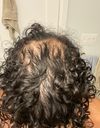
The conversation discusses biannual SCUBE3 injections and microneedling as treatments for hair loss. Specific treatments mentioned include Minoxidil, Finasteride, and RU58841.
The conversation is about someone's hair transplant progress after 8 months, questioning if results will improve. They use topical minoxidil and finasteride, a dermapen, vitamins for hair, and aminexil shampoo, and sometimes do scalp massages.
People discussed using finasteride, minoxidil, and dutasteride for hair loss, with mixed results and side effects. Some had positive outcomes, while others experienced issues like libido changes and chose alternatives like hair systems.
A 35-year-old transitioning female (MtF) shared her hair regrowth journey using Minoxidil, Dutasteride, Microneedling, and Exosomes, starting from a bald state. Commenters discussed the impressive results, skin care routine, and the effects of estrogen on hair and skin.
A person shared their positive experience with a hair transplant at Sule Hair Transplant in Istanbul, performed by Dr. Selahattin Tulunay using the Hybrid FUE technique with 5,000 grafts, costing €2,990. The user reported significant hair growth and satisfaction at 3, 6, and 12 months post-surgery, without using finasteride or minoxidil, but faced skepticism from others about the authenticity of their post.
Pyrilutamide is a selective AR antagonist with a high binding affinity, making it effective in competing with DHT for androgen receptors. The 1% concentration is more effective than the 0.5%, but the latter may suffice for mild hair loss; the drug is considered a good option for those avoiding 5AR blockers due to side effects.
Bimatoprost is preferred over Latanoprost for hair growth. Users are seeking a reliable supplier for raw Bimatoprost powder to make their own topical solution.
Avoid layering thin or thinning hair, as it can make hair appear thinner and uneven. Proper framing and minimal layering can help maintain a fuller look, especially when using treatments like Minoxidil and Finasteride.
User doing PRP with exosomes for hair loss, sees possible regrowth after two treatments. Another user suggests providing before and after pictures for better assessment.
A user is using homemade topical spironolactone for androgenetic alopecia and is unsure about its effectiveness due to concurrent telogen shedding. They are seeking advice on others' experiences with homemade topical spironolactone.
User "mynameisbogus" shares 2-month progress using Dut, Min, Oral Min, Keto, Dermarolling, and Retinol for hair loss at age 40. Others discuss impressive results and potential for full hair regrowth.
A user plans to create a DIY topical treatment for hair loss using Rapamycin, possibly combined with alpha-ketoglutaric acid (a-KG). They discuss the concentration and formulation process for Rapamycin, considering safety and skin penetration, and intend to apply it every other day to the scalp.
USER19 shared progress pictures 1.5 years after a hair transplant of 4180 grafts by Dr. Ahmet Yildirim, with no medications used. New hair growth started after the 3rd month.
A user shared their positive experience with a 2987 graft hair transplant focused on the hairline, supplemented by finasteride and minoxidil for the mid scalp and crown. They expressed satisfaction with the results and the supportive care received during and after the procedure.
The conversation discusses updates on hair loss treatments, specifically GT20029, PP405, and a rumored injectable peptide from UT. GT20029 is seen as a promising treatment expected within 5-7 years.
The conversation discusses the difference between the commercially available Pyrilutamide and the version in clinical trials. It also mentions treatments like Minoxidil, finasteride, and RU58841 for hair loss.
The conversation discusses experiences with Haircross Hair Growth Serum, which contains Redensyl, Capixyl, Procapil, Anagain, and Baicapil, as an alternative to Minoxidil and Finasteride. Users report mixed results, with some experiencing no regrowth and others noting slight thickening, but concerns about side effects and effectiveness compared to standard treatments remain.
The user has been using topical finasteride and minoxidil since 2021 and is exploring other hair treatment companies like Xyon and Happy Head due to dissatisfaction with the current product's smell. They question the authenticity of consultations from these companies, suspecting they might be automated.
BionicBell discussed using Bimatoprost, a medication typically for eyelash growth, for hair loss and mentioned a compounding pharmacy that can mix it with other ingredients like minoxidil and finasteride. They are seeking advice on using topical finasteride for female pattern baldness and are considering a custom foam combination to maximize hair growth results.
Kintor is producing a cosmetic with KX826, starting at 0.5% concentration and moving to 1%. The 0.5% concentration wasn't as effective as minoxidil and finasteride, but the 1% concentration shows promise.
The conversation discusses hair regrowth after 7 months of treatment, with the recent addition of tretinoin 0.05%. The treatment routine remained the same as before, except for this new addition.
Scientists at UCLA have developed a promising treatment for male pattern baldness using a molecule called PP405, which can potentially stimulate dormant hair follicles. Initial trials showed significant results within a week, but larger clinical trials are needed to confirm its efficacy and safety.
The potential availability of a new hair loss treatment called HMI-115, which has shown promising results in experiments on monkeys but is not yet available to the public. Replies cautioned against using unproven substances from shady labs.
The conversation discusses using RU58841, topical finasteride/minoxidil, MK677, and microneedling as treatments for hair loss. MK677 is mentioned as a growth hormone that improves hair health and recovery from microneedling.
A stem cell and adenosine triphosphate cocktail showed promising results in hair regrowth for male and female mice, with potential for future clinical trials. Users humorously reacted to the success in mice, expressing hope for human application.
The conversation discusses using high molecular weight hyaluronic acid after microneedling to form a protective barrier, though it's considered expensive and offers marginal improvement. Users share experiences with different microneedling tools like derma rollers, dermastamps, and Dr. Pen, with some opting not to use any products on the scalp.
The user had a hair transplant 10 months ago and sees some improvement but still has thin spots. They previously used finasteride pills and now use a topical solution of minoxidil, dutasteride, and tretinoin.
The VT Reedle Shot, a skincare product using silica spicules, is discussed as a potential at-home alternative to microneedling for hair regrowth. It is suggested that different intensities may aid in hairline regrowth.