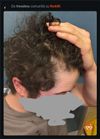
The user is experiencing severe hair shedding after using RU58841, stemoxydine, and minoxidil, and has stopped using finasteride due to side effects. They hope the shedding is temporary and will lead to regrowth.
Why androgenic alopecia affects the scalp rather than other body parts, potential explanations for this phenomenon, treatments available to combat hairloss, and the implications of male attractiveness in modern society.
A user lost 60% hair density in 4 months, started finasteride and microneedling, and has greasy, flaky, yellowish scalp. They are awaiting biopsy results, and another user suggested trying ketoconazole shampoo.
Topical saw palmetto is discussed as a mild anti-androgen for hair growth, with some users combining it with other treatments like spironolactone and ketoconazole shampoo. Users share mixed experiences, with some not noticing regrowth and others hopeful for positive results.
A 20-year-old FTM individual started finasteride for hairloss with initial success but experienced increased shedding after 7 months. They are considering oral minoxidil as advised by their doctor to address the worsening hairloss.
The user "ajsr8" shared their story of hairloss despite being on treatments. They started using finasteride in 2019 and later tried topical minoxidil, but it didn't seem to work. They also experienced side effects from other treatments. They are considering cutting off their hair and stopping the medications if there is no improvement in three months. Other users suggested trying different treatments and getting a blood test to check for underlying conditions.
The conversation discusses hairloss treatments, specifically the use of dutasteride, finasteride, and other methods like PRP, laser, and mesotherapy. Despite these treatments, the user is experiencing hairloss, and others suggest consulting a dermatologist, considering alternative treatments, and addressing potential scalp inflammation.
DHT promotes beard growth but causes scalp hairloss due to inflammation and fibrosis. Treatments like finasteride and minoxidil help with hormonal signals and blood flow but don't address underlying inflammation.
An 18-year-old experiencing hairloss and seborrheic dermatitis has tried finasteride, dutasteride, and various shampoos without success. They are considering anti-androgens like RU58841 and KX-826 for oil control and dandruff reduction.
Pyrilutamide is believed to be more effective than RU58841 and 1 mg finasteride in treating hairloss, with no systemic hormonal effects and the potential to block more than 31% of scalp DHT. It may also antagonize scalp testosterone due to its action as an androgen receptor antagonist.
Hairloss discussion mentions Native Americans' resistance to male pattern baldness and lack of facial hair. Users discuss genetics, sun exposure, and potential treatments like minoxidil and finasteride.
Quercetin might help with hairloss by inhibiting HSP-70, which increases androgen receptors. Concerns include its staining properties and unclear topical absorption.
The user experienced significant hairloss after extended fasting, initially thought to be Telogen Effluvium, but later suspected male pattern baldness. They tried finasteride briefly but stopped due to concerns about side effects, and are unsure if the hairloss is due to Telogen Effluvium or another cause.
A 20-year-old male experienced significant hair shedding for nearly 10 months, despite using finasteride, oral minoxidil, and ketoconazole, and is concerned about chronic telogen effluvium. He has been supplementing with vitamins and minerals but remains unsure of the cause.
Scientists discovered a new T cell treatment that could regrow hair. Users are skeptical but hopeful, with some relying on finasteride and minoxidil in the meantime.
Pyrilutamide is discussed as a potential hairloss treatment, acting as an androgen receptor antagonist. The conversation questions if it can maintain hair long-term without using finasteride.
Hairloss due to DHT is causing distress, with Minoxidil, finasteride, and RU58841 being potential treatments. The conversation includes humor and frustration about the topic.
Whey protein does not cause hairloss; concerns are likely unfounded. The user is on finasteride and minoxidil but sees no improvement, so they are phasing out these treatments while continuing to work out and use whey protein.
A 21-year-old is experiencing hairloss despite using finasteride, minoxidil, derma rolling, vitamins, and keto shampoo. They are contemplating a hair transplant but worry about their age and future hairloss.
The conversation humorously discusses hairloss and its treatments, specifically mentioning Minoxidil, finasteride, and RU58841. It highlights a transformation from hairline recession to significant hair regrowth.
A user is using topical finasteride, keto shampoo, microneedling, and tretinoin for hairloss and is considering adding pyrilutamide. They notice some improvement at the temples and seek advice on whether to focus on cosmetic results despite daily shedding.
A man struggled with hairloss from age 18, tried various methods without success, and finally sought medical help at 23. He was prescribed oral finasteride, topical minoxidil, and Nizoral shampoo, which after two years of consistent use, significantly improved his hair condition.
A person used hair fibers for 11 years to hide hairloss, which affected their social life. They had a hair transplant, improving their life, and recommend addressing hairloss directly.
Potential treatments for hairloss, specifically the combination of liquid minoxidil and pyrilutamide, with some suggesting that adding finasteride may be beneficial.
The conversation is about the role of testosterone in hairloss and the effectiveness of different treatments. The conclusion is that DHT is the main culprit for hairloss, and finasteride has been proven to work long-term in maintaining and regrowing hair. Testosterone may have a minor effect, but it is not the primary cause of hairloss.
Lichen Planopilaris (LPP) is an autoimmune condition causing permanent hairloss and fibrosis, often misdiagnosed. Treatments include pioglitazone, topical corticosteroids, anti-inflammatory medication, and Jak inhibitors.
A 25-year-old noticed thinning hair at the temples and started using finasteride (1mg/day) for two months, along with keto shampoo twice a week and vitamins like vitamin D, biotin, and zinc. They are seeing some results and are hopeful about regaining lost hair.
A user shared their 5-year journey with hairloss, detailing treatments including minoxidil, finasteride, plasma therapy, and mesotherapy. They initially avoided finasteride but later started using it due to dissatisfaction with minoxidil alone.