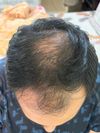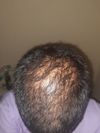
User has used Finasteride, Minoxidil, and derma roller for 8 years to treat hair loss but is still losing the battle. Others suggest trying Dutasteride, oral Minoxidil, RU58841, or considering a hair transplant.
Body hair transplants may look better if kept very short. People with limited donor regions or waiting for Verteporfin or FAK Inhibitors could consider this option.
A user's journey to treat hair loss with a combination of oral medication, topical treatments, microneedling and different shampoos and supplements. It includes warnings about an OGX biotin shampoo potentially causing further hair loss.
Use retin-a cream and maintain a good skincare routine to counteract skin issues caused by topical minoxidil. Taking sublingual minoxidil can also be beneficial.
A 25-year-old woman is experiencing hair loss and has started microneedling with a 0.5mm roller, applying a mix of essential oils overnight. She questions whether to switch to a 1.5mm roller and the best order for her routine, while a reply suggests using Minoxidil for better results.
Tocotrienols are being discussed as a potential treatment for hair regrowth, but users report no noticeable effects after several months of use. Some users are combining tocotrienols with other treatments like pumpkin seed oil and peppermint and rosemary oil.
A user is seeking alternatives to **Curatio Triclenz Hair Cleanser** and **Triflow Hair Conditioner** due to issues with hair weight and scalp pimples. They need recommendations for mild shampoos available in Europe, preferably Sweden.
The user is treating hair loss with dermarolling, a laser helmet, scalp massages, and Nizoral. They stopped using minoxidil and finasteride and are considering pumpkin seed oil and sulforaphane.
The conversation discusses the appearance of new baby hairs with treatments like castor oil, finasteride, minoxidil, and dermarolling. Users note that baby hairs often go unreported after initial excitement, with some seeing growth and others losing interest in updates.
Hair loss treatments, specifically the use of Alfatradiol as an over-the-counter topical 5AR inhibitor that has been shown to be effective in stopping hair loss without side effects. Other treatments discussed include Minoxidil, finasteride and RU58841.
Hair loss treatments include using finasteride, dutasteride, and RU58841. Lifestyle changes like increasing carb intake and moderate alcohol consumption are suggested to boost estrogen levels.
Taking oral Vitamin D alongside topical minoxidil improves hair density more than using minoxidil alone. Users discuss Vitamin D dosages, potential benefits, and the importance of combining it with Vitamin K2.
Some individuals do not respond to oral minoxidil for hair loss, despite it generally working by improving blood flow to hair follicles. Factors like metabolism, drug interactions, and individual variations in the drug's activation may influence its effectiveness.
A 26-year-old is experiencing hair thinning and has received conflicting diagnoses of androgenetic alopecia and telogen effluvium. They are considering treatments like dutasteride, oral and topical minoxidil, and are unsure whether to start treatment or pursue further diagnosis like a scalp biopsy.
Using finasteride and peptides, including GHK-Cu, improved hair thickness and regrowth. The user also used a KLOW blend and CJC/IPA for better sleep and recovery.
The user resumed taking 5mg oral minoxidil and 0.5mg dutasteride daily, with vitamins, and noticed hair regrowth. They switched from finasteride to dutasteride due to side effects and prefer oral minoxidil over topical for convenience and effectiveness.
The user is seeking advice on sourcing finasteride, dutasteride, and minoxidil, as their doctors are unwilling to prescribe both finasteride/dutasteride and minoxidil simultaneously. They are also looking for sources of GHK-Cu and RU58841 in the USA, with suggestions including using services like Hims, ro.co, and Musely.
The conversation is about hair loss treatments, specifically using dutasteride and oral minoxidil, and exploring additional vitamins and supplements like vitamin D, zinc, biotin, and omega-3 to support hair health. Users suggest getting a blood panel to identify deficiencies and emphasize the importance of protein and overall nutrition.
A drug that regrows body parts, but not hair, sparking debate on hair loss treatments. Discussions include the use of finasteride, dutasteride, and the potential for new methods to restore hair.
The user has been using topical finasteride and minoxidil for a month to address hair thinning. They are experiencing shedding but have noticed small hairs on their temples.
The user plans to switch from topical to oral finasteride (1mg/day) and minoxidil (3mg/day) due to unsatisfactory results with topical treatments. They seek advice on the effectiveness, potential side effects, and the timing for considering a hair transplant, with recommendations to monitor health metrics like blood pressure and conduct thorough bloodwork before starting.
A user claims a product can treat alopecia, but others are skeptical, calling it a scam due to lack of evidence and transparency. The product is said to inhibit Type II 5-αr by 22.9%, but is considered weaker than existing DHT blockers.
The conversation is about a user's progress in treating diffuse hair thinning using a topical regimen including finasteride, minoxidil, ketoconazole, microneedling, saw palmetto, collagen, and vitamins, along with lifestyle changes. The user plans to switch from topical to oral finasteride for potentially better results.
A user shared their hair recovery progress after 3 years on oral finasteride (1mg daily) and minoxidil (2.5mg), noting a full hairline recovery and decent crown improvement. They are considering adding dutasteride for further crown recovery, and reported no significant side effects except for temporary watery semen.
A 25-year-old male is experiencing hair thinning at the hairline and vertex, considering using a dermapen or dermastamp, and seeking advice on whether to continue with natural remedies like onion juice and rosemary oil or start using minoxidil or finasteride. He is also looking for recommendations on microneedling devices.
The user noticed small circular hairless spots after a buzz cut and has been using finasteride, dutasteride, and oral minoxidil for hair loss. They are experiencing continuous shedding and thinning, and it is suggested they consult a dermatologist for a scalp examination and possible biopsy to determine if it's alopecia areata or androgenetic alopecia.
Stopping oral minoxidil is often recommended a week before a hair transplant and can be resumed a week after. It's best to consult the clinic for specific guidance on minoxidil, finasteride, and vitamins before surgery.
A 27-year-old is experiencing hair thinning and receding, currently using finasteride and planning to start minoxidil. They seek advice on hairline treatment options, including styling, PRP, peptides, and micro-needling.