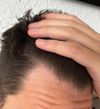
The user shared progress on hair regrowth using oral dutasteride, oral minoxidil, and verteporfin procedures. They reported some regrowth after 6-9 months of treatment.
The conversation discusses using NAC and quercetin as supplements for hair loss, with some users also mentioning finasteride. NAC is highlighted for its potential benefits, but concerns about its safety and absorption are also raised.
The conversation discusses adding either RU58841 or pyrilutamide to a hair loss treatment regimen that already includes oral dutasteride and oral minoxidil. RU58841 is considered the stronger anti-androgen but may have more side effects.
Sprocketshead asks if pyrilutamide can be applied with minoxidil, and inquires about its consistency and odor. They want to know if it's more high maintenance than topical minoxidil.
Pyrilutamide and RU58841 are androgen receptor antagonists that block receptors without significantly reducing testosterone or DHT levels. Any indirect effect on androgen levels is likely negligible.
Verteporfin is discussed as a potential treatment for hair regrowth, but skepticism exists about its effectiveness in regenerating extracted hair follicles. The conversation also mentions the possibility of needing a hair transplant by 2028.
The conversation discusses androgen receptor degraders for hair loss, highlighting their potential advantages over traditional AR blockers like RU58841 and pyrilutamide. Concerns about the safety and cost of these treatments are also mentioned.
Isotretinoin and tretinoin are different; isotretinoin can cause hair loss and has more side effects. Tretinoin may affect minoxidil absorption, and users suggest waiting before applying minoxidil.
User Arrosis shared their 1-week experience using Pyrilutamide for hair loss, noticing reduced shedding and increased libido but also experiencing headaches, dizziness, and nipple sensitivity. They plan to try a lower frequency to see if it helps with side effects.
The user is experiencing hair loss and has been using RU58841 but is considering pyrilutamide and minoxidil, avoiding finasteride due to side effects. Another user suggests finasteride or dutasteride as essential, possibly in topical form, while dismissing saw palmetto as ineffective.
Estrogen injections significantly improved hair growth, particularly on the crown, after stopping finasteride. Monotherapy with estrogen led to hairline improvement, but also caused sterility and potential feminization effects.
Hair loss treatments like Breezula and PP405 are delayed, with approvals taking years, while existing treatments like minoxidil and finasteride remain popular. New treatments like Clascoterone and Veradermics are in trials, but high costs and lengthy approval processes slow their release.
Verteporfin is being explored for its potential to improve hair transplant outcomes by reducing scarring and increasing donor hair follicles. There is skepticism about the results, with some claiming misleading presentation of evidence.
A user shared their experience using capsaicin from chili peppers and occasional topical minoxidil to promote hair growth, noting noticeable improvements without significant side effects. They previously experienced side effects from dutasteride and minoxidil but found the new regimen effective and manageable.
The conversation is about the difficulty in obtaining GT20029, a hair loss treatment, due to patent issues and the need to resort to group buys or Chinese labs for acquisition. Specific treatments mentioned include Minoxidil, finasteride, and RU58841.
A user shared their hair regrowth progress using Dutasteride, topical Minoxidil, Spironolactone, and Estradiol Valerate injections as part of hormone replacement therapy for transitioning. They experienced significant hair improvement and personal satisfaction but caution against this approach for non-transitioning individuals due to irreversible changes.
An 18-year-old is using a high-dose hair loss treatment regimen including finasteride, minoxidil, dutasteride, and plans to add RU58841 and bimatoprost, despite warnings from others about the risks. The user is determined to reverse hair loss but acknowledges the potential dangers and does not recommend others follow their approach.
Using a low dose of topical Tamoxifen effectively reduces gynecomastia caused by finasteride, with minimal side effects. The solution involves mixing Tamoxifen with ethanol and propylene glycol, applied daily to the chest.
Research and science related to a minor improvement in hair growth caused by the use of verteporfin, as well as potential treatments such as Minoxidil, Finasteride, and RU58841.
Bicalutamide blocks androgen receptors, preventing testosterone and DHT from binding, which can help with hair loss but may cause feminization. It is not recommended for those who do not want feminization effects.
A user shared a six-month update on hair improvement using Pyrilutamide and Minoxidil, noting significant hair regrowth and strength. Some participants questioned the legitimacy of the results and the source of Pyrilutamide.
The user experienced temple recession, shedding, and acne while on 0.5mg dutasteride, 1.25mg finasteride every other day, and 5mg oral minoxidil daily. They are considering switching treatments due to worsening symptoms and are contemplating using a topical anti-androgen like RU58841.
The conversation discusses potential hair loss treatments, including hair cloning, setipiprant, and topical finasteride, questioning their availability and effectiveness as permanent cures. The user is inquiring about the release dates and efficacy of these treatments.
A user suggests that deeper microneedling with Verteporfin injections might help regrow hair in areas with scar tissue, alongside a DHT blocker. Another user explains that hair loss might be due to reduced Wnt/β-Catenin signaling and suggests that treatments like Minoxidil, Finasteride, and microneedling could potentially reverse it.
GeneTherica is discussed as a source for RU58841, with ordering possible via WhatsApp. The conversation focuses on the legitimacy of this supplier for hair loss treatment.
1% finasteride is considered too high, with most people using 0.1% or 0.3% topically. Combining it with 0.1% tretinoin is aggressive and may cause skin irritation.
Topical Clascoterone showed a 539% improvement in hair count compared to placebo, but its effectiveness and safety are debated. Users compared it to minoxidil and finasteride, with mixed opinions on its potential release in 2026 or 2027.
Breezula's phase 3 results are expected in July or August, with commercialization possibly in two years. There are concerns about delays and effectiveness, and the cost may be high.
The conversation discusses the potential of topical cetirizine (Zyrtec) for hair growth in comparison to minoxidil, noting cetirizine's ability to reduce prostaglandin D2, which inhibits hair growth. Users share mixed experiences with cetirizine for allergies and scalp health, and there's a mention of the risk of dementia with long-term antihistamine use.
Clascoterone lotion, being tested in Germany, is as effective as Minoxidil and Finasteride for hair loss but without serious side effects. About 400 men participated in the trials.