PP405 is a new hair loss treatment in phase 2 trials that may promote hair growth by increasing lactate production and activating hair follicle stem cells. It could potentially replace hormone-disrupting treatments like Minoxidil and finasteride.
Hair loss treatments RU55841, CB-03-01, and Eucapil were discussed, with concerns about needing increased dosages over time and potential side effects. A user suggested that CB's results could be due to various factors and that combining it with finasteride might slow down any upregulation.
The user is using finasteride 1mg every other day and seeks a topical solution to complement it, excluding minoxidil. They are considering various combinations of ingredients like finasteride, dutasteride, and tofacitinib, with options for nourishing oils and other additives.
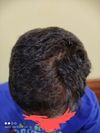
The conversation humorously discusses hair loss treatments, mentioning Minoxidil, finasteride, and RU58841. It jokingly credits a person for the potential success of a treatment called GT20029.
The conversation discusses potential hair loss treatments, including Setipiprant, Bimatoprost, and Follicept. The user encourages signing up for Follicept, which may come to market soon.
GT20029 and CosmeRNA are both potential hair loss treatments; GT20029 breaks down the androgen receptor, while CosmeRNA prevents its production. Continuous use is needed, but less frequently than current treatments like Minoxidil and Finasteride.
The efficacy of degrading the androgen receptor through dermal application in DP cells, a delivery system for topical drugs that involves dissolving microneedles, and rosemary oil as an alternative anti-androgen.
The conversation discusses buying RU58841 directly from a Chinese supplier for cost savings. It mentions that companies like Anageninc and Actifolic do the same.
Comparing the effectiveness of RU58841, Pyrilutamide and CB-03-01 as treatments for hair loss, with people discussing different aspects such as binding affinity, time of inhibition, safety data and cost.
A 17-year-old is addressing hair loss with finasteride, topical minoxidil, and microneedling. They are considering adding GHK-Cu to their regimen, but others advise caution with finasteride due to age.
A user is considering making a 2% clascoterone lotion from powder due to unavailability in their location. They plan to mix clascoterone powder with retinol lotion and use literature to determine the correct dosage.
The user's consideration of taking finasteride as a short-term treatment, while awaiting advances in medical technology such as Pyrilutamide and GT20029; other users' experiences with Finasteride, including potential side effects.
Hair loss treatments discussed include promising Pyr available online and Verteporfin dosing after FUE for follicle regeneration, but no updates on SCUBE3.
The acne medication Winlevi, which contains Clascoterone, is available in the U.S. and may slow down hair loss until a higher concentration treatment, Breezula, is released.
The user has been treating hair loss for 7 months using a combination of pyrilutamide, a topical mix of finasteride and minoxidil, microneedling, a topical mix of GHK-Cu and minoxidil, ketoconazole shampoo, fish collagen peptides, zinc, and vitamin D3. Another user suggests that continuous small improvements could lead to significant hair regrowth over time.
PTD-DBM is a Korean-developed treatment for hair loss, with limited information available and some users testing it personally. A user purchased PTD-DBM for $115 and plans to test it on their temples, but its effectiveness and authenticity remain uncertain.
Hair loss may be linked to the TRPS1 gene and protein, not just DHT. Amplifica's AMP-303 targets mesenchymal stem cells and shows promise in treating hair loss, unlike Pelage's PP405.
The user is considering switching from finasteride to dutasteride for hair loss. They are unsure if GT20029 can regrow hair, particularly on the temples. Another user mentions that regrowth on finasteride can take up to 2 years.
Clascoterone 5% solution shows strong potential for hair growth, offering a new treatment for alopecia with minimal side effects. It blocks androgen receptors locally and may be available by late 2026 or early 2027.
Hair loss involves more than just DHT, with genetic factors like TRPS affecting hair follicles. Treatments such as Amplifica's AMP-601 and AMP-303 target stem cells for potential hair growth solutions.
A 16-year-old is experiencing hair loss and is using minoxidil, finasteride, and plans to add RU58841, while considering other treatments like MK-677 and microneedling. Concerns are raised about the potential impact of these treatments on puberty and development.
Scientists discovered a new T cell treatment that could regrow hair. Users are skeptical but hopeful, with some relying on finasteride and minoxidil in the meantime.
The conversation is about someone considering using CB-03-01 for hair loss but has ordered finasteride, which they are hesitant to use. They are seeking advice on how to prepare CB-03-01 from powder form and the appropriate strength to use.
A user is experiencing hairline recession and has started using RU58841, applying it to the temples. They are seeking advice on the appropriate dosage for this specific area.
Alfatradiol is often discussed at a 1% concentration, but studies typically use 0.025%. Some users report success using it as a topical treatment alongside other hair loss treatments like finasteride.
The user is experiencing hair loss and plans to use a treatment protocol including Saw Palmetto Berries, MCT Oil, Zinc, testosterone balancers, L-tyrosine, and L-theanine. They also use a specific dandruff shampoo and are open to non-prescription treatments.