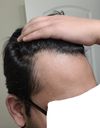
Hair loss treatments like minoxidil, finasteride, dutasteride, and RU58841. Users stress early prevention and discuss challenges with different hair loss patterns.
Finasteride, dutasteride, and minoxidil are discussed as treatments for male pattern baldness. Finasteride and dutasteride are effective DHT blockers, while minoxidil is necessary for regrowth but must be used consistently.
PP405 (Everychem 3HP) may help with hair regrowth, with mixed user experiences. Users often combine it with minoxidil and finasteride, but there are concerns about its efficacy and side effects.
A new topical treatment, PP405, shows promising results for hair regrowth, potentially outperforming existing treatments like finasteride and minoxidil. However, it may still need to be combined with DHT blockers for optimal results, and its long-term effectiveness remains uncertain.
Switching milk brands cleared scalp inflammation and other symptoms, but hair shedding continues. The user hopes shedding will stop as hair cycles progress.
The user experienced hair regrowth with dutasteride but later lost progress despite using minoxidil foam and dermastamping. Suggestions included reducing dermastamping frequency, conducting blood tests, and considering oral minoxidil or different brands of dutasteride.
The user plans to stop finasteride after three months, believing hair loss isn't due to DHT, and will continue with oral minoxidil, microneedling, and ketoconazole shampoo. They suspect stress and poor nutrition are the main causes and seek opinions on DHT blockers' effectiveness.
Switching from finasteride to dutasteride can cause initial shedding, but many see long-term hair regrowth and stabilization. Responses vary, with some experiencing fewer side effects and others finding it less effective.
The user experienced stable hairline but diffuse thinning after switching from oral finasteride to a topical solution of minoxidil and finasteride. They are concerned about the effectiveness of the topical treatment and are considering other options due to a recent decline in hair density.
The user is considering starting topical minoxidil to address a receding hairline and mild dandruff. They are seeking advice on potential effects and side effects of the treatment.
Scalp tension from the occipitalis muscle is theorized to contribute to hair loss, but most believe DHT and genetics are the main causes. Treatments like finasteride and minoxidil are considered more effective than addressing scalp tension.
Hair loss is often linked to inflammation and DHT, with treatments like finasteride, dutasteride, and minoxidil being effective for many. Natural remedies like turmeric and oils are discussed, but medications are generally seen as more reliable for managing genetic hair loss.
A 28-year-old male experiencing hair thinning is considering minoxidil and finasteride. Minoxidil helps regrow hair, while finasteride prevents further loss; both are usually lifelong treatments.
Dutasteride is more effective than finasteride for hair loss, with optimal dosing at 0.5mg once or twice a week to minimize side effects. Topical application may further reduce side effects while effectively lowering scalp DHT.
Creatine may cause hair loss in some individuals, especially those on finasteride, despite no scientific link. Personal experiences suggest individual sensitivity to DHT could be a factor.
Hair loss greatly affects mental health and social life for young men. Treatments like finasteride, minoxidil, and hair transplants are common, with mixed success and ongoing self-esteem challenges.
A user experienced significant hair regrowth using finasteride 1 mg daily for two years and gradually introduced dutasteride 0.5 mg daily over four months. They reported no side effects and plan to switch fully to dutasteride due to its cost-effectiveness and potential effectiveness.
DHT affects hair follicles, contributing to hair loss, but the exact mechanism is unclear. Treatments like finasteride and minoxidil are used to manage hair loss, though they may have side effects and varying effectiveness.
PP405 is criticized for overhyped claims and cherry-picked data, with doubts about its effectiveness compared to minoxidil and finasteride. Many users express skepticism, emphasizing the need for more comprehensive trial results.
Diet and lifestyle changes can reduce hair shedding but won't regrow hair lost to genetic male pattern baldness. Treatments like finasteride and dutasteride are necessary for significant hair regrowth.
A user reversed severe hair loss with dieting, lifestyle changes, and topical minoxidil, highlighting reduced inflammation and body fat. The conversation debates finasteride's effectiveness and the impact of diet and lifestyle on hair health.
The user is experiencing significant hair loss after switching from finasteride to dutasteride for five months. Suggestions include that the hair loss might be a normal shedding phase, with some recommending continuing the treatment for up to 24 months or considering alternatives like RU58841.
Switching from finasteride to dutasteride can cause significant hair shedding if done abruptly. It's recommended to overlap both treatments and gradually taper off finasteride to minimize shedding.
Creatine does not significantly affect DHT levels or cause hair loss. Some users continue using finasteride and minoxidil while taking creatine, expressing skepticism about its impact on hair loss.
The user has been using finasteride for hair loss since January 2023, initially seeing improvement but now experiencing increased thinning. They are considering other factors like thyroid and insulin resistance and are seeking advice from long-term finasteride users, while some suggest trying dutasteride, minoxidil, or consulting a dermatologist for further evaluation.
PP405 is a promising molecule that may reactivate dormant hair follicles, potentially offering a new treatment for hair loss. It is in phase 2 trials, with possible availability between 2027 and 2030.
Accutane may accelerate hair loss in genetically predisposed individuals by affecting enzymes related to DHT metabolism. Some users report hair loss after taking Accutane, while others use treatments like finasteride and minoxidil to manage hair loss.
A person is struggling with hair loss despite using finasteride and minoxidil, considering dutasteride and magnesium supplements. They are advised to be patient, consider a hair transplant, and check for thyroid issues.
A 28-year-old is experiencing hair loss despite using treatments like oral minoxidil, finasteride, and high-dose dutasteride (2.5 mg). They suspect lichen planus might be contributing to the issue and plan to continue treatment while monitoring progress.