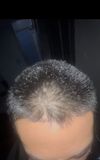
Vitamin E is suggested as beneficial for hair follicles. Some users question the dosage and effectiveness, while others share positive experiences with vitamins.
Investing in pharmaceutical products to treat hair loss and the potential risks associated with that, as well as other treatments such as Minoxidil, Finasteride, RU58841, and a COVID-19 booster.
The user experienced regrowth and stabilization in hair density using finasteride, minoxidil, a derma roller, and an LLLT helmet, but noticed a recent decline in hair quality. They only take finasteride orally and are unsure about the effectiveness of the LLLT device.
The user had a hair transplant with 2,000 grafts in 2017, and after four and a half months of using finasteride, minoxidil, derma rolling, and Boton shampoo, they are seeing hair regrowth including the return of their widow's peak. They are considering switching to RU58841 and a deeper derma rolling treatment.
A user who underwent a hair transplant in their twenties and are now discussing the best treatments for long-term management of hair loss, such as finasteride and Minoxidil, as well as potential alternative treatment options like RU58841.
A 46-year-old shared 1.6 years of hair regrowth progress using a regimen that includes Minoxidil, Finasteride, and possibly other treatments. Suggestions included considering a hair transplant, using dutasteride, and adding tretinoin for further improvement.
A user shared their experience with a hair restoration method involving adding individual human hairs on ultra-fine strands between existing hair, allowing for natural movement and appearance without blocking the scalp. They also continue using rosemary oil and gentle massage for basic growth support.
The user experienced heavy shedding 10 months after a hair transplant and used a topical solution of Minoxidil and Finasteride, later switching to Finoduta. They also dealt with a dry scalp and greasy hair, using various shampoos and conditioners, and sought advice on whether the shedding was normal and how to manage the dry scalp.
Hair regrowth after 13 weeks using topical minoxidil, oral finasteride, peptide shampoo, serum, and a red light hat. Some growth is attributed to a recent hair transplant.
A user shared their 11-year journey with alopecia, using finasteride, dutasteride, and a hair transplant. They encouraged others not to panic, noting that hair miniaturization can take over 15 years to complete.
PP405 is anticipated as a future treatment for dormant hair follicles, but its effectiveness and safety are uncertain. Current treatments include oral minoxidil and microneedling, with some avoiding finasteride due to side effects.
The user is experiencing a difficult shedding phase after starting a hair loss treatment with oral finasteride, topical minoxidil, and microneedling. Despite the shedding, they remain hopeful for regrowth and plan to continue the treatment, encouraged by others' positive results.
Hair regrowth progress using finasteride, minoxidil, and dermarolling. Visible improvements started around month 6, with initial shedding from minoxidil.
The user experienced hair regrowth using a routine of 5% minoxidil, 0.1% finasteride, 0.1% dutasteride, and 0.025% tretinoin, with plans to adjust the treatment. They noticed significant improvement within a year and are considering changes to avoid potential hair shedding.
A 33-year-old experienced hairline improvement using finasteride and minoxidil, later stopping minoxidil while continuing ketoconazole shampoo. Initial side effects included shedding, reduced libido, and anxiety, but these resolved, leading to a full hairline recovery.
The user is using Minoxidil, Finasteride, RLLT, Nizoral Shampoo, and microneedling for hair regrowth. They notice some thickening and new hair growth, especially in the front, but are unsure about the overall regrowth due to previous head shaving and photo comparisons.
A user with long-term hair loss has been using topical minoxidil, finasteride, RU58841, ketoconazole, and dermastamping for 8 months. They are unsure if the new hairs are miniaturized or vellus.
A 25-year-old male with androgenetic alopecia experienced improved hair condition after using finasteride, oral minoxidil, and dutasteride, but later faced diffuse thinning and texture deterioration after a shedding phase. Others suggest patience, continued treatment, and using ketoconazole shampoo, with some sharing similar experiences of post-shed thinning.
The user shared their 12-month hair regrowth progress using 1mg finasteride, 5mg oral minoxidil, and topical minoxidil. They also used a derma stamp weekly and treated seborrheic dermatitis with Mometasone and Nizoral.
A 19-year-old is experiencing worsening hair loss and severe seborrheic dermatitis despite using finasteride for six months. Nizoral (ketoconazole) is no longer effective, and they are seeking over-the-counter solutions and advice for an upcoming dermatologist visit.
The conversation discusses hair loss treatments, focusing on insulin resistance, microneedling with topical melatonin, and stress reduction. Users express skepticism about the advice, preferring proven treatments like minoxidil and finasteride, while some mention alternative methods like dermal incisions and verteporfin for reducing fibrosis.
The user experienced increased hair loss with topical finasteride and is considering switching to oral finasteride. Others shared mixed experiences, with some suggesting oral finasteride is more effective, while others noted individual results vary.
The user is experiencing a minoxidil shed after six months of use, noting a significant number of miniaturized hairs compared to mature ones, and has been on finasteride 0.5mg daily for two years with positive results. The user meticulously counts and categorizes shed hairs, sparking reactions ranging from amusement to concern over the level of obsession.
Alfatradiol is considered a mild treatment for hair loss, often used alongside other treatments like finasteride, minoxidil, and dutasteride. Users report it helps maintain hair but is not effective for regrowth on its own.
Dutasteride often stops hair loss quickly, with some users noticing reduced shedding and thicker hair within a few months. Some users combine it with minoxidil for better results, though side effects like lower libido and initial shedding are common.
The conversation discusses hair maintenance and mild regrowth after 7 months of using finasteride. Users suggest that finasteride helps stop hair loss, while minoxidil could aid in regrowth, but finasteride alone is effective for maintaining hair.
Finasteride is likely causing beard thinning due to its anti-androgen effects, which reduce DHT levels necessary for thick facial hair. Some users suggest using minoxidil to potentially counteract this effect, while others note that stopping finasteride may allow the beard to regrow.
Whey protein is unlikely to cause hair loss, and some users suggest it might be beneficial if dietary protein is insufficient. Hair loss is generally considered genetic, and there is skepticism about the dermatologist's advice to switch from whey protein to whole foods.
The user has been using finasteride for 13 months and minoxidil for 2.5 years but continues to experience significant hair loss. Suggestions include switching to dutasteride and increasing the oral minoxidil dose to 5mg, while also considering lifestyle changes like diet and stress management.
A 20-year-old with diffused thinning is using oral minoxidil for androgenetic alopecia. They plan to switch to topical minoxidil, finasteride, and bimatoprost, and may consider surgery if their condition improves.