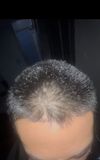
A user's father, mostly bald for 20 years, is regrowing hair using a serum called "Skrzypovita Serum Pro" without minoxidil. The user is curious about which ingredients might be causing hair growth.
A 36-year-old male had a 3000-graft FUE hair transplant in Turkey, with 2000 grafts to the front and 1000 to the crown. Post-operation, he experienced nausea, dizziness, itching, and pain, but saw hair growth and plans to take pictures once redness subsides.
The user is experiencing diffuse hair loss despite using finasteride and dutasteride and is considering adding minoxidil, microneedling, or RU58841. They are also thinking about increasing the dutasteride dose or opting for a hair transplant, while being cautious about side effects.
Stress can lead to hair loss by affecting hair-follicle stem cells, and this loss is harder to recover from if one has male pattern baldness (MPB). Treatments like finasteride and minoxidil are used to address hair loss, but stress-related hair loss differs from androgenic alopecia.
A 19-year-old is experiencing worsening hair loss and severe seborrheic dermatitis despite using finasteride for six months. Nizoral (ketoconazole) is no longer effective, and they are seeking over-the-counter solutions and advice for an upcoming dermatologist visit.
Whey protein is unlikely to cause hair loss, and some users suggest it might be beneficial if dietary protein is insufficient. Hair loss is generally considered genetic, and there is skepticism about the dermatologist's advice to switch from whey protein to whole foods.
Minoxidil alone can work for some people, but it may not address DHT-related hair loss. Adding a derma roller and using ketoconazole shampoo might improve results.
PP405 is anticipated as a future treatment for dormant hair follicles, but its effectiveness and safety are uncertain. Current treatments include oral minoxidil and microneedling, with some avoiding finasteride due to side effects.
The user has been experiencing sudden and aggressive hair shedding despite using oral dutasteride and topical minoxidil for six years, and recently added topical finasteride without improvement. Possible causes discussed include stress-related hair loss, dietary changes, or high DHT sensitivity, with suggestions to consult a doctor and consider adjusting treatments.
Dutasteride may not effectively stop scalp hair loss and can cause thinning of facial and body hair, including eyebrows. Users suggest considering other causes like autoimmune conditions or vitamin deficiencies and exploring treatments like finasteride or minoxidil.
Accutane use led to hair loss and seborrheic dermatitis for many, with treatments like dutasteride, minoxidil, and Nutrafol being used to manage symptoms. Some users reported improvement, while others experienced persistent issues or side effects from treatments like finasteride.
The user experienced hair loss despite using Fin and Min for 12 years and switched to Dutasteride, RU58841, and Keto scalp serum, but shedding and itch persist. They are considering increasing Dutasteride to 2.5mg and questioning the necessity of a scalp biopsy, with mixed opinions on its usefulness.
Peptides like TB500, KPV, GHK-CU, and BPC-157 are overhyped for hair growth with limited proven effectiveness in humans. Combining peptides with delivery methods like iontophoresis and sonophoresis shows promise, but many claims remain unproven.
Bryan Johnson uses a custom hair loss treatment that includes topical finasteride, minoxidil, azelaic acid, diclofenac, tea tree oil, rosemary oil, ginkgo biloba, biotin, and melatonin, which have shown varying degrees of effectiveness with minimal side effects. He also undergoes PRP and laser therapy, and has tried dutasteride mesotherapy.
The post discusses potential links between low vitamin D levels and hair loss, and how correcting this might impact the effectiveness of Minoxidil and Finasteride treatments. The responses vary, with some suggesting that vitamin D deficiency would cause overall scalp hair loss, while others believe it would first affect the most sensitive areas.
A user's decision to shave their head after struggling with hair loss for seven years, and the medications and treatments they are using to attempt regrowth. They also discuss potential future treatments that may come out in the near future.
Alpecin Caffeine shampoo is ineffective for stopping hair loss, with unreliable supporting research. Finasteride is effective in reducing hair loss by lowering DHT levels.
The user observed new tiny white hairs after 12 days of using minoxidil, finasteride, microneedling, and biotin, hoping they will become terminal hairs. Others advise that while some hairs may not fully grow, consistent treatment, patience, and scalp massages could enhance results.
The user is considering switching from Finasteride to Dutasteride for better hair regrowth while using Oral Minoxidil. They are unsure about their progress and are contemplating increasing the Minoxidil dosage or trying Dutasteride.
Diet and lifestyle changes can reduce hair shedding but won't regrow hair lost to genetic male pattern baldness. Treatments like finasteride and dutasteride are necessary for significant hair regrowth.
The user is considering whether to add RU58841 or Nizoral shampoo to their current hair loss treatment of finasteride and minoxidil, noting budget constraints and concerns about hair dryness. They are unsure if RU58841 is worth adding or if they should use both treatments to see the effects.
A 21-year-old is experiencing aggressive hair loss despite using minoxidil, dutasteride, and GFC, and is seeking advice on whether to switch treatments or consider a hair transplant. Suggestions include continuing current treatments, checking for underlying health issues, and considering alternatives like RU58841 or microneedling.
A 22-year-old man experienced significant hair loss after stopping minoxidil and finasteride, causing emotional distress. He resumed these treatments and is considering dutasteride and microneedling to manage his hair loss.
The user shared their 4-year hair regrowth progress using finasteride, minoxidil, estradiol, and spironolactone. They noted significant regrowth by the second year and additional benefits from estradiol and spironolactone.
A user shared their experience with hair loss treatments, noting improvement after switching from minoxidil and finasteride to dutasteride. They observed new hair growth and reduced scalp inflammation, expressing hope for further progress.
A user discusses their habit of analyzing others' hair due to their own hair thinning at 18. Another user mentions starting finasteride in 2010 and still having a full head of hair.
The conversation discusses that dutasteride may be more effective than finasteride for frontal hair loss due to higher 5ar Type 1 enzyme activity in that area. Some users question the validity of this information, while others confirm it with additional sources.
A user is confused about a dermatologist's positive assessment of their scalp despite concerns about their hairline. They discuss using oral minoxidil, concerns about side effects from finasteride, and difficulty finding topical finasteride.
The conversation is about whether low vitamin levels can cause hair loss. The consensus is that the user's vitamin levels are normal and unlikely to affect hair loss or the effectiveness of finasteride and minoxidil treatments.