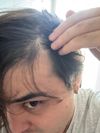
The user reintroduced RU58841 and noticed increased shedding and visible thinning. They have also been using dutasteride and oral minoxidil for 2 years.
Yunce Medical, a Chinese company, is developing hair multiplication technology similar to Stemson Therapeutics, with potential for quicker availability due to favorable regulations. Users express skepticism and hope for future advancements in hair loss treatments.
Ninan50 uses 0.6 minoxidil, 0.05 finasteride, biotin, and dermarolling for hair loss. Plans to increase to 0.7 minoxidil and 0.125 finasteride, with positive progress seen.
GT20029 is a potential treatment for androgenetic alopecia, addressing the root cause by targeting androgen receptors, unlike Minoxidil or Finasteride. It is seen as a preventative measure rather than a regrowth agent, with hopes for market release soon.
A user started using RU58841 a month ago after using finasteride and minoxidil for nearly three years, hoping for hair regrowth at the temples. Other users suggest vitamin B supplements and microneedling to improve hair thickness, and one mentions the possibility of a hair transplant for the temples.
Kintor Pharma completed a successful Phase II clinical trial for KX-826, a treatment for androgenetic alopecia. KX-826 is similar to finasteride with minor side effects and is more backed than Cosmerna.
The conversation discusses hair loss linked to BDNF-increasing nootropics like Semax and Lions Mane. Suggested topical treatments include capsaicin, beta-glucan, and ginseng to counteract TGF-B activation.
The conversation is about enhancing dermarolling for hair loss by using topical peptides like tb-500 or GHK-Cu to aid in healing and hair growth, and whether anyone has experienced significant results from this method.
A 23-year-old male has been using finasteride and topical minoxidil for 14 months with slight improvement, but recent shedding led him to switch to a new minoxidil formulation without success. He is considering using topical RU58841 or dutasteride to better address scalp DHT, as his bloodwork shows high total testosterone and mid-range DHT levels.
Hair growth relies on mechanical forces, not just chemicals, with tissue acting like a motor. Minoxidil and finasteride help, but maintaining tissue elasticity and addressing mechanical issues are essential.
Kintor Pharma completed enrolling subjects for a Phase III trial of KX-826 for male hair loss treatment. The trial includes a 24-week treatment period and a 4-week safety follow-up, with results expected in about 6-7 months.
Hair loss involves more than just DHT, with genetic factors like TRPS affecting hair follicles. Treatments such as Amplifica's AMP-601 and AMP-303 target stem cells for potential hair growth solutions.
A 21-year-old is experiencing hair thinning and is using oral finasteride and topical minoxidil, considering adding oral minoxidil. They are unsure if the condition is androgenetic alopecia (AGA) or telogen effluvium (TE) and are advised to continue treatments and get a blood test.
User wants to make homemade topical finasteride to minimize side effects and asks about using glycerin, stirring time, storage, and alternative solvents. Another user's comment is unclear.
New hair loss treatments like GT20029, Clascoterone, and PP405 are being discussed, with concerns about how to apply multiple topicals alongside existing treatments like minoxidil and finasteride. Suggestions include creating a routine, mixing treatments, or minimizing redundancy in treatment stacks.
A user (seblt) who has had side effects from finasteride, minoxidil and RU58841 but is now trying pyrilutamide as a last resort, with other users providing advice and support. They have already seen some baby hairs growing after 10-14 days of treatment and will provide updates in 1-2 weeks.
A 27-year-old man shared his hair regrowth progress after using finasteride for 4 years, recently adding a solution of RU58841 with minoxidil and alfatradiol, tretinoin on temples, and occasional ketoconazole. He is seeking opinions on his treatment approach.
A 32-year-old male shares his 5-year progress using finasteride, minoxidil, RU58841, and ketoconazole for hair loss. Despite consistent use, he feels his hair isn't as thick as before and is concerned about continued shedding and hairline miniaturization.
The conversation discusses using a TCA 35% chemical peel on the scalp to potentially improve hair growth by addressing fibrosis and enhancing the effectiveness of topical treatments. The user also mentions trying microneedling and other methods like topical metformin and dutasteride for hair regrowth.
The conversation discusses a last-resort hair loss treatment combining topical finasteride, minoxidil, melatonin, and progesterone, with claims that topical finasteride can inhibit up to 52% of scalp DHT. One reply clarifies that progesterone is not an anti-androgen but has anti-androgenic properties because it competes with androgens for receptors.
Minoxidil, finasteride, dutasteride, and microneedling are commonly used for temple regrowth, with varying results and timelines. Consistency and patience are emphasized, with some users seeing progress after several years.
The conversation discusses verteporfin as a potential treatment for hair regeneration, which could lead to unlimited hair transplants by healing the donor area. Some users are considering using verteporfin now, while others are hopeful it will be available for future hair transplants.
The conversation discusses GT20029, a drug in Phase II trials that targets androgen receptors with minimal systemic effects, and TDM-105795, a growth stimulant with a different mechanism than minoxidil that may revive papilla stem cells. Both are potential new treatments for hair loss.
Kintor Pharma has finished enrolling the first patient in a Phase III trial for KX-826, a treatment for androgenetic alopecia (AGA). One user has set a reminder to check back on the topic in a year.
The user is using finasteride, HGH, GHK-CU, BPC-157, KPV, biotin/collagen/keratin vitamins, ketoconazole shampoo, and low-dose naltrexone to address hair loss, avoiding minoxidil due to past shedding experiences. Adenosine is discussed as a potential alternative to minoxidil, though it is noted to be expensive and hard to find.
Low-Level Laser Therapy (LLLT) is seen as a safe and effective method for maintaining hair and promoting regrowth in androgenetic alopecia (AGA) and male pattern baldness (MPB), with devices like the HairMax LaserComb® and iRestore helmet being popular. Some users and professionals are skeptical about its long-term effectiveness and cost.
The conversation discusses creating a topical melatonin solution for hair loss, with challenges in dissolving melatonin pills due to additives. Suggestions include using melatonin powder mixed with ethanol and glycerin.
The conversation discusses Shiseido's RepliCel Hair-01 technology for hair regeneration, which aims to stop hair loss with minimal regrowth. Treatments mentioned include Minoxidil, finasteride, and RU58841.
The user has been using topical minoxidil, finasteride, microneedling, and laser light therapy for 11 weeks to address hair thinning. They report difficulty applying the treatment due to increased hair thickness and are unsure if the results are significant.