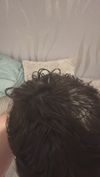
Small hairs around the hairline may regrow with continued use of minoxidil, finasteride, and ketoconazole. The user is hopeful about hairline improvement.
A user was prescribed a topical treatment for hair loss including Latanoprost, Minoxidil, Dutasteride, Hydrocortisone, and Progesterone, after using an oral Minoxidil and Finasteride combo without significant results. Concerns were raised about the long-term use of hydrocortisone, with suggestions to consult a doctor regularly.
The user experienced eyebrow hair loss after COVID-19 and has not seen regrowth despite using Latisse. They are seeking new treatment options but are cautious about spending money on ineffective solutions.
A 27-year-old man shared his hair regrowth progress after using finasteride for 4 years, recently adding a solution of RU58841 with minoxidil and alfatradiol, tretinoin on temples, and occasional ketoconazole. He is seeking opinions on his treatment approach.
The conversation discusses whether a longtime NW7 scalp has vellus hairs under a microscope or is completely smooth. Treatments mentioned include Minoxidil, finasteride, and RU58841.
A user experienced androgenic alopecia starting at the vertex without frontal hairline recession and is seeking information on this pattern. Another user noted that vertex or diffuse hair loss is common among men.
The user shared their experience with CB-03-01 (Breezula/Clascoterone) for hair loss, noting reduced shedding and improved hair appearance but experiencing significant sleep disturbances and low energy due to HPA axis suppression. They decided to stop using it due to these side effects and are waiting for GT20029 as an alternative.
A 31-year-old used topical minoxidil and finasteride with weekly microneedling for 3.5 weeks, seeing improvements in the crown and frontal areas. They are happy with the results and curious about the 3-month mark.
A new topical treatment, TH07, combining finasteride, latanoprost, and minoxidil, is entering phase III trials with promising early results. Some users express skepticism, noting the treatment uses existing products.
A 20-year-old male with a high hairline seeks advice on potential hair loss, noting a family history that typically doesn't progress beyond Norwood 2. A user suggests it appears to be a mature hairline rather than hair loss and advises monitoring for changes.
The conversation discusses the availability of Breezula, a drug for hair loss, now being sold as an acne treatment, and whether it can be applied to the scalp. Users express skepticism about new hair loss treatments and suggest waiting for FDA approval.
A user is interested in seeing scalp tattoos as a response to hair loss, specifically looking for creative designs rather than scalp micropigmentation. They are considering this approach for their own Norwood 5 hair loss situation.
A 23-year-old shares their hair and eyebrow regrowth journey, attributing success to a routine involving Minoxidil, Dutasteride, vitamins, biotin, and fish oil, alongside improved lifestyle habits. They report no side effects from Dutasteride and minor itchiness from Minoxidil, noting significant improvements in appearance and satisfaction with the results.
A user shared their 3.5-month progress using oral finasteride, topical minoxidil, biotin, and weekly 1.5mm derma rolling. Another user commented that the original poster's hairline has improved significantly.
The user is using a routine involving microneedling, Minoxidil with tretinoin, a red light cap, scalp massages, Nizoral shampoo, and essence oil shampoo to address hair loss, with visible progress noted. They are considering topical finasteride or dutasteride if progress slows but are cautious due to past side effects.
The user is seeking opinions on their hair loss, specifically the receding of their right temple. They are considering switching to Dutasteride but are unsure if it will help. Other users suggest that their hairline has improved with the use of Finasteride and Minoxidil. One user mentions using RU58841 to thicken their hairline.
The user is considering a second hair transplant or scalp micropigmentation to address thinning in the crown area and hide scars from a previous transplant. They have been using finasteride and minoxidil for three years but are concerned about the appearance of their donor area and the effectiveness of scalp micropigmentation.
The user has been using oral finasteride and topical minoxidil for 4 months and is questioning if there's regrowth. Responses suggest that diffuse thinning takes longer to show results, but there is some progress noted.
Tiny blond hairs on the vertex may indicate early hair regrowth from using dutasteride and minoxidil. Consistent treatment is advised, with potential for thicker hair over time, but a hair transplant might be needed for significant results.
The conversation discusses using Botox to treat male pattern baldness, suggesting it may promote hair growth by increasing scalp blood flow and oxygen, reducing dihydrotestosterone levels. The user wonders why this treatment is not widely discussed or if it has been discredited.
The user has been using topical finasteride and minoxidil for 7 months, seeing better results on the temples than the crown. Others suggest continuing the treatment for up to 18 months and consider additional options like oral finasteride or a derma pen for better absorption.
Finasteride may inhibit melanin production, affecting tanning and causing white hairs in the beard and eyebrows. The user considers switching to oral Dutasteride or topical treatments to address these issues.
The user has been using topical minoxidil and oral finasteride for hair regrowth, noticing some improvement and baby hairs at the hairline after four months. Suggestions include continuing the current treatment, considering microneedling, ketoconazole shampoo, vitamins, and possibly RU58841, while avoiding a hair transplant.
The user experienced hairline improvement using topical 5% Minoxidil in the first month and 8% Minoxidil with 0.3% topical finasteride in the second month, along with batana oil, Vitamin D, and biotin. The user takes two doses daily and reports a thicker, stronger hairline.
A 23-year-old has been using minoxidil for 1.6 years, finasteride for 1 year, and ketoconazole shampoo, along with biotin, to treat hair loss. They noticed baby hairs and a fuller hairline but seek further improvement, especially in the temple areas, and are considering adding rosemary oil and a dermastamp.
The user is using a treatment of topical minoxidil 7% and finasteride 0.1% twice daily, along with a low-level laser therapy cap, biotin, and collagen supplements, and is seeing good progress on the hairline and temples but not the midscalp. They experienced initial shedding, saw results by month three, and are happy with the progress, though some users express concern about using finasteride at a young age.
Microneedling can cause sneezing and eye tearing due to nerve stimulation, particularly near the temples and forehead. Some users find it lessens over time, while others prefer using finasteride and minoxidil for hair growth.
A 30-year-old with diffuse thinning and a balding crown is using a treatment regimen of a 2-in-1 pill containing finasteride, minoxidil, and biotin, along with various supplements. After two weeks, no side effects have been experienced, and updates with pictures will be posted monthly.