The use of tropoelastin injections and verteporfin for hair transplant recipients to help regrow donor area hairs, as well as research done on tropoelastin injections restoring elastin in scarred heart tissue and skin. There are discussions about why it is taking so long to get cosmetic mass produced tropoelastin injectables on the market.
The user started using topical latanoprost and dutasteride, experiencing significant hair shedding and scalp itchiness, possibly due to an allergic reaction. They are considering stopping the treatment if the shedding is linked to an allergy.
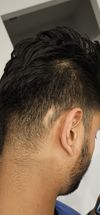
OP injured their temple using derma rolling and tretinoin, causing peeling and potential hair follicle damage. Users suggest the injury might be permanent, possibly resulting in scar tissue where hair won't grow.
PP405 is a topical gel being tested for hair regrowth in adults with androgenetic alopecia. Volunteers aged 18-55 are needed for a 16-week trial in several US locations.
Lichen Planopilaris (LPP) is an autoimmune condition causing permanent hair loss and fibrosis, often misdiagnosed. Treatments include pioglitazone, topical corticosteroids, anti-inflammatory medication, and Jak inhibitors.
8 months post hair transplant, OP experiences asymmetrical shedding despite using finasteride and starting minoxidil. The doctor suggests it might correct itself or be due to transplant trauma, recommending a wait-and-see approach.
The post discusses the use of latanoprost foam for hair growth, with the user expressing concerns about its efficiency and safety. The user is currently using topical dutasteride, which maintains their hair but doesn't promote regrowth, and is seeking a product that doesn't affect hormone levels.
OP is considering adding topical bimatoprost or latanoprost to their hair loss treatment, which already includes oral minoxidil, and is seeking reliable sources for these products. Users discuss the effectiveness and sourcing of these treatments, with some using bimatoprost for both hairline and eyelashes, and others planning to use latanoprost mixed with finasteride.
A hair restoration case involved injecting four different doses of Verteporfin into the mid scalp and using Scalp MicroPigmentation (SMP) around the extraction areas. Photos were taken and an update will be shared soon.
Dr. Bloxham's 9-month update on FUT scar revision with Verteporfin shows promising results. Excitement is high for FUE, which appears highly effective based on Dr. Barghouthi's findings.
A user is concerned about hair loss in the temple area despite using Minoxidil and finasteride for 10 months and is curious if PP405 can help. Responses indicate uncertainty about PP405's effectiveness, with some optimism about future treatments and AI speeding up drug discovery, but emphasize waiting for clinical trial results.
The user is using oral minoxidil for hair growth and is considering adding topical latanoprost, but is concerned about potential eye color change. They are seeking advice on the effectiveness of latanoprost for hair thickening and the risk of eye color change.
Hair loss treatment with latanoprost, minoxidil, and biotin showed progress. Latanoprost, a glaucoma drug, stimulates anagen phase and increases conversion of vellus hair to terminal hair.
Setipiprant and bimatoprost are being discussed as potential future treatments for hair loss. Some individuals have started testing setipiprant before FDA approval, but no progress updates are available yet.
The user experienced eyebrow hair loss after COVID-19 and has not seen regrowth despite using Latisse. They are seeking new treatment options but are cautious about spending money on ineffective solutions.
A user is starting treatment for hair loss with topical minoxidil, oral finasteride, and is considering adding topical latanoprost but is unsure about the application frequency and method for latanoprost. They are seeking advice from others with experience using these treatments.
The user is considering another hair transplant or scalp micropigmentation (SMP) for a congenital bald spot, but previous transplants were less effective due to scar tissue. Suggestions include using hair fibers, changing hairstyles, or doing nothing, as the spot is not very noticeable.
A user discusses a topical prescription for hair regrowth containing Minoxidil, Finasteride, and Latanoprost, noting Latanoprost's side effect of promoting eyelash and eyebrow growth. Others share experiences and information about Latanoprost, highlighting its origins as a glaucoma drug and potential side effects.
Hair loss discussion includes LLLT treatments and a satirical condition called PLLLTS, causing patients to resemble lighthouses and attract moths. Some users express concern about others taking the satire seriously.
Verteporfin is being explored for its potential to improve hair transplant outcomes by reducing scarring and increasing donor hair follicles. There is skepticism about the results, with some claiming misleading presentation of evidence.
Bimatoprost and latanoprost are being considered for scalp hair growth, with concerns about side effects like skin darkening and fat loss. A user warns about potential chemical burns from latanoprost.
A 19-year-old is experiencing hair thinning and recession above the temples, causing stress and consideration of starting finasteride despite financial constraints. They are unsure whether to begin treatment immediately or wait to assess the situation further.
The conversation discusses patient updates on hair loss treatment with Verteporfin after five months, as reported by Dr. Blake Bloxham. Patients voluntarily sent their progress pictures to Dr. Bloxham.
A human trial of verteporfin, a potential treatment for hair loss, with some users noting potential improvements in scarring and overall healing compared to control areas.
Dr. Bloxham's trial is testing verteporfin on hair transplant patients to see if it can improve hair regrowth in treated areas. People are discussing the potential for follicle regeneration, expected results timeline, and concerns about side effects like cancer.
Latanoprost/bimatoprost's effectiveness in hair loss treatment is discussed, with its potential to convert vellus hairs to terminal hairs. It works differently from minoxidil and finasteride, and may be best for hairline application, but is not a replacement for them due to price and mechanism.
Latanoprost is discussed as a potential hair loss treatment, noted for its synergy with minoxidil and 5-AR inhibitors, but concerns include its effectiveness on scalp hair, cost, and potential skin darkening. Some users express interest in trying latanoprost or bimatoprost despite limited real-world evidence.
Longitudinal partial follicular unit transplantation involves extracting part of the donor follicular unit, allowing the donor area to be overharvested without noticeable hair loss. The conversation questions if this method is practiced in clinics or if it's theoretical, and whether it relates to hair cloning or multiplication.