Search
for
Sort by
Community Join
360-390 / 1000+ resultscommunity Can topical tretinoin only applied to face (not hairline) exacerbate hair loss?
Topical tretinoin applied to the face may exacerbate hair loss in some individuals, potentially triggering conditions like frontal fibrosing alopecia. Experiences vary, with some users reporting no impact on hair, while others experience significant hair loss.
community 15M with Right Temple Norwood 3, Seeking Meds Before Dermatologist Visit
A 15-year-old is experiencing uneven hair loss, with one temple receding significantly. They are considering using finasteride, minoxidil, or dutasteride to slow hair loss before visiting a dermatologist, and may consider a hair transplant in the future.
community 4 months after HT and 3 months on every other day 1.25 mg fin + 2x daily topical min
The user had a hair transplant with 2000 grafts in the frontal and mid-scalp areas and has been using finasteride and minoxidil for 3 months. The crown area is expected to improve with continued treatment, and results are generally positive so far.
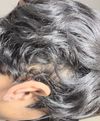
community Is this normal? (losing hair on side of head)
The user is concerned about potential alopecia areata. They are seeking advice on whether this condition is normal.
community Anyone familiar with Dr. Behnam’s stem cell + prp treatment?
community Fevipiprant 2019!
The conversation discusses Fevipiprant, an asthma drug that may block CRTH2 and potentially stop male pattern baldness (MPB) without inhibiting DHT. It also mentions the use of finasteride and dutasteride for hair loss.
community OFFICIAL Multi-Center Verteporfin Trial Recruitment
Recruitment for a verteporfin trial and a separate hair cloning trial using verteporfin and other methods is underway, with locations in Jordan, NYC, Beverly Hills, and Memphis. Dr. Bloxham is conducting the hair cloning trial, and interested participants are encouraged to contact him directly.
community Fuzzy Feeling To Scalp?
The user has been taking oral finasteride for 2 months, experiencing more hair loss but noticing some fuzzy hair growth on the scalp. They are questioning if this new hair growth is significant.
community A reminder that Telogen Effluvium could look like MPB; my progress
A 19-year-old male experienced significant hair loss, initially thought to be male pattern baldness (MPB), and used minoxidil and briefly finasteride. After realizing the issue was telogen effluvium (TE), he improved his diet and supplemented with vitamins, which led to substantial hair regrowth.
community Thin spots over time even with Finasteride
A user shared their experience with Finasteride for hair loss, noting improvement but still some thinning. They plan to get a hair transplant to address remaining thin spots and strengthen their hairline.
community Anyone here have a lot of knowledge on hair follicle stem cells and progenitor cells for PP405?
Hair follicle stem cells remain in bald individuals, but progenitor cells do not, raising questions about hair regrowth claims by Pelage. PP405 is discussed as a potential treatment, with skepticism about its effectiveness compared to existing treatments like Minoxidil and Finasteride.
community dht becoming active since the scalp is tight en cause inflammation
User discusses tight scalp causing hair loss and suggests treatments like scalp massages, PRP, saw palmetto, and eucapil. They share their experience with saw palmetto and eucapil and consider adding PRP and scalp massages for better results.
community I’m starting PTD-DBM and valproic acid today - anyone with experience?
The conversation is about using PTD-DBM and valproic acid for hair loss. The user is inquiring about the dosage of these treatments, noting that valproic acid is used at a 7.5% solution.
community DUPA, Non Responders and Connective Tissue Disorders
A 27-year-old male with diffuse hair loss, including the donor area, did not respond to finasteride, dutasteride, or minoxidil. He suspects his hair loss may be linked to a mild connective tissue disorder, possibly affecting the structural support of hair follicles, rather than being purely hormonal.

community Three weeks in and temples are responding
The user reports improvement in temple hair after three weeks of using finasteride, minoxidil, ketoconazole, microneedling, stemoxydine, and follicopeptide. They note visible progress by maintaining the same hair length for comparison.
community 2 months post hair transplant. How is it looking so far?
community scarring alopecia awareness in this community
Lichen Planopilaris (LPP), a form of permanent hair loss, which can be mistaken for seborrheic dermatitis and is characterized by scalp itching, burning, redness, and dandruff. Treatment options discussed include steroidal creams, finasteride, minoxidil, and RU58841.
community Progress assessment 2 years apart.
community Dr. Bloxham Final verteporfin update
Verteporfin is being explored for its potential to improve hair transplant outcomes by reducing scarring and increasing donor hair follicles. There is skepticism about the results, with some claiming misleading presentation of evidence.
community PROMISING Verteporfin day 84 UPDATE - donor hair regeneration human trial
Verteporfin shows promise in donor hair regeneration after 84 days. Combining Finasteride, Minoxidil, and Pyrilutamide with unlimited hair transplants is seen as a potential near-cure for hair loss.
community Temple recession continues, 19 MtF, Monotherapy w/ confirmed low T, also taking 1.25mg Finasteride,
A 19-year-old transgender individual is experiencing worsening temple recession despite taking female hormones and 1.25mg finasteride. They are seeking advice on additional treatments to address hair loss.
community Does my HT look like 3200 Grafts? AFRO HAIR (NHT) 19 days post
community Try the meds, stick with them and see where it goes! 2 months before and after temple regrowth
Using finasteride and minoxidil for two months led to noticeable hair regrowth, especially at the temples, with minor side effects. Users discuss their experiences with these treatments, noting minimal sexual side effects and encouraging others to try them.
community Started to notice these tiny black hairs pop up on my temples area after implementing rosemary oil into my routine. (Fin, minox, 0.5 derma). They aren't peach fuzz, will these eventually grow into terminal hairs?
User noticed tiny black hairs on temples after using rosemary oil along with finasteride, minoxidil, and 0.5mm derma roller. They are curious if these hairs will become terminal.
community Question about hair transplant effect on current hair growth
community First post: Baby Hair Regrowing on temples at 39
A 39-year-old experienced hair regrowth on his temples after switching from finasteride to topical RU58841 combined with 5% minoxidil. He also underwent stem cell treatment and noticed improvements, attributing the regrowth mainly to the change in treatment.
community Any experiences with Ptd-dbm??
The user experienced reduced hair loss using an online serum but found it too expensive and is seeking a vendor for ptd-dbm. They are also interested in KY19382 but are unable to find it.
community PRP ( PLATELET-RICH-PlASMA) for hair loss
A 27-year-old male experiencing hair loss post-Covid is considering PRP (platelet-rich plasma) therapy. He's seeking personal experiences about the process, particularly regarding pain levels, despite his dermatologist's assurance of using local anesthesia.
community PP405 vs Hair Cloning – Which Would Be Better for NW7 to NW1?
PP405 and hair cloning are discussed as potential treatments for reversing hair loss from Norwood 7 to Norwood 1. Hair cloning is seen as a more permanent solution, while PP405's effectiveness and long-term effects remain uncertain.