Search
for
Sort by
Community Join
210-240 / 1000+ resultscommunity Any updates on verteporfin or FAK inhibitors regarding donor area hair regeneration? or, when can we expect updates?
Verteporfin and FAK inhibitors being looked at as potential treatments for hair regeneration, with updates on the unofficial off-label human trial being discussed.
community Can you get hair transplants for frontal temple density ? Or would i be more likely to get shock loss
The user is considering a hair transplant for frontal temple density but is concerned about shock loss. They have been using finasteride for about two years and are advised to consider minoxidil and microneedling for better results.
community Injured temple with derma rolling
OP injured their temple using derma rolling and tretinoin, causing peeling and potential hair follicle damage. Users suggest the injury might be permanent, possibly resulting in scar tissue where hair won't grow.
community Verteporfin for treatment of donnor areas after hair transplants...
Hair loss discussion includes treatments Minoxidil, Finasteride, and RU58841. Verteporfin considered for treating donor areas after hair transplants.
community Anyone notice pain in scalp alongside hairloss?
community If bloodflow, and scalp tightness is cope why does scalp Botox produce results?
Scalp Botox may help hair loss by relaxing muscles and increasing blood flow, potentially benefiting conditions other than androgenetic alopecia. DHT affects hair follicles differently, causing tension and hair loss in some areas but not others.
community Reducing tension on the back, sides and top of head causes hair growth in MPB sufferers. Studies inside
Reducing scalp tension can help reverse male pattern baldness (MPB). Firm scalp massages and scalp stretching exercises are beneficial.
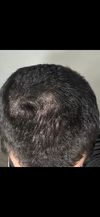
community 17m Seeking Second Opinion on Hair Thinning and Receding Temples
A 17-year-old is frustrated with hair thinning and receding temples, seeking advice after a dermatologist dismissed concerns. Suggestions include starting Minoxidil for regrowth and considering Finasteride if androgenetic alopecia is suspected.
community Tattooed your scalp as a response to going bald? Show me!
A user is interested in seeing scalp tattoos as a response to hair loss, specifically looking for creative designs rather than scalp micropigmentation. They are considering this approach for their own Norwood 5 hair loss situation.
community Has anybody here actually tried PTD-DBM?
The conversation is about trying PTD-DBM for hair loss treatment. Users are curious about its effectiveness and results.
community Is this finally regrowth at my temples?!
The user switched from topical to oral finasteride and minoxidil, noticing thicker and longer baby hairs, suggesting potential regrowth at the temples. Other users agree it looks like a sign of success.
community Need help with reviving temple areas
The user has been using dutasteride, minoxidil with tretinoin, and ketoconazole shampoo for hair loss but hasn't seen improvement in temple areas. Suggestions include trying microneedling with minoxidil or considering a hair transplant, though temple transplants can be challenging.
community M24 – Doctor advised against immediate HT due to weak donor area. Thoughts?
community where and how to do Verteporfin after HT
The conversation is about a user planning to undergo a hair transplant and seeking information on clinics that perform Verteporfin treatment. A user suggests Dr. Barghouthi might offer this service.
community Verteporfin day 119 update - donor hair regeneration human trial
A human trial of verteporfin, a drug that can inhibit wound healing by scarring and promote regeneration of original tissue and hair follicles to provide an unlimited source for hair transplants; people discussed the potential of this drug and how it could be rolled out in mainstream with more doctors getting on board.
community 21M with a nasty case of MPB; Heres what's on my radar for the future.
Hopeful treatments for hair loss, including Verteporfin, Androgen Receptor Degradation, and SCUBE3. These treatments offer potential solutions to slow or stop the effects of androgens on the scalp.
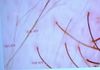
community Concerned About Asymmetrical Frontal Hair Loss and Recent Finasteride Use, Seeking Experiences
The user is experiencing asymmetrical hair loss at the frontal hairline and is concerned about potential conditions like frontal fibrosing alopecia. They have started using finasteride and pumpkin seed oil to address the issue.
community What if a NW7 transplanted the rest of their hair into a "mohawk" pattern and did SMP on the side and back of their head?
A user is considering a hair transplant in a "mohawk" pattern with scalp micropigmentation (SMP) on the sides and back, questioning its feasibility and appearance. Others discuss donor region quality, potential scarring, and alternative treatments like dutasteride and RU58841.
community Severe Hair Loss Post-Surgery and Stress, Possible DUPA or Alopecia?
The user is experiencing severe hair loss after surgery and stress, with thinning all over the head, including the sides and neck. They are unsure if it's due to DUPA or alopecia areata incognita, and doctors have not observed miniaturization.
community DUPA VS. FAPD, which is more treatable? Which is worse?
DUPA is considered more treatable than FAPD, as FAPD involves scarring that prevents hair regrowth. The user has started treatment with oral dutasteride and minoxidil, hoping for better results than previous treatments.
community Verteporfin being used anywhere?
Verteporfin is being explored for hair regeneration, with unofficial trials and updates shared online. Efforts are being made to encourage more surgeons to trial verteporfin for donor hair regeneration.
community Does this look like potential Temple regrowth
community Has anyone asked a hair transplant surgeon to consider using verteporfin during their surgery?
Exploring the potential of using verteporfin during hair transplants to minimize scarring and regenerate follicles, as well as discussing a possible standardized protocol for this treatment.
community What has helped you regrow your temples?
User seeks advice for regrowing temples, currently using Fin, oral Min, and dermarolling. Suggestions include improving scalp environment and considering RU58841 or dutasteride.
community The Truth About DUPA and Retrograde: My Research Summary
The conversation discusses the importance of scalp biopsies for diagnosing hair loss conditions like DUPA and Retrograde, which may not be just AGA. It emphasizes that treatments like finasteride and dutasteride may not work if the condition is autoimmune.
community Is this a good sign of progress on my corners, could this be indicative of my whole head?
A 23-year-old male is using topical minoxidil and oral finasteride for hair regrowth, noticing some progress on his temples and seeking advice on whether this indicates overall scalp improvement. Users suggest patience, as regrowth can take time, and advise against a hair transplant, noting that the current treatment seems effective.
community Phase II for Technoderma Therepeutic's TDM-105795 set to begin in April tentatively
Phase II for TDM-105795 for Androgenic Alopecia is set to begin in April 2023. The study aims to evaluate the efficacy and safety of TDM-105795 in male subjects.
community Has anybody ever found out, what these hardened, tight spots on the scalp (where most balding takes place) are and how they appear and how to make the disappear?
The conversation discusses hair loss and treatments like finasteride, minoxidil, and ketoconazole shampoo. Users suggest scalp massages, warm showers, and other methods to address scalp tension and tight spots, with some mentioning the potential effects of medications like escitalopram and probiotics.
community HAIR REGENERATION HUMAN TRIALS with Verteporfin
A new human trial using an FDA-approved treatment for wound healing called Verteporfin, which may potentially be able to reverse scarring and regrow hair in that area. The trial is only lasting one month so far.