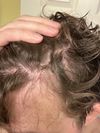
Hair loss discussion includes treatments like Minoxidil, Finasteride, and RU58841. A secret to applying Toppik Hair Building Fibers is shared, and a possible reason is to help people apply Toppik.
The conversation is about the interest in testing verteporfin, potentially with a dermaroller, for hair loss treatment. There is frustration over the lack of group buys for promising treatments compared to past efforts with less evidence.
Kintor Pharma completed a successful Phase II clinical trial for KX-826, a treatment for androgenetic alopecia. KX-826 is similar to finasteride with minor side effects and is more backed than Cosmerna.
A user experienced hair regrowth after 3 months using finasteride, both topical and oral minoxidil, 0.5mm microneedling daily, and 300mg testosterone. They reported noticeable muscle gains and no side effects while being on testosterone replacement therapy.
TDM-105795 showed better efficacy and safety in trials for hair loss, with a higher hair count improvement compared to GT20029 and HMI 115, but it's not as widely discussed. The user is questioning why this is the case.
A user's experience of using Fin, Min and Microneedle treatments to help thicken their hair before undergoing a Hair Transplant (HT) procedure. The conversation also includes discussion about the results post-HT, including pictures.
Ultrasound imaging can non-invasively detect active and inactive hair follicles, inflammation, and fibrosis, potentially reducing unnecessary biopsies. It may help assess hair growth potential and diagnose scalp issues, but some users believe in trying treatments regardless of ultrasound results.
People are discussing the use of finasteride for hair loss and the importance of hormonal blood testing to monitor effects like changes in DHT and estradiol levels. Some users also mention using minoxidil and the potential side effects of estradiol, such as gynecomastia, especially at higher doses.
The conversation discusses managing gynecomastia symptoms potentially caused by finasteride use, with treatments including reducing finasteride dosage, using DIM, ashwagandha, tamoxifen, epistane, and arimistane. Users share experiences and advice on balancing testosterone and estrogen levels to address symptoms.
The post discusses the completion of the HMI-115 Australian Phase 1 Trial for hair loss treatment. The user speculates about the potential early release of the trial results.
The conversation discusses the potential of a new hair loss treatment, GT20029, which targets androgen receptors in the scalp and is in phase 1 trials in China. Users express hope that this treatment will be more effective than current options like Minoxidil and Finasteride.
A peptide from Japanese water chestnut fruit may help with hair loss by suppressing DHT's effect on hair follicle cell death, potentially serving as a finasteride alternative. The treatment's effectiveness and safety in humans remain uncertain.
Hope Medicine's announcement of the HMI-115 Phase II clinical trial for androgenetic alopecia in China; other related trials have been conducted or are ongoing in different countries, including Australia, US, and Europe. There is speculation that the product may be accepted across borders without additional testing.
The conversation humorously discusses hair loss treatments, focusing on the use of finasteride and dutasteride, with some users debating the effectiveness and cost of different dosages. Some users mention using topical minoxidil and express concerns about side effects and availability of higher doses.
The user shared their positive 5-month results using finasteride, minoxidil, derma rolling, and supplements like biotin, zinc, iron, and vitamin C. They provided before and after photos and mentioned applying minoxidil even when derma rolling.
A user experienced severe testicular pain after two weeks on oral finasteride. Another user suggested that while rare, this side effect can occur and recommended considering topical finasteride if the pain persists.
The conversation is about the long-term safety trial results for pyrilutamide, which are expected soon. Treatments mentioned include Minoxidil, finasteride, and RU58841.

Kintor's Pyrilutamide results for hair loss treatment will be released soon. The treatment may replace current treatments like finasteride and minoxidil without systemic side effects.
Scalp massaging for hair loss hasn't shown significant changes yet, but the scalp is more flexible. Combining treatments like minoxidil, tretinoin, dutasteride, inversion, microneedling, and a good diet might enhance results.
A user experienced accelerated hairline recession after adding dutasteride to their regimen of topical finasteride and minoxidil, despite reduced hair shedding. They were informed that ELISA testing for DHT levels can be highly inaccurate.
The user tried Redensyl but stopped using topical finasteride and continued with 5% minoxidil. They are experiencing hair loss and considering accepting baldness.
A 21-year-old male diagnosed with telogen effluvium and male pattern baldness started taking finasteride, which initially slowed hair shedding and slightly thickened hair. The doctor recommended iron and vitamin D supplements, and the user is considering minoxidil but wants to stabilize shedding first.
A 36-year-old is experiencing underwhelming results from derma stamping for hair thinning, using needle lengths of 0.5mm to 0.75mm. They are considering increasing needle length, taking a break, or pairing the treatment with rosemary oil.
The "DHT itch" is real and likely due to inflammation at the hair follicle, exacerbated by increased testosterone or androgens. Treatments mentioned include dutasteride, minoxidil, finasteride, and various topical solutions.
A 28-year-old male has been using oral finasteride and minoxidil for over a year without seeing significant results in hair thickness, particularly in the front. He is considering adding dermastamping to his routine and is exploring whether topical treatments might be more effective.
PP405 shows potential for hair growth, with 31% of advanced balding men experiencing over 20% increase in hair density in 8 weeks. However, skepticism persists due to selective data presentation and lack of long-term results, with comparisons to treatments like minoxidil and finasteride.
The user has been using finasteride, dutasteride, and minoxidil without success and is considering a comprehensive blood test to explore other causes of hair loss. They are unsure about the necessity and cost of the extensive tests and are seeking advice on whether to proceed with the full panel or focus on specific tests.