Switching from finasteride to dutasteride caused significant shedding but minimal side effects. The user plans to continue dutasteride for 12 months despite concerns about hair density.
Finasteride is likely causing beard thinning due to its anti-androgen effects, which reduce DHT levels necessary for thick facial hair. Some users suggest using minoxidil to potentially counteract this effect, while others note that stopping finasteride may allow the beard to regrow.
The user has been using 1mg oral finasteride daily for four years, experiencing significant hair regrowth and increased testosterone levels without negative side effects. They advise patience and monitoring for side effects, noting that their haircontinues to improve with this treatment.
The post discusses the difference in effects of Minoxidil (Min) on scalp and facial hair. The user questions why Min-induced hair growth on the scalp is temporary, while facial hair growth seems permanent, even after stopping Min. They propose theories, including different Min mechanisms on body and facial hair, the role of DHT, and the possibility of not achieving fully terminalhair. The responses include personal experiences and theories about Min's effects on hair growth.
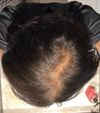
The user is considering switching from finasteride to dutasteride and possibly using oral minoxidil to address hair loss, having seen some progress with topical treatments and microneedling. They are also contemplating a hair transplant in the future and seeking advice on obtaining medications in Italy.
The user switched from finasteride to 0.5mg oral dutasteride and added 2.5mg oral minoxidil, along with occasional microneedling, to improve hair regrowth. They reported no side effects and are hopeful for continued progress, especially in the temple area.
The user has been using a combination of treatments including Dutasteride, Minoxidil, RU58841, ketoconazole shampoo, microneedling, and low-level laser therapy to address hair loss but continues to experience shedding and density loss. Despite high testosterone and iron levels, the user is frustrated with the lack of improvement and is considering adjusting treatment or exploring other options like a hair transplant.
The user has been using 1 mg finasteride for three months and recently started using 5% minoxidil once daily, resulting in new vellus hair growth. The user is hopeful that minoxidil will positively impact terminal hairs and is considering adding a derma stamp to the routine.
Procyanidin B2, a compound derived from Annurca apples, as a potential treatment for pattern hair loss. Several clinical studies were mentioned, which found that procyanidin B2 could increase hair growth, density, and keratin content. Other treatments such as Minoxidil, Finasteride, and RU58841 were not discussed.
The conclusion of this conversation is that after 90 days of using 5% topical minoxidil, dermarolling once a week, and taking 1mg of oral finasteride daily, the user "M3ga_Shniz" has experienced a complete stop in hair loss thanks to finasteride. They are hopeful that their temples will continue to grow more as they continue with the treatment.
The user has been using oral Minoxidil, Finasteride, and dermarolling for two months to address hair loss and is considering continuing the treatment until December before possibly switching to Dutasteride. They are hesitant about getting a hair transplant and are exploring other options like SMP, while receiving encouragement and advice from others to continue the current regimen for a longer period to see more results.
The user has been using pyrilutamide, topical finasteride, and 15% minoxidil for hair growth for almost 4 years. Despite mixed responses from others, the user reports seeing progress, especially with the addition of pyrilutamide, and plans to continue the regimen.
The user shared a 7-year hair progress journey, starting with occasional minoxidil use and later including a finasteride prescription, online prescriptions, and microneedling. Significant hair growth was achieved, but side effects led to a reduction in medication dosage.
Dutasteride is likely the most effective treatment for male pattern baldness, followed by finasteride and minoxidil in various forms and dosages. Users discuss personal experiences, dosages, and potential side effects, with some considering combining treatments for better results.
User has been using topical finasteride and minoxidil since May, previously used a spray version since January. They are seeing vellus hairs and have added weekly microneedling to their routine.
Creatine may cause hair loss in some individuals, especially those on finasteride, despite no scientific link. Personal experiences suggest individual sensitivity to DHT could be a factor.
A 22-year-old male experiencing diffuse thinning is using oral minoxidil and finasteride but notices his hair looks thin in sunlight. Suggestions include using hair products, considering topical minoxidil, addressing seborrheic dermatitis, and possibly trying dutasteride or a hair transplant.
Hair loss impacts mental health, with treatments like Minoxidil, finasteride, and stem cell transplants discussed. There is hope for future breakthroughs, but current treatments are limited, and awareness is lacking.
JW0061 shows superior hair growth results compared to existing treatments, with significant increases in hair follicles. The Wnt/β-catenin pathway is crucial for hair growth, and JW0061 activates this pathway effectively.
Topical minoxidil can cause increased body hair due to systemic absorption, varying by individual skin sensitivity. The user seeks experiences and solutions to prevent this side effect.
Unwanted hair growth from minoxidil use, with suggestions to reduce dosage or switch to finasteride. Users recommend hair removal methods like shaving, waxing, or electrolysis to manage excess facial hair.
A 19-year-old male is experiencing hair loss and has been prescribed 5% minoxidil and ketoconazole shampoo but is unsure about starting finasteride. He plans to begin using minoxidil soon and is seeking advice on whether to add finasteride to his treatment.
PP405 is discussed as a potential treatment for hair loss, with excitement about its promise but skepticism about its current effectiveness. Users mention combining it with treatments like minoxidil, finasteride, and microneedling, but emphasize it is not a cure.
DHT affects hair follicles, contributing to hair loss, but the exact mechanism is unclear. Treatments like finasteride and minoxidil are used to manage hair loss, though they may have side effects and varying effectiveness.
User had a 5000-hair FUT procedure in South Korea in 2014 and is satisfied with results. Uses Minoxidil, dermarolling, and Toppik hair fibers for crown area, and considering Finasteride.
Japanese scientists discovered ABM cells, enabling successful human hair follicle cloning, potentially curing hair loss. The treatment may be available in Japan by 2028, but it will be expensive and require travel.
Hair follicles are mostly dormant but can be reactivated with treatments like minoxidil, finasteride, and microneedling. A new drug, PP405, shows promise for hair regrowth but may not be available until 2027-2028.
The user stabilized hair loss with oral finasteride, dutasteride, and topical minoxidil, and underwent a stem cell and PRP procedure. Recent increased hair shedding may be due to restarting dermarolling, affecting minoxidil absorption, or the waning effects of the stem cell treatment.
Hair regrowth from treatments like minoxidil, RU58841, and finasteride is not permanent; stopping these treatments typically results in hair loss resuming. Beard hair can become permanent with minoxidil use, unlike scalp hair, which requires ongoing treatment to maintain gains.