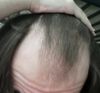
A 15-year-old is experiencing hair loss and is considering treatment options. They are aware they cannot use DHT blockers like finasteride due to their age and are exploring other causes like Telogen Effluvium.
Hair fibers impressively cover bald spots, boosting confidence. User started big 3 treatment (0.5mg fin, 1 time minoxidil 5% topical, ketoconazole 2%) for regrowth.
A user with aggressive male pattern baldness found that topical melatonin significantly reduced their hair shedding to 1 or 2 hairs per day and noticed some thickening of side hair. They tried many treatments like finasteride and minoxidil with little success, but topical melatonin showed immediate results in reducing hair loss.
A user on finasteride, minoxidil, dermastamp, and Nizoral is seeing baby hairs and asks if it's regrowth. Another user confirms it is regrowth and encourages them to continue.
A 33-year-old attempted hair regrowth after 10 years of baldness using topical finasteride, minoxidil, micro-needling, a laser cap, and later oral dutasteride. They noticed some regrowth, especially vellus hairs, and are considering a hair transplant or other treatments despite side effects.
Three months into using Minoxidil, finasteride, dermarolling, tretinoin, and saw palmetto shampoo, the user is seeing baby hairs on their hairline and is hopeful they will thicken. Another user reports that their own baby hairs have been getting thicker and longer over time.
The conversation humorously discusses two resilient hair strands that resist DHT, with mentions of minoxidil and finasteride as ineffective treatments. Users joke about cloning the hairs and the mystery of baldness.
A user shared their experience with hair loss treatments, including topical minoxidil, finasteride, RU58841, and microneedling, noting significant hair regrowth except at the hairline. They plan to start oral minoxidil and switch to a combination treatment, while another user mentioned that some miniaturized hairs may not fully recover.
The user has been using finasteride for over a year and noticed short, prickly hairs on their scalp that don't grow like the rest of their hair. Despite losing about 40 short hairs when washing, their overall hair density hasn't decreased.
The post discusses a 21-year-old male's significant hair regrowth after experiencing shedding periods during an 11-month treatment with finasteride, minoxidil, ketoconazole, biotin, and dermaroller. The conversation encourages persistence with the treatment despite shedding phases, as hair tends to grow back thicker and longer.
Scalp tension from the occipitalis muscle is theorized to contribute to hair loss, but most believe DHT and genetics are the main causes. Treatments like finasteride and minoxidil are considered more effective than addressing scalp tension.
The user is experiencing hair thinning and loss at the temples, likely due to androgenetic alopecia. Suggested treatments include finasteride and minoxidil to slow hair loss and promote regrowth, with buzzing hair short as a styling option.
A 21-year-old male diagnosed with telogen effluvium and male pattern baldness started taking finasteride, which initially slowed hair shedding and slightly thickened hair. The doctor recommended iron and vitamin D supplements, and the user is considering minoxidil but wants to stabilize shedding first.
The user experienced hair regrowth with finasteride and minoxidil but faced shedding after stopping the treatment. They resumed the treatment and used Toppik hair fibers to mask hair thinning during the shedding phase.
A user, 35M, has been using oral finasteride for 5 years and 5% minoxidil for 3 years, which stopped hair loss but didn't promote regrowth. After starting RU58841 5 months ago, they noticed long, translucent hairs and are asking if these hairs will darken and how to encourage this.
The user discusses their experience with hair loss despite taking estrogen and cyproterone, and estimates needing around 3000 grafts for a feminine hairline. They are considering getting the procedure done in Turkey due to high European costs.
A user recovered from severe Telogen Effluvium using 1mg finasteride and 2.5mg oral minoxidil within four months. Another user regained 80% hair density with finasteride and minoxidil over two years, and is now trying dutasteride.
A user reported significant hair thickening and new baby hairs on the hairline after 11 months of using 1mg finasteride every other day and microneedling once a week. They experienced no shedding, and finasteride stopped all hair loss within 24 hours of the first pill.
A 25-year-old shares progress on hair regrowth using finasteride, ketoconazole shampoo, Alpecin caffeine shampoo, and topical minoxidil, noting improved hair health but persistent temple thinning. They consider switching to oral minoxidil, adding microneedling, and possibly a hair transplant after one year.
The user is discussing hair regrowth after 3.5 months of using finasteride, questioning if the new growth is baby hairs. They compare photos from December to the present to assess progress.
A 21-year-old male diagnosed with telogen effluvium and male pattern baldness started oral finasteride, which initially slowed hair loss and slightly thickened hair, but experienced increased shedding after surgery. The doctor recommended iron and vitamin D supplements, and the user is seeking additional advice.
The user is experiencing hair loss with possible causes including chronic telogen effluvium, diffuse alopecia areata, and androgenic alopecia. They have tried treatments like Nizoral shampoo, minoxidil, and finasteride, and are considering a biopsy for further clarity.
The user has been using topical minoxidil and finasteride for hair loss, with some regrowth at the temples but continued hairline thinning. The dermatologist suggested possible telogen effluvium due to stress and deficiencies, prescribed oral minoxidil, and may consider dutasteride if the condition doesn't improve by January 2026.
The user experienced heavy shedding 10 months after a hair transplant and used a topical solution of Minoxidil and Finasteride, later switching to Finoduta. They also dealt with a dry scalp and greasy hair, using various shampoos and conditioners, and sought advice on whether the shedding was normal and how to manage the dry scalp.