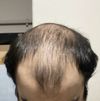
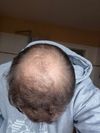
A 25-year-old shared their 3-month progress using a combination of 1mg finasteride and 5% minoxidil for hair loss. The images show noticeable improvement in hair density.
A recent discovery in hair cloning identified a previously unknown cell type essential for hair follicle growth, which could potentially make lab-grown hair viable if translated to humans. However, skepticism remains due to past delays and the challenges of replicating results in humans and making the process affordable.
The user is using 0.1% dutasteride, 1% minoxidil with 2% procapil and 0.005% caffeine in the morning, and 1% minoxidil with 2% procapil and 0.01% tretinoin at night. They are concerned about the solution vehicle's effectiveness in preventing systemic absorption and ensuring the products stay around the hair follicles.
A user shared their positive 3-month experience using finasteride, minoxidil, and vitamin D to treat hair loss, noting significant regrowth and minimal shedding. They also discussed potential side effects and the low likelihood of experiencing them, while being open to answering further questions.
A 26-year-old male experienced hair regrowth using finasteride, minoxidil foam, and micro-needling over 2-3 months, with significant improvement in the crown, sides, and temples, but less in the hairline. He noted side effects like fluid retention in the ankles and weight gain but no change in libido.
Oral PTD-DBM was discussed as a potential hair loss treatment, but it was deemed ineffective in humans despite promising results in mice. The conversation concluded that trying it without VPA might be unwise.
A 29-year-old male has been using topical finasteride (0.1%) and minoxidil (5%) for 2.5 months and noticed thicker, darker hair. He is considering whether to switch treatments, as the current regimen seems effective.
The user is experiencing significant hair shedding despite 2 years on finasteride, 1.5 years on RU58841, and 10 months on oral minoxidil, and is frustrated with the ongoing issue. Another user shares a similar experience of losing a lot of hair daily for the last 3 years.
A user shared their 9-month progress using RU58841 at 2% daily for hair regrowth, initially starting at 5% but reducing the dose due to early signs of gynecomastia, which has since mostly resolved. They achieved their goal of regrowing hair at the temples and hairline.
Avoid layering thin or thinning hair, as it can make hair appear thinner and uneven. Proper framing and minimal layering can help maintain a fuller look, especially when using treatments like Minoxidil and Finasteride.
Beard to scalp hair transplants can provide 12,000-15,000 grafts for coverage, with fast recovery time. However, beard hair may grow curly and not suitable for frontal areas.
A 25-year-old uses oral minoxidil, dutasteride, and a shampoo with minoxidil and ketoconazole for hair loss, experiencing progress and increased body hair. Users discuss the effectiveness of these treatments, with some suggesting that dutasteride is primarily responsible for hair thickening.
The user experienced hair loss due to defective dutasteride and is now using a regimen including dutasteride, oral and topical minoxidil, RU58841, tretinoin, and microneedling to recover hair density. They are optimistic about regaining their hair despite recent setbacks.
The user experienced hair regrowth and improved hair density using oral finasteride and topical minoxidil, with microneedling as an additional treatment. They are considering a hair transplant for low-density areas but are uncertain due to existing follicles.
Microneedling daily at 0.3mm combined with topical finasteride and minoxidil is effective for hair thickening, with added benefits from near-infrared therapy. The approach may not improve the front hairline, and deeper microneedling is done monthly for better results.
A user applied the 8T3 product for hair loss, targeting LPP and AGA, and plans to update on its effectiveness. The product uses a saline buffered phosphate vehicle, suitable for those intolerant to ethanolic vehicles.
The user is using 5% minoxidil, 1mg finasteride, and a 1.5mm dermaroller 1-2 times a week for hair growth, noting improved growth speed and density. They avoid applying minoxidil immediately after dermarolling due to skin irritation.
A user discusses their rapidly receding hairline and a prescribed topical solution containing 7% Minoxidil, 0.1% Finasteride, and 3% biotinoyl tripeptide. The solution is a custom compound from their dermatologist, costing $50 for a one-month supply.
A 31-year-old male shares his 4-month progress in treating hair thinning with tar shampoo, 5% topical minoxidil, and finasteride. He reports thicker hair, no folliculitis, and no significant side effects, except increased libido.
A user experiencing diffuse thinning since age 18 describes their hair as unhealthy, dry, thin, and hard, with texture changes cycling between good and bad every few weeks. They are not on any medication, only taking vitamins and supplements.
A user's experience with hair loss regrowth, achieved through the use of 1mg finasteride, 5% Minoxidil, an essential oil blend, and microneedling once per week, as well as other treatments like warm water washes, baby shampoo, and OGX coconut conditioner. Other users shared their experiences with similar treatments and congratulated the original poster on his results.
BionicBell discussed using Bimatoprost, a medication typically for eyelash growth, for hair loss and mentioned a compounding pharmacy that can mix it with other ingredients like minoxidil and finasteride. They are seeking advice on using topical finasteride for female pattern baldness and are considering a custom foam combination to maximize hair growth results.
The conversation is about a user's successful hair regrowth after 5 months of using 1.25mg Finasteride, 5% Minoxidil, and Nizoral twice a week. The user, aged 28, experienced shedding in the first 6 weeks but has seen significant improvement since.
The post discusses a phase 2 trial for HMI-115, a hair loss treatment, in China, specifically seeking volunteers aged 18-65 with Norwood 3 vertex, 4, and 5 hair loss. The conversation includes questions about the specific recruitment criteria and how to volunteer.
The conversation is about a 25-year-old considering whether to start using hair loss treatments like Minoxidil, finasteride, or RU58841, or to shave his head. He is seeking advice due to his family history of baldness.
A 28-year-old male shares his 12-step hair regrowth routine, including finasteride, minoxidil, RU58841, LLLT, dermarolling, various shampoos, supplements, and a healthy diet. He seeks advice on microneedling frequency and mentions experiencing lowered libido and occasional scalp inflammation.
The user is using oral finasteride, topical minoxidil, Nizoral, dermarolling, a hair thickening conditioner, and hair vitamins for hair loss treatment. They stopped taking testosterone due to medical reasons and are now technically on estrogen, but it's unclear if this impacts their hair growth.
The user is experiencing hair loss and has been using treatments like minoxidil, finasteride, and ciclopirox olamine. Despite these treatments, they are concerned about increased shedding, dandruff, and possible additional hair loss conditions.