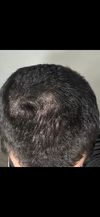
Exosomes are discussed as a new hair loss treatment, but skepticism is expressed about their effectiveness. Other treatments mentioned include Minoxidil, finasteride, and RU58841.
The user is applying topical finasteride with stemoxydine for hair loss and has noticed hair thickening but no regrowth after two months. They also report high SHBG and prolactin levels and a lack of morning erections, even on low doses of medication.
The conversation discusses the effectiveness of Regenera Activia stem cells versus Cellgenic exosomes for hair loss treatment. The user has been using topical minoxidil 5% and 0.001% estradiol for a year without results.
The conversation discusses using topical spironolactone for hair loss, with the original poster already using oral and topical minoxidil, dutasteride, and latanoprost. Opinions differ on the effectiveness and safety of adding spironolactone, with some users suggesting alternative treatments like finasteride and vitamin supplements.
The conversation is about a 23-year-old man's positive experience with hair regrowth using oral finasteride (1mg daily) and topical minoxidil (twice daily), with initial side effects including zero libido and watery semen that resolved except for the semen consistency. He also used dermarolling initially but stopped due to brittleness.
The conversation is about finding a legitimate online source for 17α-estradiol (Alfatradiol) powder to make a 0.1% solution for hair loss treatment. A user suggests Anagenica as a source.
A user shared their experience using the Olympia hair growth formula for a month and asked for others' opinions on its composition. The conversation focuses on the effectiveness of the formula, which includes Minoxidil, finasteride, and RU58841.
A 25-year-old male is experiencing positive temple regrowth after using 1 mg oral finasteride daily and a custom topical solution from Musely containing minoxidil, dutasteride, tretinoin, ketoconazole, and hydrocortisone. He is considering adding dermarolling to enhance results, while others share their experiences and suggestions for hair regrowth treatments.
The user has been using finasteride for 15 months, minoxidil for 4.5 months, and estrogen monotherapy for 4.5 months. Their current regimen includes finasteride, minoxidil, alfatradiol, and estradiol gel.
Dutasteride raises scalp testosterone by 99%, which may not be ideal for those sensitive to all androgens. Some argue finasteride's balancing act might be better, while others believe dutasteride is superior for hair regrowth.
A 20-year-old with thinning hair has low vitamin D and normal testosterone. They are prescribed oral minoxidil and vitamin D, and are questioning if finasteride is also necessary.
User tried oral finasteride, topical finasteride, topical dutasteride, and RU58841 but experienced side effects. They discuss upcoming treatments like clascoterone, pyrilutamide, gt20029, and KY19382 as potential options.
A serum with oleic and palmitoleic acids shows promise for hair regrowth in mice, but its effectiveness in humans is unproven. Minoxidil and finasteride remain the recommended treatments.
People are interested in trying clascosterone (Breezula) for hair loss, especially those who are too young for finasteride. Some users express concerns about the cost and prescription requirements, while others discuss alternatives like RU58841.
Testosterone can still cause hair loss even when DHT is blocked by dutasteride, especially if hair follicles are sensitive. Topical treatments like RU58841 or pyrilutamide may help, but their long-term effectiveness is uncertain compared to dutasteride.
The conversation is about a person experiencing significant hair loss in the donor area after a hair transplant, with others suggesting it might be shock loss. The person is taking oral minoxidil and dutasteride to help with the issue.
Balancing hormones, particularly testosterone and DHT, may prevent hair loss and slow aging. Treatments include finasteride, dutasteride, zinc, magnesium, collagen, and natural DHT-blocking shampoos.
The user discusses a galenic hair lotion containing progesterone, estradiol, cyproterone, hydrocortisone butyrate, and cetirizine pheniramine, which has effectively stopped their hair loss over two years. They are curious about the compatibility of finasteride with the lotion's components and note that their trichologist has successfully used minoxidil and finasteride in similar treatments for others.
Finasteride can cause gynecomastia due to hormonal imbalances, and using an aromatase inhibitor like anastrozole can help manage these side effects. It's important to work with an endocrinologist to address these issues safely.
The user checked iron, ferritin, B12, zinc, testosterone, DHT, and estrogens to understand hair loss causes and the effects of dutasteride. They also noted increased heart rate and paleness with oral minoxidil.
The user is experimenting with a zinc sulfate and B6 topical solution called "Zix" for hair loss, alongside using a zinc oxide scalp mask and low-level laser therapy (LLLT). They report minimal hair loss after three months of use and are seeking feedback from others who have tried similar treatments.
Hair loss treatments discussed include microneedling, minoxidil, tretinoin, finasteride, dutasteride, pumpkin seeds, saw palmetto, and scalp massage. The consensus is that finasteride or dutasteride is necessary for significant regrowth, while other methods may only slow hair loss.
GT20029 is discussed as a potential treatment for androgenetic hair loss by targeting androgen receptors, unlike finasteride which reduces DHT broadly. Concerns include its effectiveness, genetic variations in androgen receptors, and availability, with some skepticism about its potential as a true alternative.
Some hair loss may be linked to chromosome 20, which isn't affected by DHT blockers like finasteride. Treatments like minoxidil, microneedling, and genetic testing are suggested, but their effectiveness for this type of hair loss is uncertain.
The conversation discusses hair loss treatments, specifically mentioning Minoxidil, finasteride, and RU58841. It also references Epibiotech's hair multiplication and cell therapy as potential solutions.
The conversation discusses how different factors can stimulate type 1 and type 2 isoforms of 5-alpha reductase, which are enzymes linked to hair loss. Specific treatments mentioned include oral Dutasteride and topical Finasteride.
A 27-year-old man shared his hormonal panel results after one year of taking finasteride 1mg/day for hair loss, showing his DHT levels nearly doubled. He reported stabilized hair loss with mild side effects that resolved, and he is considering a hair transplant but is concerned about the increased DHT levels and potential treatment options.
Topical estradiol may help with hair loss but can have systemic effects, like reduced testosterone production. Using estrogen blockers can have negative side effects, such as joint pain and reduced sex drive.