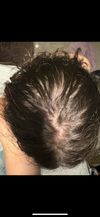
Hair loss affects confidence, with discussions on treatments like finasteride, minoxidil, and RU58841. Emphasis is placed on self-acceptance and building confidence beyond appearance.
Various hair growth treatments were discussed, including microneedling, bimatoprost, setipiprant, stemoxydine, PGE2, CB-03-01, WNT Beta-Catenin upregulators, KY19382, topical estrogen, IGF-1, GH, MK-677, oral castor oil, fisetin, resveratrol, cetrizine, and lactic acid. Users shared experiences and sources for these treatments, with some expressing interest in topical solutions and others noting the lack of FDA approval or scientific evidence for certain options.
The conversation discusses the use of 5-alpha-reductase inhibitors like finasteride and dutasteride for hair loss in transgender women, particularly in relation to testosterone suppression. The original poster has been using dutasteride and is considering stopping it due to undetectable testosterone levels.
Results for Amplifica's AMP-303 hair loss treatment study are expected late summer 2024. The study, fully enrolled in Q1 2024, focuses on safety and tolerability.
Eirion Therapeutics is recruiting for phase 1 of ET-02 in Texas, which showed promising hair growth results in non-clinical studies. ET-02 demonstrated significantly more hair growth compared to Minoxidil.
A person shared their positive experience with a hair transplant at Sule Hair Transplant in Istanbul, performed by Dr. Selahattin Tulunay using the Hybrid FUE technique with 5,000 grafts, costing €2,990. The user reported significant hair growth and satisfaction at 3, 6, and 12 months post-surgery, without using finasteride or minoxidil, but faced skepticism from others about the authenticity of their post.
The conversation discusses concerns about brain fog potentially caused by finasteride use, with some users sharing personal experiences of cognitive issues and others suggesting it might be paranoia or unrelated. The original poster decides to stop using finasteride to see if their cognitive function improves.
The conversation is about seeking updates on new hair loss treatments, specifically mentioning scube3 and GT20029, with one person mentioning HMI_115 as showing promising results.
Hair loss, DHT and bloodflow with Andrew Huberman; the discussion includes opinions about supplements, finasteride, minoxidil, turmeric, coffee and botox injections for hair loss.
PP405, a promising hair loss treatment, is expected to be available by 2027, with faster trials due to its topical nature. Users are eager for its release, comparing it to existing treatments like minoxidil and finasteride, but remain cautious about its long-term effectiveness.
A user's experience taking finasteride, which resulted in them having an unexpected emotional reaction, and the replies to this post focus on the humorous aspects of cautionary tales about hair loss treatments.
The user has been experiencing diffuse hair thinning despite using finasteride, minoxidil, dermarolling, clobetasol cream, and PRP sessions. They seek advice on additional treatments and are advised to check vitamin D, iron, and thyroid levels.
Hair restoration after FUE surgery, with discussions on using finasteride, dutasteride, and oral minoxidil for hair maintenance and growth. Users share experiences with these treatments, noting varying side effects and effectiveness.
The user had a hair transplant with 4500 grafts and has been using minoxidil twice daily for over a year but stopped finasteride due to severe side effects. The transplant cost $3500 and improved their self-confidence, positively affecting their dating life.
Hair loss treatment with latanoprost, minoxidil, and biotin showed progress. Latanoprost, a glaucoma drug, stimulates anagen phase and increases conversion of vellus hair to terminal hair.
NAD⁺ precursors and EGCG may increase hair density, but users report mixed results with no significant hair gains. Some users suggest combining these with finasteride or dutasteride for better results.
Obtaining treatments for hair loss that are not approved in one's own country, such as pyrilutamide or GT20029. It was suggested to use a middleman to get it, but there is the risk of getting low quality or fake products.
The mechanism of Androgenic Alopecia and practical applications of treatments like Minoxidil, Finasteride, RU58841, dermarolling, scalp massages, anti-fungals, progesterone, estrogen, PPAR-γ activators, reducing oxidative stress, and scalp exercises. It explains why DHT is important in AA and how other factors might be involved such as hypoxia, increased DKK-1 expression, morphological changes to the scalp, skull growth during childhood/puberty, and blood flow.
The user shares their experience with a hair system, noting no one noticed the change except their girlfriend. They discuss the learning curve, maintenance tips, and their satisfaction with the results, feeling more confident and optimistic.
The user experienced persistent acne and skin issues with dutasteride, leading them to stop its use. They switched to finasteride, which caused mild acne and potential liver concerns, prompting consideration of alternative treatments like topical finasteride and GHK-Cu.
The conversation provides a detailed list of blood tests recommended before starting finasteride to establish a baseline for monitoring potential side effects. A shorter list is also provided for those with limited funds, and the user shares personal experience of using finasteride without issues for about nine years.
The user is considering using topical finasteride for thinning hair around the middle part, vertex, and crown, and is unsure if the whole scalp is thinning. Another user suggests oral finasteride is more effective than topical, and recommends consulting a dermatologist for proper treatment.
The user plans to use a combination of tretinoin, topical minoxidil, and topical finasteride for hair loss treatment. They seek advice on application order, timing, and tretinoin dosage.
An Instagram account named "hair_grwow" is stealing progress pictures from a subreddit and falsely claiming the results are due to their products. Users are upset and reporting the account, with one deciding to stop sharing their progress due to the theft.
User shows temple area progress after hair transplant, using DUT every other day and oral Min 2.5 daily. Another user asks about number of grafts and cost.
A 28-year-old man shared his experience with a 2990 graft FUE hair transplant at HDC Clinic in Cyprus, praising the professionalism and care received. He has been using topical Minoxidil, Biotin, Dermarolling, and recently started Finasteride and oral Minoxidil.
A 23-year-old has been using finasteride for 5 years to stabilize hair loss and is now adding minoxidil, tazarotene, and dermarolling to improve hairline density. They hope this new regimen will thicken existing hair and restore the hairline.
A 27-year-old male with ADHD is experiencing hair thinning and is starting a treatment with topical finasteride (0.025%) and minoxidil (5%). He is addressing high prolactin levels and low vitamin D, while managing side effects from ADHD medication.
The user experienced hair loss possibly due to scalp damage and tried natural treatments with limited success. They reported noticeable hair thickening after using a laser treatment device, suggesting it may be effective, especially for those on finasteride.