Search
for
Sort by
Community Join
930-960 / 1000+ resultscommunity Growth Update on Crown - Fin & Min
The user shared progress pictures of their hair growth after using finasteride, oral minoxidil, and undergoing a hair transplant with 4,200 grafts in Istanbul. They reported thicker hair and noticeable crown regrowth, with no side effects from the treatments.
community PP405: Regrows Hair In 8 Weeks. Is This The Miracle Cure?
PP405 is considered as a potential hair regrowth treatment, but users are skeptical due to past product failures. They compare it to Minoxidil and Finasteride, questioning its effectiveness and the intentions of pharmaceutical companies.
community For those on TRT and suffer from a more aggressive type of (AGA) hairloss, what are your hair safe protocols?
People on testosterone replacement therapy (TRT) with aggressive androgenetic alopecia (AGA) discuss using Dutasteride or Finasteride, sometimes combined with topical treatments like RU58841 or CB-03-01 (Breezula), to prevent hair loss. Concerns about side effects and costs of certain treatments are mentioned, with one individual sharing their experience of slowed hair loss using Finasteride alone.
community 20M What blood test panel should I take?
community Pelage Pharmaceuticals’ PP405 and its Impact on Follicular Regeneration to be Presented at the American Academy of Dermatology (AAD) Annual Meeting 2026 28th march
Pelage Pharmaceuticals' PP405 aims to treat hair loss by reactivating dormant hair follicle stem cells, showing promising results in early trials. The company plans to present their findings at the American Academy of Dermatology Annual Meeting in 2026.
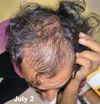
community About my regrowth journey
The user shares their hair regrowth journey using Minoxidil, finasteride, and RU58841. They include a progress picture from July 2.
community Pro as Heck Guide to Hairloss
community INTEGRITY ISSUE - Melissa Toyos Verteporfin Treatment Marketing
community Verteporfin being used anywhere?
Verteporfin is being explored for hair regeneration, with unofficial trials and updates shared online. Efforts are being made to encourage more surgeons to trial verteporfin for donor hair regeneration.
community 9 Months post FUE surgery hair result. 4052 grafts, 10130 hairs transplanted
The individual had a hair transplant in Turkey with 4052 grafts, resulting in significant hair growth and increased confidence. They use finasteride, rosemary oil, and vitamins, and are pleased with the natural-looking results, encouraging others to consider similar treatments.
community Update progress on Fin, Min, and Kx-826
The user is using oral finasteride, minoxidil, and KX-826 for hair regrowth, noticing small improvements. They plan to add ketoconazole shampoo and consider a hair transplant with verteporfin after a year of treatment.
community TRUST THE PROCESS! Glad I stuck with it. Hope it gives more hope to others.
Significant hair regrowth was achieved after 8 months on oral finasteride (1mg) and 5 months on oral minoxidil (5mg) without side effects. The user stressed the importance of patience and consistency, despite initial shedding.
community Age 21 to 25, N3 to N2 in 4 years
A user shared their hair regrowth journey from age 21 to 25 using finasteride and a carnivore diet. Other users debated the effectiveness of diet changes versus genetic factors in hair loss.
community 5 month Timelapse video of my regrowth journey
The user had a hair transplant in 2020 and later learned they needed to continue medication for hair loss. They shared a 5-month timelapse video of their hair regrowth using topical finasteride/minoxidil, microneedling every 3 weeks, and ketoconazole.
community Better Than Minoxidil? Topical Sodium Valproate
Topical sodium valproate may promote hair growth by inhibiting GSK3β, allowing beta-catenin to proliferate, but it has potential side effects and requires more research. The conversation also mentions skepticism about a product called Vdphlo1, which includes sodium valproate and other ingredients.
community Vitamin Deficiency Correction Timeline?
A user is experiencing hair regrowth after treating vitamin D, B12, and B9 deficiencies, noticing some improvement after 9 months. They are unsure if further improvement will occur or if they have reached the end of progress, with a possibility of androgenetic alopecia (AGA) being suggested.
community My first 5 week journey so far. Am I a hyper responder?
The user reports noticeable hair growth after 5 weeks using finasteride, minoxidil, dermarolling, and ketoconazole. They seek confirmation of their progress and question if they are a hyper responder.
community Got Blood Work Lab Results for hormones. Need some help analyzing hormone values for Fin
The user got blood work to check hormone levels before starting Finasteride for hair loss and is seeking advice on interpreting the results. They are considering hormone levels in relation to potential side effects of Finasteride.
community 1mg of finasteride/2 sessions of Kenalog injections/ Clobetasol (4 months into treatment)
community New Study: PP405, developed by Pelage Pharmaceuticals, can reactivate dormant hair follicle stem cells and stimulate natural hair growth by 20%
PP405, developed by Pelage Pharmaceuticals, can reactivate dormant hair follicle stem cells and increase hair growth by 20% in eight weeks, unlike minoxidil or finasteride. However, skepticism remains about its effectiveness and availability, with concerns about funding and the timeline for broader access.
community Is tazarotene potentially better than tretinoin in combination with topical minoxidil?
Tazarotene may be more effective than tretinoin when combined with topical minoxidil for hair loss due to its selective binding to RAR-beta and gamma, though it can cause irritation. Tazarotene's potency can lead to indirect inflammatory reactions despite potentially causing less irritation than tretinoin.
community Detransitioning, questions about hair loss prevention while body ramps back up testosterone production
The conversation discusses preventing hair loss during detransitioning, with suggestions to use finasteride or dutasteride as DHT blockers. The user is also considering rosemary oil and monitoring testosterone levels.
community Intermittent fasting triggers hair loss in study (suppresses hair follicle regeneration)
Intermittent fasting may suppress hair follicle regeneration, but opinions vary on its impact on hair loss. Some users report no negative effects or even hair improvement while using treatments like finasteride and minoxidil.
community 2.5 Years Progress FUE Hair Transplant Turkey!
The post is about a user sharing their hair transplant results after 2.5 years. They did not use any medications like finasteride or minoxidil.
community Detailed 6 months update for FUE HT and 4 years of FIN-MIN journey
A 25-year-old who has been using minoxidil and finasteride for 4 years to treat hair loss, underwent a successful FUE hair transplant in Mumbai, India, in April 2023. The user reported positive results, including increased hair density and reduced frizziness, and plans to continue treatment for further growth.
community Progress Picture / hair regrowth regimen
A user successfully regrew hair using finasteride, minoxidil, ketoconazole shampoo, biotin supplements, and rosemary mint oil, despite initial side effects. They highlighted the need for commitment, a healthy lifestyle, and being a "hyper responder" to treatments.
community Anyone try a combo therapy of everything except fin? Minox + Tret + microneedling + caffeine, etc
The user experienced severe side effects from finasteride and is considering a combination therapy including Minoxidil, Tretinoin, microneedling, caffeine, and other ingredients. They are also thinking about adding red light therapy and microneedling once per week.
community How can my DHT be so low without Finasteride on cycle?
A user is curious why their DHT levels are not higher despite using 400mg of testosterone without finasteride, and wonders if zinc or GHK-Cu injections could be influencing this. Another user suggests that more testosterone typically leads to more DHT, but the user might be fortunate not to exceed normal DHT levels.
community Tretinoin can enhance the skin permeability of Minoxidil approximately 3-fold at 0.05%[24] and itself has some hair regrowth properties.
The conversation discusses enhancing Minoxidil absorption for hair loss treatment using Tretinoin and MSM (Methylsulfonylmethane). The user is seeking sources for Tretinoin and mentions MSM's potential to improve the absorption of topical agents.