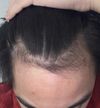
A 17-year-old is experiencing rapid hair loss from NW1.5 to NW3 in six months and feels dermatologists are unhelpful. They are using Minoxidil (Rogaine) and seeking advice on application.
A user is advocating for Phase 3 trials of the hair loss treatment PP405 to be conducted in Germany, citing benefits like a diverse patient base and faster access for European patients. Despite skepticism about the petition's influence, the user believes it can demonstrate significant interest and potentially influence strategic decisions.
The user experienced significant hair regrowth using Trestolone, GHK-Cu, and Minoxidil. They avoided Finasteride due to concerns about side effects and noted that their approach reduced androgenic load, contributing to hair regrowth.
Dermatologists use treatments like oral minoxidil, finasteride, and RU58841 for male-pattern baldness, considering side effects and patient preferences. Photobiomodulation is noted as mildly effective but costly, while PRP is debated for its effectiveness compared to microneedling.
The conversation discusses interest in participating in PP405 trials for hair loss treatment, with users expressing uncertainty about eligibility due to location. Participants are eager for updates and willing to pay for shipping if trials are limited to America.
Finasteride, minoxidil, and derma rolling are currently the best treatments for hair loss. New treatments like TDM-105795, GT20029, PP405, HMI 115, Tsuji, Scube 3, RU, JW0061, Topilutamide, and verteporfin show promise but have uncertain timelines.
Hormone replacement therapy with spironolactone and estradiol significantly improved hair thickness and growth, surpassing previous treatments like dutasteride, finasteride, and minoxidil. The user experienced regrowth in receded areas and a more youthful appearance.
Kintor Pharma successfully dosed the first patient in a Phase II trial for KX-826 for acne vulgaris. Users are more interested in results for male pattern baldness (MPB).
ABS-201 shows promise for male hair regrowth by blocking the prolactin receptor, with higher expected efficacy than current treatments. The discussion also covers dosing differences between macaques and humans for hmi115, highlighting a significant dosage disparity.
The conversation discusses a clinical trial for Setipiprant in the US, starting June 29th, with eligibility excluding recent users of minoxidil or finasteride. It encourages informed decision-making before signing up.
Diffuse thinners often experience more hair regrowth with DHT blockers like finasteride, possibly due to less DHT sensitivity and the presence of miniaturized, not completely bald, follicles. However, regrowth varies widely among individuals, influenced by factors like genetics, the stage of hair loss, and treatment methods such as minoxidil, microneedling, and dermarolling.
Tretinoin can irritate seborrheic dermatitis, but using it with a moisturizer on calm skin may help. Parallel Health's skin microbiome testing and phage therapy are suggested for persistent issues.
A user shared a new hair loss treatment protocol including topical dutasteride, latanoprost, caffeine, minoxidil, tretinoin, and triamcinolone acetonide. Others discussed the effectiveness and availability of these treatments, with some suggesting simpler oral alternatives.
A human trial of verteporfin, a drug that can inhibit wound healing by scarring and promote regeneration of original tissue and hair follicles to provide an unlimited source for hair transplants; people discussed the potential of this drug and how it could be rolled out in mainstream with more doctors getting on board.
A user with diffuse hair loss for a decade tried various treatments, including LLLT Helmet, supplements, topicals, and hair transplants. They found relief from scalp inflammation and itching using a topical solution made from crushed Xeljanz pills mixed with ethyl alcohol.
The conversation is about finding a solution for scalp inflammation related to AGA, with the user expressing frustration that Minoxidil and Finasteride do not address inflammation. The user has researched glucocorticoids and topical NSAIDs for reducing inflammation and seeks advice from specialists.
A young female diagnosed with Lichen planopilaris (LPP) experienced years of misdiagnosis and ineffective treatments, including a hair transplant and other procedures. She is considering litigation due to the misdiagnosis and has learned that LPP is chronic, hair loss can be stopped with ongoing medication, but lost hair cannot regrow.
PP405 may promote short-term hair growth by pushing follicles into the growth phase, but concerns exist about long-term effects due to lack of rest phases. Users discuss various treatments like finasteride, minoxidil, spironolactone, alfatradiol, and investigational drugs like KX-826 and GT20029 for hair maintenance and regrowth.
PP405 shows promise in hair loss treatment, but stem cell therapy using adipose-derived stem cells and ATP also successfully reversed androgenetic alopecia in mice. Stem cell therapy is costly, and some doubt the effectiveness of PP405 based on press releases.
Kintor Pharmaceutical's stock rise suggests potential positive news about Pyrilutamide, a topical anti-androgen. GT20029 may also compete with existing treatments like finasteride and dutasteride.
Oral PTD-DBM was discussed as a potential hair loss treatment, but it was deemed ineffective in humans despite promising results in mice. The conversation concluded that trying it without VPA might be unwise.
Treating Seborrheic Dermatitis, a fungal scalp condition which can cause hair loss. Treatments discussed include antifungal shampoos, cold showers, exfoliating the scalp, taking Vitamin D, and stimulating the prostate through the anus.
The conversation is about whether the phase 2 results for pyrilutamide, a potential hair loss treatment, were presented at a dermatology convention and inquiries about the completion of phase 3 trials. Specific treatments mentioned include pyrilutamide.
The user discusses using essential oils like peppermint, rosemary, tea tree, and lavender to improve hair thickness and seborrheic dermatitis. They plan to add RU58841 to their routine and seek advice on using it alongside the essential oils without interference.
The conversation discusses a patent filed by Shiseido for cloning Dermal Papilla (DP) cells to treat hair loss. The method involves using viral vectors to maintain the cells' growth-inducing properties, differing from Replicel's approach with Dermal Sheath Cup (DSC) cells.
User on fin, minox, and ketoconazole seeks to add another topical anti-androgen. Hierarchy of effectiveness: 1. RU55841, 2. Fluridil - Eucapil, 3. CB-03-01 - Breezula, 4. Ketoconazole; alfatradiol suggested as addition.
Hair loss treatments like finasteride, minoxidil, and hair transplants have side effects and limitations. There is hope for future advancements in stem cell therapy and hair follicle regeneration, though skepticism about their effectiveness and timeline persists.
The conversation covers aggressive hair regrowth treatments like Dutasteride, Minoxidil (oral and topical), RU58841, microneedling, and ketoconazole shampoo. It also mentions PRP, laser therapy, GHK-Cu injections, and hormone therapy for maximum regrowth.