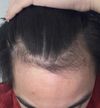
The conversation discusses the use of topical finasteride for hair loss, with the user considering whether oral finasteride might be more effective in reducing DHT levels. Other users suggest alternatives like dutasteride, RU58841, saw palmetto, and a combination of Redensyl, Procapil, and Capixyl, while debating the effectiveness and side effects of these treatments.
Eleven days after a hair transplant, the user has removed all scabs and plans to resume Oral Dutasteride and Oral Minoxidil. They will also start using a serum provided by the clinic and are sharing progress and clinic information privately to avoid negative comments.
The user is experiencing hair loss despite using finasteride and dutasteride and is considering adding minoxidil. Suggestions include switching to daily dutasteride and adding a topical anti-androgen.
User shared 16-month progress using finasteride 1 mg/day and minoxidil 5% solution once/day, noting significant regrowth, especially in temporal peaks. Users discussed shedding, side effects, and positive feedback from others.
DHT itch's existence is debated, with some claiming it's real and others saying it's psychological. Finasteride, Ketoconazole shampoo, and addressing scalp conditions like dandruff or eczema may help reduce itchiness.
A user with diffuse hair loss for a decade tried various treatments, including LLLT Helmet, supplements, topicals, and hair transplants. They found relief from scalp inflammation and itching using a topical solution made from crushed Xeljanz pills mixed with ethyl alcohol.
A 16-year-old has been using minoxidil since February and added tretinoin two months ago to speed up hair regrowth. A suggestion was made to add micro-needling weekly to enhance minoxidil's effectiveness.
The conversation is about managing an itchy, flaky scalp, possibly due to psoriasis, and the use of a hydrating conditioner to address dryness. The user is concerned about using conditioner due to experiencing telogen effluvium.
The user switched to oral Dutasteride, added RU58841, and used Ketoconazole-enriched Minoxidil but still experiences scalp itch and hair loss after 4 months. They are advised to give Dutasteride more time, consider seeing a dermatologist, and explore other topical solutions.
The user is experiencing breast tissue growth from taking dutasteride and minoxidil, and is considering reducing the dosage or stopping the medication. Suggestions include seeing an endocrinologist, using Raloxifene or Arimidex, and considering topical treatments or surgery if necessary.
Visible hair improvement after 10 weeks using minoxidil, estradiol enanthate, acetophenide algestone, and bicalutamide. The user is a 25-year-old male with reduced testosterone levels, expressing a preference for less masculinity.
User tried oral finasteride, topical finasteride, topical dutasteride, and RU58841 but experienced side effects. They discuss upcoming treatments like clascoterone, pyrilutamide, gt20029, and KY19382 as potential options.
Many users experienced increased diffuse thinning after starting finasteride, with some switching to dutasteride or adding minoxidil in hopes of improvement. Thyroid issues and low ferritin levels were also discussed as potential factors affecting hair loss.
The user has been using finasteride for 7 months and is experiencing some regrowth but struggles with an oily scalp despite trying ketoconazole and salicylic acid. They are seeking advice on managing the oily scalp and are reassured by others that regrowth is visible.
The conversation is about using Xeljanz for hair regrowth in individuals with LPP. The user is seeking experiences and expectations from others who have tried this treatment.
The user experienced initial hair improvement with finasteride but noticed worsening hair loss after switching to dutasteride. They are considering returning to finasteride due to persistent hair shedding and scalp itch.
The conversation is about someone using Dutasteride, oral Minoxidil, and Tretinoin for hair loss, and they also stopped antipsychotics and treated an H. pylori infection. They feel there has been progress in their hair growth over two months.
The user experienced significant hair regrowth over 10 months by using 1.5mg oral finasteride and minoxidil daily, along with weekly derma stamping, after a previous hair transplant and initial thinning. The conversation highlights the importance of using DHT blockers post-transplant to maintain results.
The user experienced hair loss due to a crash diet and later developed scarring hair loss. They are now on finasteride, oral minoxidil, LDN, Zyrtec, and Oztela to reduce scalp inflammation and promote hair regrowth.
The user is asking if using a 10% fluridil formulation would be effective for blocking scalp androgens in addition to their current treatment of oral dutasteride.
The user is considering switching to oral dutasteride, topical minoxidil, retinoic acid, and clobetasol for hair loss treatment, after limited regrowth with finasteride and other topicals. They are seeking a source for clobetasol, as they believe it may help with their condition.
The user reported significant hair regrowth after seven months using topical minoxidil 5% combined with 0.1% finasteride and weekly micro needling. The community responded positively, noting visible improvement and discussing the effectiveness of topical versus oral finasteride.
The user visited a trichologist due to ineffective topical finasteride treatment for hair loss. The trichologist recommended a new regimen including a two-month course of locoidon (cortisone 0.1%), followed by a solution containing minoxidil, hydrocortisone butirrate, estrone, progesterone, tocopherol acetate, trichosol, and transcutol.
A user successfully regrew hair over 20 months using oral dutasteride and minoxidil, with no significant side effects. They are satisfied with the results but may consider a hair transplant for more density.
Loose-Message9596 has been experiencing hair loss for 3-4 years, initially due to low ferritin and vitamin D levels, and has tried treatments like vitamins, System 4, and PRP therapy. They are considering starting finasteride and minoxidil but are unsure due to their relatively low DHT level of 425.
The user experienced significant hair regrowth after 11 months using 0.5 mg dutasteride and 5 mg oral minoxidil daily, initially using a topical treatment with finasteride, minoxidil, and tretinoin. They reported no side effects, except for increased body hair and longer eyelashes, and switched from finasteride to dutasteride for more regrowth.
The user has been using finasteride for over two years with mixed results and is considering starting dutasteride and oral minoxidil, though both are hard to obtain. They are also contemplating a hair transplant in the future due to diffuse thinning.