A 35-year-old transgender woman experienced hair regrowth with feminizing HRT, adding dutasteride and bicalutamide, and plans a hair transplant for further improvement. Estrogen also improved skin appearance, and the user advises against cisgender men using feminizing HRT for hair regrowth.
Vitamin D may counteract DHT and help with hair growth, as seen in mice and human hair cultures. Some users discuss using Vitamin D, magnesium, and other supplements for hair health, while others humorously note the success in mice.
PP405 shows promise in stimulating new terminal hair growth by activating dormant follicles, with no systemic adverse effects observed in a short-term trial. However, long-term efficacy remains unproven, and further trials are needed to confirm its potential as a hair loss treatment.
The conversation is about the interest in testing verteporfin, potentially with a dermaroller, for hair loss treatment. There is frustration over the lack of group buys for promising treatments compared to past efforts with less evidence.
Kintor Pharma finished enrolling and dosing participants in a Phase I trial for a hair loss treatment called AR-PROTAC (GT20029). The effectiveness of another drug, pyrilutamide (KX-826), for hair loss will be clearer after a Phase 2 trial expected to complete in January 2023.
The conversation discusses various theories of hair loss, including DHT sensitivity and genetic factors, with the user willing to use themselves for research due to having a hair loss gene but different hair loss patterns compared to their brothers. Specific treatments were not mentioned in the provided text.
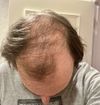
The conversation discusses hair loss treatments, specifically minoxidil, vitamin D supplements, and the potential impact of iron overload. The user experienced hair regrowth with high-dose vitamin D but faced hair thinning again after reducing the dosage, and is now exploring the role of iron overload in hair loss.
PP405 is anticipated as a future treatment for dormant hair follicles, but its effectiveness and safety are uncertain. Current treatments include oral minoxidil and microneedling, with some avoiding finasteride due to side effects.
Topical Calcipotriol (vitamin D derivative) may help with hair regrowth, especially for alopecia areata. The user wonders if adding classic vitamin D to lotions like Minoxidil could have a similar effect.
PP405 is seen as a potential breakthrough for converting vellus hairs to terminal hairs, with users expressing both hope and skepticism. It is compared to treatments like minoxidil and finasteride, with discussions on side effects and marketing concerns.
Concerns about the potential systemic effects and safety of PP405 for hair loss, with discussions on its comparison to existing treatments like finasteride and minoxidil. Users express skepticism about untested research chemicals and emphasize the importance of clinical trials to ensure safety and efficacy.
The conversation discusses using topical liposomal finasteride for hair loss, with concerns about high DHT levels. The user's DHT level is above the normal range, which may affect hair health.
A 22-year-old is experiencing diffuse hair thinning all over the head, losing about 300 long hairs daily, despite having good genetics and vitamin levels. They are seeking advice on whether this pattern is normal and considering consulting a dermatologist.
A peptide from Japanese water chestnut fruit may help with hair loss by suppressing DHT's effect on hair follicle cell death, potentially serving as a finasteride alternative. The treatment's effectiveness and safety in humans remain uncertain.
A 21-year-old male with a thyroid condition noticed his hair thinning uniformly without a receding hairline. He is considering using a 5ARI to prevent further baldness if he starts TRT.
The conversation is about someone experiencing hair thinning at the temples and seeking alternative treatments to Minoxidil due to side effects. They are inquiring about the effectiveness of peppermint oil and dermarolling for hair growth.
The user is experiencing significant hair loss and is considering treatments like minoxidil, finasteride, and possibly a hair transplant. They are advised to consult a dermatologist and consider oral minoxidil and dutasteride, while being aware of potential side effects and the need for ongoing treatment.
A user discusses using a hair thickening spray similar to L'Oreal Root Touch Up, noting it provides volume and covers thinning temples but may cause hair to fall out when washed. They speculate the fallen hairs might have been loose already.
A user is experiencing rapid hair loss and has been diagnosed with telogen effluvium by multiple dermatologists, but doubts the diagnosis due to the severity and speed of the hair loss. They are considering various treatments like spironolactone, estradiol, and possibly finasteride, while also exploring the possibility of hormonal imbalances or autoimmune issues.
Hair density improved using topical dutasteride, minox, keto, and 3.5% fluridil for 6 months. Better results when hair is dry, but still unsatisfied when wet.
Balding can be traumatic for many, affecting self-esteem and social interactions, while others accept it more easily. Treatments mentioned include finasteride, minoxidil, and RU58841.
Tazarotene may be more effective than tretinoin when combined with topical minoxidil for hair loss due to its selective binding to RAR-beta and gamma, though it can cause irritation. Tazarotene's potency can lead to indirect inflammatory reactions despite potentially causing less irritation than tretinoin.
The user is experiencing diffuse thinning and inflammation despite using 2.5mg dutasteride daily, ciclopirox, and ketoconazole shampoos. They are considering treatments like hydroxychloroquine and JAK inhibitors due to suspected scarring alopecia and have faced challenges in obtaining a scalp biopsy.
A user is comparing Capillus Ultra and Capillus ONE for hair loss treatment, questioning if the number of diodes matters. Another user suggests the OMG helmet as the only worthwhile option.
The post discusses how using finasteride and minoxidil for hair loss resulted in the user's hair changing from straight to wavy. The responses suggest this change indicates healthier, thicker hair and share similar experiences, while also expressing concerns about potential side effects of the treatments.
Mixing ketoconazole 2% shampoo with coal tar and salicylic acid for seborrheic dermatitis is discussed, with users sharing experiences and alternative treatments like sulfur soap and scalp massage. Some users report success with these methods, emphasizing the importance of avoiding irritants and maintaining scalp health.
KY19382 is discussed as a potential treatment for creating new hair follicles and possibly curing hair loss. The conversation seeks user experiences and sourcing information for KY19382.
Treating the itch associated with male pattern baldness, which is believed to be caused by DHT. Potential treatments discussed include salt water, finasteride, ketoconazole, and RU58841.