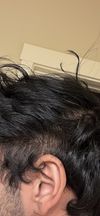
The conversation discusses hair thinning and treatments like Minoxidil, finasteride, and RU58841. The user is concerned about distinguishing between natural hair parting and actual thinning.
A user suggests that deeper microneedling with Verteporfin injections might help regrow hair in areas with scar tissue, alongside a DHT blocker. Another user explains that hair loss might be due to reduced Wnt/β-Catenin signaling and suggests that treatments like Minoxidil, Finasteride, and microneedling could potentially reverse it.
The user is using a topical solution with finasteride, minoxidil, and tretinoin and is considering adding GHK-Cu to enhance hair growth and quality. Another user suggests diluting GHK-Cu and storing it in a smaller, refrigerated bottle.
The user experienced side effects from finasteride and found improved mood and performance with DHT, but it worsened hair loss. They are considering options like TRT, HCG, and topical treatments like Saw Palmetto, but struggle with balancing hair preservation and functionality.
The user is experiencing thinning at the temporal points and has been using minoxidil, dermarolling, and a mixture of natural oils to improve hair growth. They are considering finasteride as a potential treatment based on shared information.
Buzzing hair can improve mental health and make applying treatments like Minoxidil and microneedling easier. It helps with self-acceptance and reduces the impact of hair loss on appearance.
Spraying pyrilutamide on the crown area shows noticeable improvement compared to using a dropper. Applying directly to the vertex is challenging without wasting the product.
This post and conversation are about the molecular mechanisms triggered by microneedling, specifically its effects on inflammation, tissue remodeling, epithelial proliferation, differentiation, and collagen synthesis. The discussion highlights the potential benefits of microneedling for hair loss treatment.
ET-02 (RS 5441) shows promising results for hair growth, performing better in humans than in mice. There is debate over the effectiveness compared to minoxidil, with some users wanting more detailed data.
Scalp micropigmentation as a treatment for hair loss, and the importance of choosing a reputable practitioner to get a natural look. Different treatments such as laser removal were also discussed in relation to long-term maintenance.
A trans woman is using 10 mg oral minoxidil, dutasteride, and estradiol for hair regrowth and is also doing dermastamping despite the pain. Users discuss the benefits of dermastamping for serum absorption and hair follicle stimulation, with some expressing surprise at the high minoxidil dosage.
Scalp massage may help with hair growth by stimulating blood flow, similar to minoxidil. Users discuss its potential benefits and share personal experiences, noting it might reduce DHT levels and improve hair health.
The conversation discusses adding melatonin powder to a topical finasteride solution for hair loss, with one reply suggesting that melatonin may promote faster hair growth but advising against mixing it directly into the solution due to potential instability.
A 36-year-old is experiencing underwhelming results from derma stamping for hair thinning, using needle lengths of 0.5mm to 0.75mm. They are considering increasing needle length, taking a break, or pairing the treatment with rosemary oil.
Hair loss discussion includes homemade 15% Procyanidin B2 apple skin extract as alternative to Minoxidil. User reports thicker hair, but no new growth yet.
The user treated traction alopecia for over a year using Nutrafol, rosemary oil, topical and oral Minoxidil, dermarolling, biotin, collagen, and vitamin D, and shared progress photos to inspire others on their hair growth journey. They also acknowledged the community and a specific person for support and encouragement.
A user shared their 3.5-4 month progress using Topical Minoxidil, Oral Finasteride, Keto 1%, and Dermastamp, reporting positive results despite some shedding and flaking. Replies praised the progress and inquired about the treatment routine and temple condition.
PP405 is a potential hair loss treatment showing promise, especially for men with severe balding. Some are hopeful it will be a game-changer for those who cannot tolerate finasteride or minoxidil, despite skepticism about the outcomes.
CB-03-01 is a topical anti-androgen with low absorption, offering potential as a side-effect-free alternative to Finasteride/Dutasteride for hair loss. It's in stage 2 clinical trials for acne and showing promise for male pattern baldness.
PP405 is a promising hair loss treatment that may outperform minoxidil and finasteride by reviving dormant follicles and promoting significant regrowth. Results from ongoing trials are awaited, with a potential market release between 2028-2030.
People who experience diffuse thinning of their hair and how they cope with going swimming. People discussed wearing a swimming cap, making jokes out of it and accepting that it's genetics.
Microneedling stimulates hair growth through stem cell activation during wound healing, not just increased blood flow. Other methods like showers or supplements don't replicate this effect.
Scalp massages may improve hair growth, with noticeable results in a few months. The technique involves detaching the skin from the skull, similar to detumescence therapy, and may be combined with other treatments for better results.
A user plans to create a DIY topical treatment for hair loss using Rapamycin, possibly combined with alpha-ketoglutaric acid (a-KG). They discuss the concentration and formulation process for Rapamycin, considering safety and skin penetration, and intend to apply it every other day to the scalp.
A user shared their 3-month hair loss progress using finasteride, minoxidil, low-level light therapy, pumpkin seed oil, and rosemary oil. The user saw a reduction in balding crown size but couldn't determine which treatment was most effective.
A 19-year-old transgender individual is experiencing worsening temple recession despite taking female hormones and 1.25mg finasteride. They are seeking advice on additional treatments to address hair loss.
PP405 is considered a promising potential cure for hair loss, with phase 2 trial results expected in February 2025. Hair cloning is also discussed as a potential ultimate solution, despite significant scientific challenges.
The user has been using topical minoxidil and finasteride for 1.5 years, which has thickened existing hair but left some areas thin. They suspect the treatment may be causing dandruff or seborrheic dermatitis and are seeking advice.