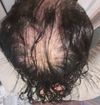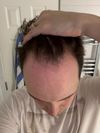
Switching from finasteride to dutasteride led to hair loss despite continued use of minoxidil. Many recommend reintroducing finasteride, as responses to treatments can vary.
Topical finasteride that doesn't penetrate the skin could potentially treat hair loss without side effects. Current challenges include finding a formulation that remains on the scalp without increasing blood levels.
Researchers at the University of Virginia discovered a new group of stem cells in hair follicles that could potentially restore hair growth. The findings suggest that activating these stem cells might offer a new way to combat hair loss, though practical treatments are still years away.
Finasteride and a hair transplant were used to reverse hair loss, leading to thicker hair and increased confidence. The user received compliments on their improved appearance.
The user reported significant hair growth progress after six months using daily Dutasteride 0.5mg and oral Minoxidil 5mg. Many users expressed amazement and inquired about side effects, age, and product brands.
The user is considering whether to continue their hair loss treatment, which includes finasteride, minoxidil spray, keto shampoo, and dermarolling. Suggestions include increasing minoxidil application, adding multivitamins, improving sleep, and possibly switching to dutasteride, while the consensus is to keep going with the treatment.
Hair loss treatments are advancing, with Coegin Pharma's FOL005 expected this year and Breezula potentially later. Pyrilutamide is available but not very effective, while Kintor's products face skepticism; traditional treatments like finasteride and minoxidil remain dominant.
A user discussed using finasteride for six months to treat hair loss, noting minimal side effects and uncertain hair regrowth. They mentioned not using minoxidil and considering future options like hair transplants.
Amplifica's new injectable treatment for androgenetic alopecia shows a 15% increase in hair thickness and coarseness in 60 days. The treatment is in early human trials and offers a promising alternative to hormone-related hair loss treatments.
A sugar gel called 2-deoxy-D-ribose (2dDR) shows potential for promoting hair regrowth by increasing blood supply to hair follicles, similar to Minoxidil, but its effectiveness in humans is unproven. It may benefit those who don't tolerate Minoxidil, but it is not a replacement for treatments like Finasteride or RU58841.
Pyrilutamide is being discussed as a potential hair loss treatment, but opinions are mixed, with some users skeptical about its effectiveness and the company's credibility. Some users report combining pyrilutamide with other treatments like dutasteride and microneedling, noting improvements, while others remain doubtful.
ET-02, a new hair loss treatment, shows promising results with a 6-fold increase in hair count, potentially outperforming minoxidil by activating stem cells in hair follicles. Further trials are ongoing to confirm its efficacy and safety, with potential market release in the future.
The conversation discusses past and current hair loss treatments, with the user reflecting on expensive peptide treatments like topical Dutasteride, Latanoprost, and others, which were ultimately deemed less effective than oral Dutasteride and Minoxidil. The user now prefers the latter due to their cost-effectiveness and efficacy.
Pyrilutamide is considered by some as an alternative for those avoiding 5AR inhibitors like finasteride and dutasteride, but opinions on its effectiveness vary. Some users report similar results with fluridil and pyrilutamide, while others find pyrilutamide less effective compared to prescription treatments.
The user improved diffuse thinning without finasteride by using minoxidil foam, cold showers, gentle hair drying, 2% ketoconazole, sulfate-free tea tree oil shampoo, dermastamping, and supplements like Omega-3, Vitamin-D, Biotin, Keratin, Collagen, B3, Zinc, and Magnesium. The regimen was followed for about six months under dermatologist guidance.
Spironolactone, finasteride, and dutasteride are discussed for hair maintenance, with concerns about testosterone and side effects like gynecomastia. Spironolactone is noted for use in both bodybuilding and hormone therapy, with low doses considered for minimizing side effects.
Dutasteride may inhibit androgen receptors in addition to reducing DHT, potentially explaining its effectiveness over finasteride for hair loss. Concerns about its impact on muscle growth are debated, with some suggesting no significant effects.
PP405 is a new hair loss treatment in phase 2 trials that may promote hair growth by increasing lactate production and activating hair follicle stem cells. It could potentially replace hormone-disrupting treatments like Minoxidil and finasteride.
Melatonin is being considered as a potential treatment for androgenic alopecia, with some users discussing its effects and combining it with other treatments like minoxidil and finasteride. Concerns about melatonin's impact on hormones and side effects from other treatments like ketoconazole were also discussed.
The conversation is about a user's four-month progress using topical minoxidil for hair loss, with discussions on potential future use of finasteride and natural DHT blockers like saw palmetto and spearmint tea. The user is cautious about oral medications due to past side effects and is exploring natural alternatives.
The user experienced significant hair regrowth and reduced shedding after using finasteride, dutasteride, and topical minoxidil for six months, with no major side effects. The user emphasizes the importance of tracking progress and plans to continue the treatment indefinitely.
Bryan Johnson uses topical dutasteride, minoxidil, and microneedling for hair loss. Users discuss treatment effectiveness and side effects, debating topical versus oral dutasteride efficacy.
Dutasteride has been used for 20 years with some hair thickness improvement but no dramatic regrowth. The user also experimented with minoxidil, tretinoin, and peptides like BPC 157 for potential benefits in hair density and quality.
The user is frustrated with hair regrowth despite using finasteride, minoxidil, dutasteride, RU58841, ketoconazole shampoo, and dermastamping. Others suggest improvement, advise against overmedication, and recommend consulting a doctor or considering a simpler regimen or hair transplant.
Finasteride and Minoxidil can maintain hair and slow hair loss for many years, but individual results vary, and some may eventually need a hair transplant. Starting treatment early increases the chances of maintaining hair without needing a transplant.
Diffuse thinning is worse than a receding hairline as it affects the entire scalp, complicating styling and hair transplants. Treatments like finasteride, minoxidil, dutasteride, and RU58841 are mentioned, with some users noting improved hair density.
Users discussed using treatments like minoxidil, finasteride, dutasteride, and exosomes for hair loss. They reported thicker hair and reduced shedding, with some experiencing minor side effects.
Nutrafol is criticized for misleading advertising, as it doesn't effectively regrow hair. Effective treatments mentioned include minoxidil and finasteride.
The user experienced significant hair regrowth after one year of using finasteride, minoxidil, and Nizoral shampoo, with no side effects reported. They noted improved social interactions and emphasized the importance of consistency in treatment.
An 18-year-old with hair thinning is using minoxidil and considering stopping creatine due to concerns about increased DHT and hair loss. Opinions on creatine's impact are mixed, and the user plans to stop it until they can access topical finasteride.