Search
for
Sort by
Community Join
840-870 / 1000+ resultscommunity Pyrilutamide or RU or cb-03-01?
The conversation discusses using Minoxidil, finasteride, RU58841, and pyrilutamide for hair loss treatment. The user is considering adding a topical treatment and has not experienced side effects from current treatments.
community A study on topical application of biotin/panthenol vs minoxodil
The conversation discusses a study comparing microneedling combined with minoxidil versus biotin/panthenol for hair loss. Results suggest biotin/panthenol may be superior to minoxidil, though the sample size was small.
community Does anyone know where to buy adenosine shampoo or conditioner in the uk?
Seeking adenosine shampoo or conditioner in the UK without minoxidil. Topical adenosine solution also considered.
community Can’t do finasteride. Does this automatically cross out Pyrilutamide?
Hair loss discussion includes finasteride intolerance and questioning if Pyrilutamide is an alternative. Pyrilutamide not commercially available, but may be tolerable if approved since it's not a 5aR inhibitor.
community 11 weeks Topical finasteride .025% formulation help
The user is using a regimen of topical finasteride (.025% concentration), minoxidil, Nutrafol, and vitamin D to address hair loss. They experienced initial side effects but reported improvement over 11 weeks and are considering increasing the dosage.
community Zix in stemoxydine
User considers making Zix topical solution with ethanol/alcohol for hair loss treatment. Asks if crushing b6 and zinc into stemoxydine is possible.
community Minoxidil + Tretinoin + Fexofenadine?
The conversation discusses using Minoxidil with Tretinoin and Fexofenadine for hair loss. Some users doubt its effectiveness, noting Fexofenadine's unproven results for androgenetic alopecia.
community Breezula is a good alternative
Clascoterone 5% solution (Breezula) is a promising alternative for androgenetic alopecia, showing continued hair growth with consistent use and no significant side effects. It may be suitable for those who cannot tolerate finasteride or dutasteride, especially when trying to conceive.
community Almost 4 months, before and after of pyrilutamide .5% once daily
The user experienced significant hair regrowth using a combination of minoxidil, alfatradiol, pyrilutamide, and nizoral, despite previous intolerance to finasteride. They emphasize the importance of consistency in treatment and are optimistic about the results, noting no side effects so far.
community Have to stop min after 3 years, diagnosed with heart murmur
The user must stop minoxidil due to a heart murmur and is considering alternatives like nanoxidil or stemoxydine while continuing dutasteride. Suggestions include adding pyrilutamide and alfatradiol or switching to topical minoxidil at a lower concentration.
community Can’t tolerate oral fin at any dosage, help me brainstorm a treatment plan.
The user cannot tolerate oral finasteride and is considering topical finasteride, minoxidil, microneedling, and RU58841 as alternative treatments for hair loss. They seek advice on whether these options are worth trying.
community Can I use adapalene instead of tretinoin for minoxidil absorption?
Adapalene can be used instead of tretinoin for minoxidil absorption, but it is not as strong. Tretinoin is a more potent retinoid.
community Added RU58841 and having almost instant results
User added RU58841 to their hair loss treatment and experienced quick results. Others also reported positive effects, but one user experienced chest pains as a side effect.
community Clascoterone - Why are there so few posts if it’s already on the market?
Clascoterone is being discussed for hair loss, but its current acne formulation may not be suitable for scalp use due to potential skin irritation and lower dosage compared to Breezula. Users mention other treatments like finasteride, minoxidil, and pyrilutamide, with some expressing skepticism about clascoterone's effectiveness for hair loss.
community Combo to reduce hair fall Turmeric + Perilla
The user stopped using finasteride and tried turmeric, ginger, and perilla extract to reduce hair shedding, noticing a significant decrease in hair loss. They experienced side effects like rashes and easy bleeding from perilla extract and softer feet, possibly from turmeric.
community antihistamine for scalp inflammation??
Cetirizine 10mg daily reduced hair shedding by 50% and lessened scalp itchiness. The user is considering long-term use for scalp inflammation and hair loss.
community Pyrilutamide with Alfatradiol and minoxidil (23M)
The user experienced side effects from a hair loss treatment and is considering using pyrilutamide, alfatradiol, and possibly minoxidil. They are unsure about starting minoxidil immediately or waiting to see the effects of the other treatments.
community 3.5 months on 7%Minoxdil - 0.1%Finasteride - .025%Tret (Topical)
The user noticed a significant improvement in hair loss after 3.5 months using a topical treatment of 7% Minoxidil, 0.1% Finasteride, and 0.025% Tretinoin, which was prescribed and shipped from a pharmacy in Indiana. Other users discussed alternative products with varying concentrations of Minoxidil and Finasteride.
community Pyrilutamide/KX-826 source? Are there any legit websites to buy from? Thanks
Pyrilutamide is an experimental hair loss treatment, with users discussing its availability and cost from sources like Anagen Inc, Actifolic, and MinoxidilMax. Some users express concerns about product authenticity and suggest waiting for further trial results to assess its safety and effectiveness.
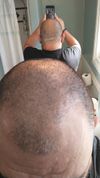
community (M49) 4 month progress - Fin 1 MG, microneedle once a week
The user reported noticeable hair improvement over four months using 1 mg of finasteride and weekly microneedling. Progress photos from October 2024 to January 2025 show positive changes.
community Trinov seems to be working.
Minoxidil initially worked but then failed. Trinov has significantly reduced shedding and shows promising results.
community Pyrilutamide Update Number Two
How Pyrilutamide, a hair loss treatment, has improved texture and regrowth of hair without any side effects for users, who are encouraged to post progress photos.
community Be careful with minoxidil, even if it's just foam.
Minoxidil caused side effects like chest pain and tinnitus for the user, leading them to stop using it and consider switching to finasteride with microneedling. Other users shared similar experiences with minoxidil, while some reported no issues, highlighting varied individual reactions.
community 5mg Min + DermaRoll 1.5mm Weekly + Keto/Salicyclic alternative day + 0.5 mg Dut. Norwood 6, should I go to 2.5 mg Dut? 33 Year old
community Anyone using tretinoin cream to aid with minoxidil regrowth?
The conversation is about using tretinoin cream to improve minoxidil absorption for hair regrowth, specifically in the temple region. The original poster eventually stopped this treatment and switched to oral medication.
community Diffuse thinner- 2 months progress. Oral Fin,Min, topical RU
community Is there any way to apply topicals without feeling like I'm wasting half of it?
community Just a suggestion for those suffering with itchiness along with MPB
A user experienced severe scalp itching with MPB and found Nizoral ineffective. A doctor diagnosed seborrheic eczema and prescribed Betacap, which relieved the itching.