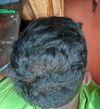
A user's experience of using Fin, Min and Microneedle treatments to help thicken their hair before undergoing a Hair Transplant (HT) procedure. The conversation also includes discussion about the results post-HT, including pictures.
The conversation humorously discusses two resilient hair strands that resist DHT, with mentions of minoxidil and finasteride as ineffective treatments. Users joke about cloning the hairs and the mystery of baldness.
The conversation discusses hair loss and the impact of testosterone and DHT levels, with suggestions to monitor these levels and consider vitamin D supplementation. Treatments mentioned include finasteride and possibly minoxidil.
An 18-year-old experiencing diffuse hair thinning since 8th grade seeks advice. They are concerned about having less hair than their 52-year-old father and are looking for treatment options.
A user shared their 9-month progress using RU58841 at 2% daily for hair regrowth, initially starting at 5% but reducing the dose due to early signs of gynecomastia, which has since mostly resolved. They achieved their goal of regrowing hair at the temples and hairline.
A 27-year-old man shared his hair regrowth progress after using finasteride for 4 years, recently adding a solution of RU58841 with minoxidil and alfatradiol, tretinoin on temples, and occasional ketoconazole. He is seeking opinions on his treatment approach.
A 22-year-old is using minoxidil for hair loss but is hesitant to start finasteride due to mixed advice and fear of side effects. They seek guidance on whether to begin finasteride despite concerns about potential permanent side effects.
The user is likely at Norwood level 3 with thinning at the crown and temple recession. Treatments like finasteride or minoxidil are suggested to manage hair loss.
A user with kidney disease and high blood pressure experienced hair thinning, especially around the vertex. They are currently using finasteride and oral minoxidil but are considering whether to resume blood pressure medication despite managing symptoms with diet and exercise.
The user experienced hair thinning from chromium and alpha lipoic acid supplements, which stopped after discontinuing them. Someone mentioned this could be telogen effluvium, a temporary condition.
The user is experiencing diffuse thinning and inflammation despite using 2.5mg dutasteride daily, ciclopirox, and ketoconazole shampoos. They are considering treatments like hydroxychloroquine and JAK inhibitors due to suspected scarring alopecia and have faced challenges in obtaining a scalp biopsy.
Dairy may contain DHT precursors that could affect hair loss and prostate health, with some users noting reduced hair shedding after eliminating dairy. Individual responses to dairy and DHT blockers vary, with some attributing hair health to diet changes and others seeing no impact.
The user is using minoxidil and finasteride to treat hair loss and is concerned about shedding and potential aggressive hair loss. They noticed some regrowth in trichoscopy pictures but are unsure about real-life changes.
The user's hair appears to have improved, looking thicker and healthier, especially around the temples, after using topical minoxidil, finasteride, dutasteride, and tretinoin. Most participants agree the last picture shows significant improvement, though one disagrees.
Scientists discovered a new T cell treatment that could regrow hair. Users are skeptical but hopeful, with some relying on finasteride and minoxidil in the meantime.
Kintor's Pyrilutamide results for hair loss treatment will be released soon. The treatment may replace current treatments like finasteride and minoxidil without systemic side effects.
Clascoterone is promising for hair loss, showing 24.5% improvement in satisfaction compared to placebo. Users consider it an alternative to finasteride, with concerns about absorption and side effects.
The user underwent a second hair transplant for the crown and mid-scalp, achieving good density. They are using minoxidil, finasteride, and biotin, and considering PRP treatments to enhance growth.
The conversation discusses hair thinning potentially linked to gut health issues and suggests biotin as a possible treatment. It also mentions that hair thinning could be due to male pattern baldness (MPB).
Orient Bio is developing a PLGA formulated version of Cyclosporine A to stimulate hair growth without its immunosuppressant effects. Users discuss various treatments like Clascoterone, PP405, minoxidil, and tacrolimus, expressing hope for new developments and sharing personal experiences with these treatments.
Spironolactone, finasteride, and dutasteride are discussed for hair maintenance, with concerns about testosterone and side effects like gynecomastia. Spironolactone is noted for use in both bodybuilding and hormone therapy, with low doses considered for minimizing side effects.
The user reported progress in hair loss treatment using oral finasteride, keto 2% shampoo, and vitamin D. They experienced reduced hair fall, fewer scalp issues, and hope for improved hair density.
A user diagnosed with Crohn's disease is concerned it might contribute to balding. They have been using keto shampoo, finasteride, and oral minoxidil, which improved their hair but not significantly.
Clascoterone, an acne treatment that blocks DHT, is being developed for scalp use against hair loss. The conversation also mentions Minoxidil, finasteride, and RU58841 as treatments.
The conversation is about a user's progress in treating diffuse hair thinning using a topical regimen including finasteride, minoxidil, ketoconazole, microneedling, saw palmetto, collagen, and vitamins, along with lifestyle changes. The user plans to switch from topical to oral finasteride for potentially better results.
Hair loss discussion with a focus on a single resilient hair, jokingly called "chad hair," that remains despite hairline receding. Some users suggest microneedling and hair follicle cloning as potential treatments.