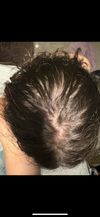
The user used 0.5 mL of 0.5 mg of Pyrilutamide for 60 days for hair loss, but didn't notice any hair growth. They shared their hormone panel results and are seeking advice on next steps.
A user named "LordGeek101" shared their positive experience with hair regrowth after using 5mg of finasteride daily, 5% minoxidil twice daily, and hormone replacement therapy (HRT) for 8 months. The user is transgender (MTF) and mentioned that the larger dose of finasteride was recommended by their doctor for better chances of hair revival.
The user reports temple hair regrowth using RU58841, minoxidil, and finasteride, recently switching to dutasteride. They consider stopping RU58841 and continuing with oral minoxidil and dutasteride.
GHK-Cu injections led to unexpected temple hair growth for someone who had been using minoxidil and finasteride for over a decade. The user plans to continue using GHK-Cu and experiment with a DIY AHK-Cu serum.
A 20-year-old male experienced significant hair shedding for nearly 10 months, despite using finasteride, oral minoxidil, and ketoconazole, and is concerned about chronic telogen effluvium. He has been supplementing with vitamins and minerals but remains unsure of the cause.
The post discusses using a combination of Dutasteride, Minoxidil, Ketoconazole, Estradiol, and Spironolactone for hair regrowth. Users suggest it needs more time and possibly a transplant, with some sharing personal experiences and side effects of similar treatments.
A 21-year-old with diffuse thinning hair is considering RU58841 due to side effects from topical finasteride and is asking for the lowest effective dose and time to see results from RU58841 users.
Triple Hair's TH-16, a product claimed to be more effective than Minoxidil 5%, has been released; it contains melatonin and resveratrol. One user reported success with topical melatonin and dermarolling.
The user is experiencing hair thinning and has a vitamin D deficiency, which they suspect might be causing the issue, but they are also considering androgenic alopecia (AGA) as a cause. They are currently using minoxidil and are unable to get finasteride prescribed, while others suggest addressing the vitamin D deficiency and consulting a dermatologist.
The user is experiencing diffuse hair loss due to high testosterone levels and has tried various treatments including finasteride, minoxidil, nanoxidil, keto/caffeine shampoo, dermarolling, and RU-58841 with limited success. They are seeking advice on safely lowering testosterone levels to manage hair loss.
Hair loss can be linked to low testosterone, affecting DHT and estrogen levels. Treatments discussed include increasing testosterone, using Finasteride, and applying estrogen cream.
The individual is experiencing hair loss and has a vitamin D deficiency, with levels at 7.49ng/ml or 26nmol/l. They are unsure if the deficiency is causing the hair loss and are seeking advice on vitamin D supplementation.
The user has high free testosterone and is still experiencing hair loss despite taking dutasteride and oral minoxidil for over three years. They are considering adding a topical anti-androgen like RU58841.
The conclusion of this conversation about hair loss is that genetics play a significant role in determining hair loss, and specific treatments like finasteride may not be effective against certain compounds like masteron and trenbolone.
The user experienced hair shedding after increasing minoxidil from 5% to 7% with latanoprost, possibly causing telogen effluvium. They are on HRT with Lupron, Estradiol, and Raloxifene, and are concerned about the shedding's duration.
A user on finasteride for 8 months shared bloodwork results showing increased testosterone and estradiol levels, with concerns about high LH. Responses advised monitoring for symptoms but noted levels are within reference ranges.
The conversation is about choosing an anti-androgen for hair loss treatment, with options being alfatradiol and pyrilutamide. Alfatradiol is considered a better choice due to its established use, while pyrilutamide is more experimental.
The conversation reassures a woman concerned about thinning hair on her crown, suggesting her hair appears normal and not thinning. Some users recommend prenatal vitamins for hair health, while others attribute the appearance to contrast between dark hair and a pale scalp.
Despite using 5% minoxidil, 0.1% finasteride, and other treatments like microneedling, MK-677, and Cialis, hair loss continues with high testosterone and DHT levels. Considering oral dutasteride but concerned about further increasing testosterone levels.
The user is experiencing increased hair shedding after 7 months of using a topical solution and is considering switching to oral treatment. They are concerned about thinning hair around the corners and temples.
The user is considering using topical finasteride for thinning hair around the middle part, vertex, and crown, and is unsure if the whole scalp is thinning. Another user suggests oral finasteride is more effective than topical, and recommends consulting a dermatologist for proper treatment.
The user switched from finasteride to dutasteride for hair loss and saw significant improvement in under two months. They also microneedle, take supplements including collagen and vitamin D3, use ketoconazole shampoo, and noticed accidental hair regrowth with retinol application on their face.
The user is experiencing hair loss and is using treatments like finasteride, minoxidil, and hormone replacement therapy (estradiol enanthate injections) to address it. They are advised to be patient with the treatments and consider using a dermapen for microneedling.
A 22-year-old male experiencing hair thinning and loss, possibly due to seborrheic dermatitis or low vitamin D, is cautious about using minoxidil or finasteride due to heart palpitations and high blood pressure. Suggestions include using ketoconazole shampoo to control inflammation and focusing on treating the dermatitis first.
Taurine shows potential in combating hair loss caused by chemical stress, especially when combined with other treatments like finasteride. Finasteride demonstrated better stress-reducing effects in the study.
A 21-year-old male diagnosed with telogen effluvium and male pattern baldness started oral finasteride, which initially slowed hair loss and slightly thickened hair, but experienced increased shedding after surgery. The doctor recommended iron and vitamin D supplements, and the user is seeking additional advice.
Excessive scalp sebum, worsened by DHT, can lead to inflammation and hair loss, with clascoterone mentioned as a treatment. Diet changes seem ineffective for scalp sebum, and treatments like minoxidil and finasteride are suggested.
The user is experiencing stage 2 hair loss and thinning, noticing more scalp visibility with short hair. They are considering diet, yoga, scalp massage, supplements, and a serum recommended by their doctor, and questioning if it's safe to stop using the serum and whether to get a blood test since hair loss isn't a family trait.