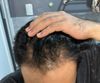
The post is about a user's progress with using finasteride, minoxidil, and dermarolling for hair loss. The conversation includes comments about different treatments and methods used.
The user has been using oral minoxidil (3mg) and finasteride (1.2mg) for 3 months. Some users notice hair growth, especially at the temples and crown, while others see no difference.
A user is making their own dutasteride solution using MCT oil but is concerned about its effectiveness and bioavailability. They are considering using propylene glycol or adding ethanol for better results, while others suggest the current dosage might be excessive.
The person is using 1mg of finasteride daily, 2mg of minoxidil, and weekly dermarolling with a 1mm needle. They sometimes use topical minoxidil as well.
The conversation is about the progress and development of a hair loss treatment called GT20029. People are discussing updates on its status and speculating on how long it will take to become available.
The conversation discusses a user's plan to inject NAD+ and GHK-Cu into their scalp to improve hair health, with concerns raised about the risks of infection and necrosis. Alternatives like finasteride, dutasteride, microneedling, oral minoxidil, and scalp massages are suggested.
The conversation is about the FDA approval of WINLEVI for acne treatment and the anticipation of Breezula, a hair loss treatment using the same active ingredient, which may indicate a positive future for Breezula's release. There is disappointment that Breezula's results are not optimal, but it is seen as progress in hair loss treatment.
Pyrilutamide, a potentially effective hair loss treatment; other topical treatments like RU58841 and CB-03-01 that may have fewer side effects than Pyrilutamide; and the Phase 3 clinical trials of Pyrilutamide, which is likely to be approved by the FDA soon.
A user shared their experience with three hair transplants, finasteride, and minoxidil to combat severe hair loss, achieving significant regrowth. They discussed the process, costs, and maintenance, emphasizing that transplanted hair is permanent and doesn't require ongoing medication.
Gizzela is unsure about the dosage and frequency of copper peptides and asks if they can be used with Stemoxydine. They seek advice on applying these treatments together.
A male in his early 20s with CCCA (scarring alopecia) started treatment with Finasteride, Fluocinolone, and Doxycycline. Steroid injections were suggested but not yet done.
The conversation is about a user sharing their positive progress with hair regrowth using oral minoxidil, biotin, finasteride, and other supplements. The user also mentions using a HIMS oral fin/min combo and receives advice and encouragement from others.
GHK-Cu is being considered for hair growth, but users report mixed results. Some use it alongside other treatments like 5AR inhibitors, making it hard to determine its effectiveness.
Tretinoin alone has led to hair regrowth in the temples and hairline. The user is considering oral minoxidil or dutasteride but prioritizes health first.
The conversation is about finding sources for topical anti-androgens like CB, pyrilutamide, fluridil, and aflatridol for hair loss treatment. The user is considering using CB powder from IndiaMart but is concerned about side effects from finasteride and minoxidil.
The conversation discusses treating male pattern baldness in a transgender woman using cyproterone acetate, finasteride, and biotin. The original poster shared their experience for others who might be in a similar situation.
RU58841 can be ordered as a powder and compounded at home, but it should be stored at room temperature to avoid crystallization. Pyraulatmide may follow a similar principle.
Discussion on hair loss treatments, focusing on Breezula, with mentions of Minoxidil, finasteride, RU58841, Pyrilutamide, GT20029, and PP405. Breezula's effectiveness is uncertain, with some trials showing minimal regrowth.
The user shared 6-month results using finasteride, minoxidil, ketoconazole shampoo, vitamin D, calcium, and biotin, showing significant improvement. Another user praised the results as excellent.
A group buy for testing a compound targeting Twist1 protein as a potential hair loss treatment. Inhibiting Twist1, which keeps hair follicles in growth phase, may prevent hair loss with minimal side effects.
The conversation is about a person showing significant hair regrowth after three months using finasteride and minoxidil. Some people congratulated the person, while others asked if they used derma rolling or oral minoxidil, to which they replied they used topical minoxidil.
A user shared their positive 3-month results using a treatment for hair loss that includes Dermaroller, Minoxidil, and Amplexe Shampoo. They avoided using finasteride due to its risks.
Alfatradiol is discussed as a weak 5ARI and estrogen, not as effective as minoxidil, RU58841, or CB-03-01, but a safe alternative for those who can't use finasteride. Users express frustration over the lack of strong FDA-approved topical antiandrogens for hair loss.
PP405 shows initial promise for treating androgenetic alopecia, with safety confirmed in early trials, but skepticism remains due to limited data. Further trials are needed to determine its true efficacy and potential market impact.
The user noticed new hair growth after using topical minoxidil and undergoing 2 GFC sessions, along with using caffeine shampoo. They plan to start using topical finasteride and minoxidil and are inquiring if shampooing is necessary before application.
The conversation discusses the molecular structures of compounds that reduce DHT levels, including finasteride and Ashwagandha. It explores the potential of using Ashwagandha topically as a 5a reductase inhibitor.
The post discusses a phase 2 trial for HMI-115, a hair loss treatment, in China, specifically seeking volunteers aged 18-65 with Norwood 3 vertex, 4, and 5 hair loss. The conversation includes questions about the specific recruitment criteria and how to volunteer.