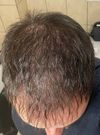
A 25-year-old woman is experiencing hair loss and has started microneedling with a 0.5mm roller, applying a mix of essential oils overnight. She questions whether to switch to a 1.5mm roller and the best order for her routine, while a reply suggests using Minoxidil for better results.
A user is experiencing increased hair shedding after using castor oil and rosemary oil twice a week for two months. They are concerned whether this is normal or if the castor oil's thickness is causing hair loss.
Applying rosemary oil on non-derma rolling days is acceptable and can be part of a regular hair care routine. It's important to monitor for any irritation.
Rosemary oil is being used as an addition to minoxidil and finasteride for hair health, with mixed opinions on its effectiveness. Some users report positive results, while others see no benefit or experience adverse effects.
To reduce oily hair, wash the scalp thoroughly with shampoo and avoid touching the hair with hands. Applying a watery body lotion to wet hair may also help lessen oiliness.
The user shared progress pictures of hair regrowth using 1mg finasteride, 5% topical minoxidil, derma stamping, and rosemary and mint hair oil. Responses varied, with some noting visible regrowth and others questioning the effectiveness of the oils.
The conversation discusses using RU58841 with octopirox or essential oils for hair loss treatment. The user is seeking advice on which variation to try.
Minoxidil can be effectively delivered through nanoemulsions containing eucalyptol or oleic acid, enhancing its diffusivity and targeting hair follicles. This contradicts the advice against mixing minoxidil with oils in topical formulations.
The conversation is about someone using finasteride for hair loss and considering adding peppermint oil to their regimen. One person replied that they tried peppermint oil for about a month with no results.
People are humorously discussing unconventional hair loss remedies like pig lard and raw liver, while also mentioning treatments like Minoxidil, finasteride, and RU58841. They mock the idea that seed oils cause balding and criticize misinformation.
User started with rosemary oil, then used oral minoxidil, topical minoxidil, dutasteride, RU58841, derma rolling, and keto for hair loss treatment. Significant progress was made, and others praised the aggressive approach.
The user is exploring alternatives to finasteride and dutasteride due to concerns about side effects, and is using rosemary and jojoba oil, ketoconazole, minoxidil, microneedling, multi-peptide serum, saw palmetto, and stinging nettle for hair loss. They are also considering CB 03 01 and spironolactone.
The conversation lists medications, oils, and herbs for hair loss, including FDA-approved treatments like Finasteride and Minoxidil, off-label options like Dutasteride and Clascoterone, and others like RU58841. It also mentions Rosemary oil, Saw palmetto, and Fo-Ti root as non-medical treatments.
The user is using finasteride 1mg every other day and seeks a topical solution to complement it, excluding minoxidil. They are considering various combinations of ingredients like finasteride, dutasteride, and tofacitinib, with options for nourishing oils and other additives.
The conversation discusses creating a topical hair loss treatment by dissolving melatonin in ethanol and possibly mixing it with castor oil, questioning the stability of the solution. An alternative of using glycerin is also considered.
The conversation is about skepticism towards a hair growth oil promoted by a social media influencer, with users suggesting it is ineffective without proven treatments like Minoxidil, finasteride, or hair transplants. The product contains various oils and extracts, but users doubt its effectiveness.
The conversation discusses using Rogain foam as a solvent for topical finasteride due to an allergy to propylene glycol. The foam's ingredients, including alcohol SD 40B, are considered suitable for dissolving finasteride for easier application without skin irritation.
The conversation discusses adding Nizoral (Ketoconazole shampoo) and castor oil to a hair loss regimen. Users suggest trying Nizoral due to its potential benefits and low cost.
The conversation discusses the effectiveness of peppermint oil and dermarolling for hair regrowth, with one person suggesting that only dermarolling is effective and comparing peppermint oil's effectiveness to that of an egg.
The user is experiencing hair loss and has tried topical finasteride without success due to side effects. They are considering using essential oils like rosemary, castor, and peppermint, and have started using 0.5% Pyriltamide.
Excessive scalp sebum, worsened by DHT, can lead to inflammation and hair loss, with clascoterone mentioned as a treatment. Diet changes seem ineffective for scalp sebum, and treatments like minoxidil and finasteride are suggested.
A user reported that applying castor oil to their eyebrows for two weeks resulted in thicker hair and is considering using it on their scalp to thicken existing hair, not to stop balding. They do not expect it to cure male pattern baldness.
The user experienced side effects from using 1% finasteride and 2% minoxidil, including dermatitis, erectile dysfunction, and heart palpitations. They switched to using 2000mg pumpkin seed oil, saw palmetto capsules, and applying pumpkin seed oil and rosemary oil twice a week, seeking feedback on results.
The user is using a topical solution containing 1% finasteride and 5% minoxidil for hair loss, with water, glycerin, and PEG-40 hydrogenated castor oil as carrier agents. They are questioning if these ingredients are effective carriers after using the solution for three months.
The conversation discusses two methods for making topical finasteride: using ethanol and propylene glycol or mixing it with topical minoxidil. The focus is on solubility and absorption, with a suggestion to crush pills finely and possibly mix with minoxidil at a slightly elevated temperature.
The user is using finasteride 1mg every other day and seeks a topical solution excluding minoxidil. They are considering various combinations of ingredients like finasteride, dutasteride, and tofacitinib, with options for nourishing oils and other additives.
The conversation discusses the potential effectiveness and risks of using topical finasteride for hair loss, with considerations about using DMSO as a vehicle for application. Concerns are raised about DMSO's safety, absorption issues, and the systemic effects of topical finasteride.