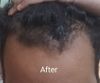
A human trial of verteporfin, a potential treatment for hair loss, with some users noting potential improvements in scarring and overall healing compared to control areas.
The user has been using finasteride (0.5mg), minoxidil (5% foam), dermarolling, and rosemary oil for 3 months, noticing baby hairs and some shedding. Advice given includes continuing the current treatment, considering additional treatments, and potentially increasing the finasteride dose.
A user reports using Hims (with finasteride and minoxidil), Kirkland Minoxidil 5%, RU58841, and derma stamping for hair loss and seeks feedback on their 9-week progress, particularly for growth around the temples and crown.
The user documented hair regrowth progress over 8 weeks using Minoxidil foam twice daily and weekly microneedling. Another user suggested adding finasteride for better results.
A user shared their 4-month progress using a topical solution with 5% minoxidil and 0.1% finasteride, applied twice daily. They reported good results despite occasional missed applications.
The conclusion of the conversation is that the user has made progress in their hair loss with the use of oral finasteride and topical minoxidil. The progress was most significant in the first year, and the user's temples are slowly improving.
SCUBE3 is available online but poses risks like tumor promotion and high costs. Users advise against using it due to health concerns and inefficacy as a standalone treatment.
A 37-year-old user shared their positive 3-month progress using a topical solution of 5% minoxidil and 0.25% finasteride, combined with weekly microneedling and Nizoral shampoo. They reported no significant side effects and emphasized the importance of consistency and microneedling for hair regrowth.
The routine involves using minoxidil, dermapen, and tretinoin for hair loss, with minoxidil applied daily and tretinoin used on alternate days. It is suggested to avoid using tretinoin and dermapen on the same day to prevent irritation.
The conversation discusses hair loss treatments, focusing on a new slow-release oral minoxidil compared to topical minoxidil and finasteride. The results show that twice-daily dosing of the new treatment is slightly more effective than once-daily, but concerns about cost, side effects, and the accuracy of reported results remain.
PP405's phase 2a trial results were presented, focusing on safety and pharmacokinetics, with a future meeting planned to share the full dataset. The trial includes a randomized controlled portion and an open-label extension, with no indication of phase 2B completion.
Breezula shows promising hair growth results, with up to 539% increase in hair count compared to placebo, and regulatory submissions are planned in the US and EU. Users are cautiously optimistic, noting the potential for Breezula to replace finasteride by targeting DHT without systemic effects.
Topical finasteride reduces scalp DHT effectively, with a suggested application of 1.5ml of 0.03% daily. It binds to scalp enzymes, potentially requiring daily or every other day application for sustained results.
The post is about a user's progress in treating hair loss using HIMS FIN/MIN spray and dermarolling. One user suggests taking the 1mg finasteride pill instead of using the topical spray, while another warns against microneedling every day.
PP405 is a promising molecule that may reactivate dormant hair follicles, potentially offering a new treatment for hair loss. It is in phase 2 trials, with possible availability between 2027 and 2030.
Topical tretinoin can increase the absorption of minoxidil by three times, which may enhance its effectiveness for hair loss treatment. Tretinoin causes increased skin turnover, making the skin more permeable and potentially improving minoxidil's efficacy.
The conversation discusses hair regrowth using finasteride, minoxidil, and a dermaroller. Users also talk about the benefits of using a stamp over a derma roller for scalp treatment.
A user shared their 12-month progress using 0.5% Pyrilutamide once daily, 0.025% topical finasteride once daily, 5% Minoxidil twice daily, and microneedling 3 times a week. They reported good progress but noted a slowdown in recent months, hoping for thicker hair soon.
A 17-year-old has been using Minoxidil for 3 months and dermastap for 2 weeks but feels they are losing progress. A suggestion was made to add finasteride 1 mg three times weekly.
The conversation discusses a user's 3.5-month experience using pyrilutamide and minoxidil for hair loss, with some perceived improvement in the temples but potential recent regression. Another user suggests that maintaining the current hairline, even without improvement, is positive.
The conversation discusses concerns about Scube3's effectiveness and potential cancer link. It questions whether Scube3 can regrow hair and how well it works according to researchers.
The conversation discusses the high prices of hair loss treatments, specifically cb-03-01 and KY19382. It also mentions the use of Minoxidil, finasteride, and RU58841.
Hair loss treatments discussed include Minoxidil, Finasteride, and RU58841. HMI-115 release timeline is uncertain, with possible grey market availability in 2024-2025.
Hope Medicine's HMI-115 is expected to be released in 2027, with phase 3 trials currently recruiting. Concerns include the safety of targeting prolactin and the potential cost of the treatment.
The conversation is about whether stemoxydine can shorten the dormant phase after a hair transplant, known as the ugly duckling phase. There is skepticism about whether it actually works as claimed.
A human trial involving verteporfin for hair regeneration, with the results showing some regrowth of 1-2 hairs in an area where a follicular unit was extracted. The conversation also suggested that future studies should involve higher doses and more frequent injections.
A 31-year-old male shared his 3-year progress using finasteride 1 mg daily, with additional treatments including nutrafol, multivitamins, vitamin D, marine collagen, PRP scalp injections, micro-needling, and Nizoral. He experienced temporary libido issues but currently has no side effects.
Cosmo Pharmaceuticals has enrolled about 850 out of 1400 patients for their phase 3 clinical trials of clascoterone (Breezula) and claims to be on schedule. The conversation is about hair loss treatments.
A 23-year-old Asian male shared progress pictures after 3 months of using minoxidil, microneedling for 1.5 years, and taking vitamin supplements. Replies suggest adding finasteride or dutasteride for long-term hair maintenance.