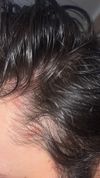
A user's hair loss progress after 4 months of using a topical fin and min mix, with responses from other users about their experience with the same treatments.
User is depressed about hair loss despite using topical minoxidil for 5 months and topical finasteride for 2 months, with no improvement. Others suggest trying oral finasteride, seeing a specialist for dandruff and oily scalp, and being patient.
A user shared progress pictures showing significant hair regrowth after using a topical solution containing 5% Minoxidil, Finasteride, Redensyl, and Procapyl. The user reported no side effects and applies the solution twice daily.
The user has been using Minoxidil and Finasteride since late 2019 with good results but is experiencing a dry, flaky scalp and shedding hairs. They also use Nizoral, biotin, zinc, magnesium, and collagen supplements, and their dermatologist prescribed fluocinolone acetonide to reduce flaking.
Significant hair regrowth was achieved using a topical combination of 0.3% finasteride and 6% minoxidil, with weekly dermastamping and ketoconazole shampoo, without side effects. Others suggested additional treatments like red light therapy and PRP.
The user is using oral dutasteride, topical minoxidil (Regaine foam 5%), and ketoconazole shampoo for hair loss, reporting good results with no significant side effects. The user is 26 years old and applies minoxidil once or twice daily.
The user is experiencing hair thinning and loss at the temples, likely due to androgenetic alopecia. Suggested treatments include finasteride and minoxidil to slow hair loss and promote regrowth, with buzzing hair short as a styling option.
A 19-year-old is experiencing worsening hair loss and severe seborrheic dermatitis despite using finasteride for six months. Nizoral (ketoconazole) is no longer effective, and they are seeking over-the-counter solutions and advice for an upcoming dermatologist visit.
The user is experiencing hair improvement in the central and back areas after using finasteride, minoxidil, and a galenic lotion, but the temple area is worsening. They suspect the lotion might be causing the issue and are considering stopping its use.
A 21-year-old male diagnosed with telogen effluvium and male pattern baldness started taking finasteride, which initially slowed hair shedding and slightly thickened hair. The doctor recommended iron and vitamin D supplements, and the user is considering minoxidil but wants to stabilize shedding first.
The user is using minoxidil and finasteride to treat hair loss and is concerned about shedding and potential aggressive hair loss. They noticed some regrowth in trichoscopy pictures but are unsure about real-life changes.
Excess sebum rich in cholesterol and triglycerides can lead to hair loss through inflammation, with treatments like Ciclopirox shampoo, Benzoyl Peroxide shampoo, and Clindamycin gel recommended for managing conditions like seborrheic dermatitis and folliculitis. Pioglitazone is suggested for Lichen Planopilaris, while Omega-3s and reducing processed foods may improve sebum quality, though genetic factors play a significant role.
The user is using 1mg oral finasteride daily, topical minoxidil on the hairline, a dermaroller weekly, Alpecin Caffeine shampoo daily, and ketoconazole shampoo weekly. The hairline appears to be improving after two months.
The user experienced stable hairline but diffuse thinning after switching from oral finasteride to a topical solution of minoxidil and finasteride. They are concerned about the effectiveness of the topical treatment and are considering other options due to a recent decline in hair density.
DHT promotes hair growth in certain areas but causes scalp hair loss, highlighting a frustrating irony. Minoxidil is mentioned as a treatment that grows hair everywhere, including the scalp.
Using ketoconazole shampoo for seborrheic dermatitis is generally fine, but opinions vary on frequency, with some suggesting every other day and others less often. Proper scalp cleaning is emphasized to prevent itching and burning.
The user shared a 10-month hair loss treatment update using finasteride, minoxidil, derma stamping, red light therapy, and keto shampoo, reporting improved styling ability but a stubborn frontal hairline. The user experienced lower libido as a side effect of finasteride.
The user experienced hair shedding and follicle shrinkage when using retinoic acid, despite trying different concentrations and frequencies. The hair loss persisted for six months but regrew after stopping the treatment.
A 29-year-old shared their hair recovery progress using a liposomal topical finasteride/minoxidil solution, LLLT helmet, and vitamins, noting that transplants were only on the hairline. They highlighted the effectiveness of their regimen and addressed skepticism with photos.
User is using topical Minoxidil (100 mg/day) and Finasteride (1 mg/day) but experiencing hair growth everywhere except the top of the scalp. They seek advice on improving scalp hair regrowth.
Using a silicone shampoo brush with ketoconazole shampoo may increase hair shedding if used roughly. Hair that sheds during shampooing would have fallen out eventually.
A person dealing with hair loss is considering shaving their head, using scalp micropigmentation to cover a FUT scar, or trying a hair system. They are also contemplating treatments like minoxidil, finasteride, and dutasteride.
A 31-year-old experiencing rapid hair loss is considering whether to shave their head or use treatments. They were prescribed B12, topical finasteride 0.1%, and minoxidil 10% but are unsure about the correct dosage and potential side effects.
A 23-year-old experiencing diffuse hair thinning has chosen a treatment stack including topical finasteride, a blend of rosemary, peppermint, and pumpkin seed oils, procyanidine B2 spray, ketoconazole shampoo, and scalp massages. They avoid minoxidil due to family history of side effects and oral finasteride due to high estrogen levels.
The conversation discusses hair loss treatments, specifically using 5% minoxidil foam, Vitamin B12, and Vitamin D, with suggestions to add oral finasteride and minoxidil for better results. Concerns about side effects, particularly from finasteride, and the need for a DHT blocker are also highlighted.
Ketoconazole shampoos are primarily for dandruff and fungus but may aid hair growth slightly, though results are minor compared to finasteride and minoxidil. Users report it helps with scalp health and inflammation, but it can dry out hair if used too often.
The user's progress with their hair loss treatment of topical minoxidil and finasteride solution, as well as scalp massage; other users commenting on the results being impressive for someone of Asian background.
The user suspects scarring alopecia and is exploring NSAIDs and turmeric/pepper for inflammation-related hair loss, having experienced burning and thinning with finasteride and testosterone reduction. They are seeking feedback while unable to afford a dermatologist.
A 20-year-old female with PCOS is experiencing hair loss and excessive facial hair. She is using ketoconazole and caffeine shampoos, microneedling, and considering anti-androgens like finasteride, but is cautious about minoxidil due to facial hair concerns.
User discusses a topical hair solution containing Tretinoin, Dutasteride, and Ketoconazole, and asks if it's safe to combine and leave in hair. Concerns include Ketoconazole being left in hair and Tretinoin's effects with Dutasteride and Ketoconazole.