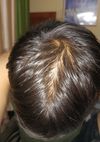
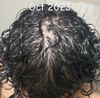
User shares new hair growth stack including oral minox, daily rolling with minox application, niacin, and Dutasteride. Excited about progress and plans to update in two months.
The user shared an 11-month hair loss treatment update, maintaining the same regimen but adding vitamins and increasing minoxidil application to 1ml during the day. It's unclear if the vitamins contributed to any changes.
A user's experience with Pyrilutamide, a topical treatment for hair loss that they used in combination with other treatments such as Minoxidil and Finasteride. The user experienced impressive results in a short amount of time.
User redh0t12 suggests using a derma pen for hair regrowth, as it helped them after using finasteride and minoxidil. Others discuss their experiences with various treatments, including derma rolling, oral and topical minoxidil, and finasteride, with mixed results.
User asks for advice on using hair thickening products and their order of application. Experienced styler suggests using thickening tonic with a blow dryer, followed by styling powder and clay, then hair fibers, and finishing with hairspray.
The conversation discusses using Stemoxydine, a hair growth stimulant considered weaker than Minoxidil, and questions whether applying it twice daily could improve results similar to twice-daily Minoxidil applications.
Using Minoxidil and Retinol together is generally safe, but caution is advised if adding Retinol to a topical hair solution, as excessive Retinol can lead to hair loss, especially with sun exposure.
The group buy for CB-03-01, a topical anti-androgen for hair loss, was postponed and refunded due to issues with the product's form and solubility. The product, also known as Breezula, is an alternative to finasteride with fewer side effects, but its official release is delayed until 2021.
Dutasteride mesotherapy is discussed as a potentially effective hair loss treatment with no sexual side effects, requiring less frequent application than daily pills. However, it is not widely popular due to limited availability, high cost, and skepticism about its effectiveness.
The conversation is about using Peppermint or Spearmint oil for hair loss and asks for successful regimens, including brands, carrier oils, and application details. No specific treatments were shared.
A 19-year-old male experiencing hair loss is seeking advice on managing it without sexual side effects. He has used topical minoxidil and finasteride but experienced side effects, and is considering lifestyle changes to help slow hair loss.
The user experienced significant hair regrowth after 4 months using oral minoxidil, oral dutasteride, topical minoxidil, Nizoral shampoo, microneedling, and various supplements. They reported increased body hair and some acne as side effects but noticed less hair breakage with silk pillows.
A user has been using oral finasteride and minoxidil without significant hair regrowth and is questioning the effectiveness of adding microneedling to their routine. Another user suggests microneedling can help with topical treatments but doesn't see it as a major factor in improving hair loss.
Oral minoxidil may cause dry skin and dark eye bags but doesn't significantly age the skin. Topical minoxidil is toxic to cats, and some users prefer finasteride.
The user stabilized hair loss with oral finasteride, dutasteride, and topical minoxidil, and underwent a stem cell and PRP procedure. Recent increased hair shedding may be due to restarting dermarolling, affecting minoxidil absorption, or the waning effects of the stem cell treatment.
The conversation discusses hair loss treatments, including the use of 2.5mg Dutasteride, 1mg Finasteride, and Minoxidil 5%, with concerns about side effects like water retention and facial changes. The user is considering alternative Minoxidil applications, such as microneedling and sublingual Minoxidil, to minimize side effects.
The user experienced significant hair regrowth using oral finasteride, minoxidil twice daily, ketoconazole shampoo, and microneedling, despite heavy shedding. They stopped using topical finasteride due to discomfort and maintained progress with their current routine.
The conversation discusses the lack of public information on the chemical structure of PP405, a hair loss treatment, and the challenges of synthesizing it without a patent. It also explores a patent related to hydrogen-based topical formulations for reducing oxidative stress and inflammation.
The conversation discusses hair loss struggles and treatments, including oral minoxidil, oral finasteride, and RU58841. Users share experiences and advice, suggesting options like topical minoxidil, microneedling, hair transplants, and scalp micropigmentation.
A 31-year-old who experienced severe hair loss during medical school tried various treatments, including topical and oral finasteride and minoxidil, but stopped due to side effects. They restarted treatment 10 months ago with a regimen including topical finasteride, minoxidil, retinoic acid, hydrocortisone, oral minoxidil, and light therapy, emphasizing the importance of consistency and skincare.
The conversation is about the effectiveness of Maneup GHK-Cu hair growth serum, a topical treatment for hair loss. The user is considering trying it but is skeptical due to issues others have had with DIY injections of a similar substance.
A 23-year-old man shared his 4-month hair regrowth progress using 1mg oral finasteride daily, 5% minoxidil with finasteride topical twice a day, multivitamins, microneedling, head massages, and ketoconazole shampoo. He's unsure of his current Norwood scale classification and is asking for help to determine it, with suggestions ranging from NW4 to NW4.5.
Dihydrotestosterone (DHT) impacts various skin conditions, including Androgenetic alopecia and seborrheic dermatitis, by causing overactivity in sebaceous glands. Topical medications Tacrolimus and Clobetasol can reduce these inflammatory conditions, and treatments like RU58841, Minoxidil, and Finasteride may also be beneficial.
Automatic-Law-3612's progress with hair loss treatments, including topical finasteride, topical dutasteride, minoxidil and pyrilutamide. They have been using these products for two weeks and noticed baby hairs in their temples getting longer.
Evidence-based treatments for androgenic alopecia, such as minoxidil, finasteride, low-level laser light therapy, dutasteride, platelet-rich plasma, and topical ketoconazole. It discusses the efficacy, safety, and mechanism of action of these treatments, as well as future developments in understanding this polygenic condition.
Oral minoxidil and finasteride can lead to quick hair growth, with some users noticing changes in as little as 2-3 weeks, though head hair may take longer. Many prefer oral minoxidil over topical due to convenience, and some also use ketoconazole shampoo and other topical treatments.
A user is using oral finasteride, oral dutasteride, and drinking topical minoxidil for hair loss, despite health warnings. Switching from finasteride to dutasteride did not improve hair density.
Fatty acid metabolic signaling can activate epithelial stem cells for hair regeneration. Oleic and palmitoleic acids showed the best results, but practical application on humans remains uncertain.
Mixing RU58841 with a solution for hair loss treatment, with suggestions to use propylene glycol and ethanol instead of k&b solution due to scalp irritation. Recommendations include using ketoconazole shampoo for itchiness and considering oral minoxidil if topical causes irritation.