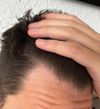
Bicalutamide and spironolactone are being compared for their effectiveness and safety in treating female pattern hair loss. The conversation seeks advice on which is better to use.
Hair loss treatments discussed include cosmeRNA, minoxidil, finasteride, RU58841, and pyrilutamide. Users debate effectiveness, side effects, and upcoming treatments, with some expressing skepticism and others optimism.
Kintor is testing Pyrilutamide with Minoxidil for hair loss. Users are skeptical about its effectiveness and concerned about limited treatment options if this fails.
A user was prescribed betamethasone dipropionate spray for a receding hairline, which caused skin peeling and depigmentation. They stopped using it and are considering alternatives like BPC-157/TB-500 for healing.
The user is experiencing hair loss and has been using RU58841 but is considering pyrilutamide and minoxidil, avoiding finasteride due to side effects. Another user suggests finasteride or dutasteride as essential, possibly in topical form, while dismissing saw palmetto as ineffective.
Pyrilutamide's effect on sebum production and scalp inflammation is unclear, with users noting no significant changes. Isotretinoin is mentioned as effective for reducing sebum, while Dutasteride and various shampoos have limited impact on oiliness and seborrheic dermatitis.
41-year-old female experienced slow hair thinning, took finasteride for a year, then switched to spironolactone. Irregular periods occurred, seeking advice on long-term side effects and considering a third medication.
A user shared a six-month update on hair improvement using Pyrilutamide and Minoxidil, noting significant hair regrowth and strength. Some participants questioned the legitimacy of the results and the source of Pyrilutamide.
Combining pyrilutamide and alfatradiol might be as effective as finasteride for hair maintenance. The user plans to try this combination alongside minoxidil and keto shampoo, hoping for improved hair thickness.
A user discusses switching from RU58841 to Pyrilutamide due to side effects like fatigue, brain fog, and elevated heart rate. They have used dutasteride, finasteride, and minoxidil, and are seeking safer alternatives.
People are discussing hair loss treatments, including pyrilutamide, minoxidil, dutasteride, alfatradiol, and bimatoprost. Users share their experiences and side effects, noting that pyrilutamide is considered more effective and safer than RU58841.
Pyrilutamide and RU58841 are androgen receptor antagonists that block receptors without significantly reducing testosterone or DHT levels. Any indirect effect on androgen levels is likely negligible.
An update on the use of Pyrilutamide, a new drug for hair loss, which has resulted in no shedding or testicle ache; other users have questioned the science behind this and shared their own experiences with Finasteride, Minoxidil, and microneedling.
A user ordered pyrilutamide (KX826) to stop hair loss and is seeking success stories. Replies indicate that it's too early to evaluate the product's effectiveness, as it takes several months to see results.
The user visited a trichologist due to ineffective topical finasteride treatment for hair loss. The trichologist recommended a new regimen including a two-month course of locoidon (cortisone 0.1%), followed by a solution containing minoxidil, hydrocortisone butirrate, estrone, progesterone, tocopherol acetate, trichosol, and transcutol.
The conversation is about finding a reliable source to purchase Pyrilutamide that ships to the UK. There's also an openness to using RU58841 as an alternative.
Ordering Pyrilutamide from Minoxidilmax to use as an experimental topical treatment for hair loss, with discussion of the carrier used in trials and encouragement from other users.
Topical sodium valproate may promote hair growth by inhibiting GSK3β, allowing beta-catenin to proliferate, but it has potential side effects and requires more research. The conversation also mentions skepticism about a product called Vdphlo1, which includes sodium valproate and other ingredients.
The conversation is about the release of Phase 3 trial results for pyrilutamide in China for treating hair loss. The user is inquiring if the actual results have been posted, noting that a recent release did not contain them.
A user is seeking advice on the efficacy and side effects of homemade topical solutions for hair loss, specifically bicalutamide, estradiol, cyproterone acetate, and spironolactone, as they cannot access RU58841 or pyrilutamide.
The user tried topical dutasteride for 6 months without success and is considering Pyrilutamide as an anti-androgen treatment for hair loss. Other users suggest using 1% Pyrilutamide and combining it with topical dutasteride.
The user has been using pyrilutamide, topical finasteride, and 15% minoxidil for hair growth for almost 4 years. Despite mixed responses from others, the user reports seeing progress, especially with the addition of pyrilutamide, and plans to continue the regimen.
Pyrilutamide, a potential hair loss treatment that is currently in development and may be available soon; an androgen receptor degrader which is also being developed as a potential treatment for hair loss; and the comparison between Pyrilutamide, finasteride, minoxidil, and RU58841.
The user discusses a galenic hair lotion containing progesterone, estradiol, cyproterone, hydrocortisone butyrate, and cetirizine pheniramine, which has effectively stopped their hair loss over two years. They are curious about the compatibility of finasteride with the lotion's components and note that their trichologist has successfully used minoxidil and finasteride in similar treatments for others.
The individual is experiencing hair loss due to insulin resistance (IR) and is seeking advice. They are currently using a keto diet, supplements, exercise, and plan to add metformin to their regimen.
A peptide from Japanese water chestnut fruit may help with hair loss by suppressing DHT's effect on hair follicle cell death, potentially serving as a finasteride alternative. The treatment's effectiveness and safety in humans remain uncertain.
The conversation is about comparing the effectiveness of 5% RU58841 and 0.5% pyrilutamide for hair loss treatment. The user is asking if the higher concentration of RU58841 makes it stronger than the lower dose of pyrilutamide.