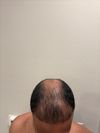
The user wants to undergo laser hair removal on a bad hair transplant and maintain their natural hairline. They are seeking shampoo recommendations while using finasteride and minoxidil.
User shared progress pictures showing significant hair regrowth using a compounded solution of Minoxidil 10%, Finasteride 0.1%, Biotin 0.2%, and Latanoprost 0.005%. They reported no side effects and are satisfied with the results.
The user has scheduled a hair transplant after stabilizing hair loss with finasteride and minoxidil, considering additional dermarolling. They are advised to use 2500-3000 grafts conservatively for temple filling without lowering the hairline too much.
The user is using a hair loss treatment regimen that includes applying various topical solutions and taking oral medication. They are mixing their topical treatments to save time but are concerned about the effectiveness of the treatments when combined and stored.
The conversation discusses the effectiveness of topical tretinoin as a monotherapy for hair loss, with users suggesting it may not be as effective as minoxidil or finasteride. The original poster is considering other options like a phenol peel and is concerned about the risks of derma rolling.
The conversation is about using RF microneedling with ExoHealer, along with finasteride and minoxidil, to improve hair thickness and reduce shedding. The user reports noticeable improvements in scalp texture and oiliness, with plans to consider stem cell treatments in the future.
Lichen Planopilaris (LPP), a form of permanent hair loss, which can be mistaken for seborrheic dermatitis and is characterized by scalp itching, burning, redness, and dandruff. Treatment options discussed include steroidal creams, finasteride, minoxidil, and RU58841.
The user has been using finasteride for two years without results and recently started a new routine involving derma stamping, retinol, and minoxidil, which seems to show progress. The user microneedles about half the week and uses L’Oréal night serum for retinol.
The user received 1600 hair grafts but is dissatisfied and plans a second transplant for better coverage. They use minoxidil and finasteride and are considering adding dutasteride.
The conversation is about using Latanoprost 0.01% solution for hair loss and seeking success stories. It mentions that Latanoprost works differently from Minoxidil, Finasteride, and RU58841.
The conversation discusses the potential for Verteporfin to reduce scarring, making hairline lowering surgeries more viable for men with mild hair loss. The user suggests that if scarring can be minimized, men might opt for hairline lowering instead of using grafts for other areas.
Exosome treatment for hair loss, derived from umbilical cord stem cells, is being considered as an option before a hair transplant. Users discuss the need for ongoing maintenance and share experiences with different exosome sources, including plant-derived options.
Oral minoxidil is considered more convenient and effective than topical or sublingual forms, with users reporting positive results and minimal side effects. Some users experience side effects with oral minoxidil and opt for sublingual or topical methods instead.
OP shared progress pictures 8 months after FUE surgery in Korea by Dr. Hyun, using Dutasteride. Users discussed the use of Dutasteride over Finasteride in Korea.
A user underwent a hair transplant with 3500 grafts after trying treatments like finasteride and minoxidil, preferring a local clinic in Toronto over traveling to Turkey. The user plans to continue using finasteride to maintain existing hair, as the transplanted hair is DHT resistant.
The user shared progress pictures after a year of treating hair loss with 5% minoxidil, then a combination of minoxidil/finasteride topical, and microneedling at 1.5mm bi-weekly. They plan to switch to oral finasteride and more frequent microneedling at a shallower depth while continuing the current regimen.
The conclusion of the conversation is that the user has experienced significant hair regrowth using a combination of medications, including dutasteride, RU58841, and minoxidil. They have not experienced any noticeable side effects and are considering a hair transplant in the future.
A 23-year-old male has been experiencing hair loss since 2022 and has used minoxidil and dutasteride with reduced shedding but no hair regrowth. He is considering PRP with mesotherapy and red light therapy, GFC, or exosomes, with a preference for exosomes due to efficiency and a reputable clinic.
The user is using oral Minoxidil, oral Dutasteride, microneedling, and RU58841 for hair loss, noticing slow progress with small hairs appearing. They are inconsistent with microneedling frequency, sometimes doing it weekly or skipping weeks.
The conversation is about sourcing Latanoprost for hair loss treatment. Users discuss potential sources and the difficulty of obtaining a prescription.
The conversation discusses the use of autologous exosomes for hair loss, questioning their effectiveness and seeking real user experiences. The user is skeptical about the treatment's legitimacy and is looking for honest feedback on its results.
Exploring the potential of using verteporfin during hair transplants to minimize scarring and regenerate follicles, as well as discussing a possible standardized protocol for this treatment.
The user is unhappy with the results of a FUT hair transplant from 2021, noting uneven hair texture and persistent thinning. They are considering a FUE procedure and have been using finasteride for a year, previously used minoxidil, and currently use Toppik for concealment.
A user shared their experience of getting 1400 hair grafts 5 months post-op with Dr. Vikram Jayaprakash, mentioning they have been using finasteride for 2.5 years. The responses include compliments on the results and questions about the cost and current treatments.
The user has been managing hair loss with microneedling, Nutrafol, topical finasteride/minoxidil foam, LLLT, and Nizoral, and plans to add oral minoxidil. They are seeing improvement and are cautious about using oral finasteride due to past gynecomastia concerns.
The post discusses a user's 2-month progress in treating hair loss using topical Du once a week, microneedling, and red light therapy. The user notes that red light therapy is primarily for face and body inflammation but also applies it to the scalp.
Topical liquid minoxidil may be safe to consume in small amounts, but it needs liver processing to become effective for hair growth. Therefore, oral pills might be more effective.
The conversation discusses the effectiveness of using finasteride alone versus combining it with minoxidil, ketoconazole, and microneedling for hair loss treatment. It also touches on the affordability and accessibility of hair transplants, with differing opinions on the financial feasibility of such procedures.