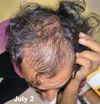
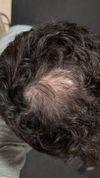
Oscar Piastri's hairline and hair loss treatments like minoxidil, finasteride, dutasteride, and hair transplants. Users share experiences and discuss treatment effectiveness.
A new potential hair loss treatment called HMI-115, and the cost of this treatment which may be expensive due to production costs but could be competitive with other treatments such as hair transplants.
The user is using a hair loss regimen involving 2ddr applied twice daily, tretinoin weekly, and occasionally micro-needling. They report feeling increased scalp thickness and seeing some hair growth progress.
A journey to treat hair loss with Minoxidil and Finasteride, as well as dermarolling and low level laser cap treatments. They have been documenting the progress over 7 months since the start of their journey.
The user has been using Pyrilutamide (Pyril) for hair loss for a month alongside finasteride/dutasteride since 2021 but hasn't seen results. They are considering switching to RU58841 due to its many success stories, despite being skeptical about the legitimacy and testing of Pyrilutamide.
miR-205, a tiny RNA, can stimulate hair growth by softening aging hair follicle stem cells in mice. Future tests aim to see if this can work in humans.
Kintor Pharma has started a Phase II trial in China for GT20029, a potential new treatment for hair loss. Participants are discussing the significance, potential release dates, and comparing it to other treatments and technologies like stem cell hair transplants and SAMIRNA.
The conversation is about a person who underwent a hair transplant surgery after using Rogaine, finasteride, and Nutrafol. They received 2300 grafts and discussed the appearance and density of the transplant, with mixed opinions on the results and advice on future procedures.
The user has been using Minoxidil, finasteride, and a dermaroller for a year with little effect on hair loss. They are considering a hair transplant and are questioning the number of grafts needed and the feasibility of transplanting onto a partially bald scalp.
A user shared their positive experience with a 4750 graft hair transplant at Dr. Orçun Clinic in Istanbul, including a high-quality exosome treatment. Despite skepticism and accusations of advertising, the user expressed satisfaction with the natural-looking results and the doctor's personal involvement.
A user shared their positive experience with a hair transplant, using 3,500 grafts, after trying various treatments like Minoxidil, Finasteride, and Dutasteride. They recommend stabilizing hair loss with Finasteride before considering a transplant.
Amplifica's new injectable treatment for androgenetic alopecia shows a 15% increase in hair thickness and coarseness in 60 days. The treatment is in early human trials and offers a promising alternative to hormone-related hair loss treatments.
The user is pleased with their hair transplant results but is concerned about the vertex area. They use Minoxidil and finasteride daily and had the procedure at a clinic in Athens.
Dr. Bloxham's trial is testing verteporfin on hair transplant patients to see if it can improve hair regrowth in treated areas. People are discussing the potential for follicle regeneration, expected results timeline, and concerns about side effects like cancer.
The conversation is about a person considering participating in a study for Clascoterone, a topical cream for hair loss, and seeking advice on potential side effects. They have mild hair loss and are not currently using other treatments like finasteride.
Finasteride was intentionally developed to treat BPH and later approved for male pattern baldness (MPB) due to its 5AR inhibition effects. The delay in MPB approval was due to concerns about off-label use for female hirsutism and the prioritization of treating a more debilitating condition.
The conversation discusses hair loss caused by Trenbolone use, with suggestions to stop using it and consider treatments like Minoxidil, Dutasteride, and RU58841. It highlights that Minoxidil may temporarily regrow hair, but stopping Trenbolone is crucial to prevent further hair loss.
A discussion on the use of Verteporfin as a hair restoration treatment and whether there are any other doctors or clinics using it currently, aside from Dr. Barghouthi. Treatments such as Minoxidil, Finasteride and RU58841 were also mentioned.
The user has seen no regrowth after 1 year and 2 months on finasteride, despite increasing the dose, and is inquiring about the potential of future treatments like verteporfin and gt20029 for hair regrowth.
A user shared an 8-month update on hair regrowth using HIMS fin/min spray and dermastamping every two weeks, showing significant improvement. Others commented on their own progress and hopes for similar results.
A Phase II clinical trial for TDM-105795 has started recruiting in the US, and it might be a promising treatment for hair loss. Many hair loss drugs, including this one, originate from China.
Hair cloning technology is advancing, with clinical trials for improved methods expected by 2028 and 2029, potentially offering a solution for hair loss if donor follicles remain. Organtech's expansion into other biotech areas may secure funding, but the effectiveness of cloning depends on the availability of androgen-resistant donor follicles.
The conversation is about someone using finasteride and minoxidil along with microneedling as a treatment for hair loss, and there's a mention of scalp tattooing as an alternative or additional approach. Some responses mock the approach, while others inquire about the specifics of the treatment and its effectiveness.
A female user has experienced severe hair shedding since stopping birth control in late 2022, diagnosed as telogen effluvium with no signs of androgenetic alopecia. Despite healthy living and optimal bloodwork, she continues to shed hair daily but also sees significant regrowth.
The post and conversation are about hair transplant tips and experiences. The user emphasizes thorough planning, essential packing, and post-surgery care, and regrets not using finasteride earlier.
The conversation is about using PTD-DBM and valproic acid for hair loss. The user is inquiring about the dosage of these treatments, noting that valproic acid is used at a 7.5% solution.
A user shared their 1-year crown transformation after a second hair transplant with 4000 grafts, using finasteride, minoxidil, and vitamins. Another user commented that while the crown has filled in, they expected more coverage from 4000 grafts and suggested a possible shedding phase.