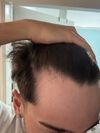
The user feels treated better with a comb-over than when bald due to cancer. They are considering a hair transplant and using finasteride and minoxidil for hair loss.
Finasteride is unlikely to cause a drop in testosterone; it typically increases it by preventing conversion to DHT. The testosterone level drop is likely due to timing of injections or other factors, not finasteride.
The conversation is about whether stemoxydine can shorten the dormant phase after a hair transplant, known as the ugly duckling phase. There is skepticism about whether it actually works as claimed.
A 20-year-old noticed hairline changes after using testosterone and started finasteride to address it. They are considering using minoxidil but are advised to monitor progress on finasteride first before adding it.
A 30-year-old shared their successful hair restoration journey using liposomal topical finasteride and minoxidil, vitamins, and a second hair transplant in Greece, which significantly improved their hair density without side effects. The transplant cost $7500 and involved filling an old scar, with the user expressing gratitude for the life-changing results.
A user noticed increased hair loss after taking B12 supplements for two months, with B12 levels rising to 1500. They are seeking help as other tests show normal levels of minerals and vitamins.
A user shared their experience with hair loss treatments, including finasteride, minoxidil, and RU58841, which improved their hair from a diffuse NW3 to a solid NW2 - 2.5. They noticed significant changes in how people treated them after regrowing their hair, suggesting that attractiveness can greatly impact social interactions and opportunities.
Finasteride increased testosterone and estrogen, stopped hair loss, and promoted regrowth. Users discussed side effects like libido changes and considered adding minoxidil and aromatase inhibitors.
The phase 3 trial results for Pyrilutamide showed no significant difference from the control treatment in increasing hair count, leading to the company halting its development. Users discussed their disappointment and skepticism about hair loss treatments, with some mentioning other treatments like Minoxidil, Finasteride, and RU58841.
The user improved their hair density and reduced scalp visibility by using 1% ketoconazole shampoo, 1mg finasteride, and 5% minoxidil, which increased their confidence. Replies discuss the effects of these treatments, with one clarifying that minoxidil does not affect hormones but finasteride does.
PTD-DBM is being explored for hair regrowth by targeting CXXC5, with clinical trials expected after pre-clinical studies. Users express anticipation and skepticism about its effectiveness.
The user is concerned about hair loss, particularly at the crown, and is using topical finasteride and ketoconazole shampoo but avoids minoxidil due to side effects. Opinions vary, with some suggesting the hair looks worse, while others see no change or slight improvement; additional treatments like oral finasteride and micro-needling are suggested.
A user shared their hair transplant journey, showing progress from February 2021 to May/June 2024. They now use finasteride, minoxidil, biotin, and Nizoral shampoo, and are happy with the results.
The effects of Finasteride on hair loss and its side-effects, such as aching balls. The user has been taking it for two years with no changes to the symptom.
Breezula's phase 2 showed reduced efficacy after 6 months, but phase 3 had positive results, causing confusion about any changes made to the drug. There is frustration over the long timeline for hair loss treatments, with some users expressing more interest in other potential treatments like GT-20029.
A 33-year-old man experienced diffuse thinning and hair shedding due to sleep deprivation and low testosterone. After starting hCG treatment, he noticed hair regrowth on his temples.
The conversation is about which blood markers to test before starting a 5-AR inhibitor for hair loss. The user mentions already testing Total T, Free T, SHBG, Estradiol, Haematocrit, Red blood cell count, and White cell count, and asks if DHT or additional markers are needed.
Whey protein and BCAAs may increase testosterone levels, potentially accelerating hair loss, but opinions vary on their impact. Some users suggest monitoring diet and hair health, while others believe the effect is minimal compared to DHT's role in balding.
The conversation discusses hair loss treatments, specifically using Minoxidil, finasteride, and RU58841. It also mentions the importance of raising vitamin D3 levels.
The user is 6 months post-hair transplant and uses finasteride, oral and topical minoxidil, along with supplements like omega-3, vitamin D3, and zinc. They are experiencing significant shedding and seek advice on whether the medications are effective and if the shedding will settle.
The user switched from finasteride to dutasteride and is seeking feedback on hair changes after 4 months. The current regimen includes oral dutasteride, oral minoxidil, and topical minoxidil.
The user shared progress pictures after three months of using RU58841, finasteride, and OM (oxidative stress modulators) for hair loss treatment. They haven't noticed much change but are seeking feedback on their results.
A user experienced increased estradiol, nipple tenderness, and ED after taking finasteride. They are considering dose reduction to mitigate these effects.
The conversation is about organizing hair regrowth results using a standard format in a single post for easier access. Treatments mentioned include oral minoxidil, oral finasteride, and dermarolling.
The conversation is about starting finasteride for hair loss, with concerns about high free testosterone and potential side effects like gynecomastia. The user plans to address vitamin deficiencies before beginning the treatment.
Finasteride's effectiveness and side effects may vary based on male phenotypes, with some users noting differences in response related to body and facial hair characteristics. Some users report success with lower doses, while others experience side effects, suggesting individual variability in response to the treatment.
A user proposed genetically engineering scalp stem cells to stop androgen receptors from causing hair loss. Others discussed the feasibility, existing research, and potential issues with this approach, including targeting the correct cells and unintended effects.
The conversation discusses the use of dutasteride and finasteride for hair loss, including switching between them, optimal dosing, and managing side effects. The user has transcriptions of videos on these topics and offers them to others interested.
Stopping finasteride often leads to rapid hair loss, returning to a genetic baseline, as the drug temporarily halts hair loss and promotes regrowth. The discussion explores the complexity of hair loss, suggesting that factors beyond DHT, such as genetics and scalp conditions, may play a role.
A 30-year-old shared their successful hair restoration journey using a combination of liposomal topical finasteride and minoxidil, vitamins, and a second hair transplant in Greece, resulting in life-changing improvements without side effects. The user emphasized the importance of proper research for hair transplant clinics and expressed gratitude for finding an effective treatment protocol.