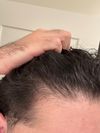
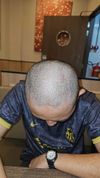
A 23-year-old male started using Redensyl and Aminexil, along with Tab BTN Ultra and Vitamin D3 supplements, for hair loss. He shared progress pictures after 45-50 days of treatment.
Exosomes combined with fractional picosecond laser treatment were effective in treating androgenetic alopecia and promoting repigmentation in white hair patches. The role of exosomes in hair repigmentation, particularly in conditions like poliosis, is not well-studied.
The conversation is about the availability of the research chemical GT20029 for hair loss treatment and when companies like Anageninc will have it. Specific treatments mentioned include Minoxidil, Finasteride, and RU58841.
The conversation discusses why CB-03-01, a potential hair loss treatment, isn't widely discussed despite evidence of its effectiveness and safety. Some users mention other treatments like melatonin, procianidin b2, and RU58841, debating their effectiveness and safety.
Microneedling for hair loss should avoid anti-inflammatory supplements like garlic, Vitamin E, fish oil, turmeric, and NSAIDs for 3 days before and 5 days after the procedure to enhance collagen production. Completely abstaining from these supplements may be unnecessary, but caution is advised around the procedure time.
SCUBE3 and Amplifica's progress in hair loss treatment is being discussed, with inquiries about their current status and clinical trials. No specific updates or new information are provided in the conversation.
A user shared their positive experience with a hair transplant performed by Dr. Timothy Carman, using 1100 grafts via FUT surgery, and reported satisfaction with the results and minimal scarring. The user continues to use minoxidil and finasteride for hair maintenance.
A user with alopecia totalis, borderline universalis, seeks advice on getting into a Xeljanz trial or appealing insurance for coverage. They experienced significant hair regrowth but are now seeing hair loss again and want to try Xeljanz.
Oleic acid and microneedling are being explored for hair regrowth, but results are mixed. Addressing DHT and fibrosis is crucial, with treatments like finasteride, minoxidil, and scalp massage also discussed.
A user shared their 9-month post-hair transplant results with 4600 grafts, using only Nourkin hair vitamins, Vitamin D, and B12, and expressed satisfaction. The replies debated the necessity of medications like finasteride and minoxidil for maintaining hair health.
The conversation discusses a video about GT20029, a treatment for hair loss, and its comparison to KX826. Users express interest in the video's effectiveness and potential, and praise its informative content.
Chime Biologics and Hope Medicine are speeding up the launch of a first-in-class antibody drug, HMI-115, for endometriosis and androgenic alopecia. The treatment involves a series of subcutaneous injections, has shown promising results in phase 1, and continues to promote hair regrowth even after the treatment is stopped.
User doing PRP with exosomes for hair loss, sees possible regrowth after two treatments. Another user suggests providing before and after pictures for better assessment.
KX-826 Phase II results show that a 0.5% concentration performs better than 1% for treating male pattern baldness. Concerns about receptor upregulation from long-term DHT antagonism were mentioned.
The conversation is about the struggles of dealing with diffuse thinning at a young age and the lack of significant improvement after using treatments like finasteride and minoxidil. Some suggest additional methods like derma rolling, microneedling, and hair fibers, while others share their own experiences and encourage persistence with treatment.
A 23-year-old experiencing severe diffuse thinning after scalp inflammation is considering finasteride as a last resort after stopping minoxidil and using anti-inflammatory medication. Users suggest that inflammation causes temporary shedding and recommend consulting a dermatologist, with some advocating for finasteride as a reliable treatment option.
The conversation is about the anticipation and uncertainty regarding the release of GT20029 Phase 2 results for hair loss treatment. Users express hope for its effectiveness and minimal side effects compared to other treatments like Pyri and HMI115.
PRP treatments have been effective for the user, with a new recommendation of using a high-quality plasma kit once a year. The user seeks experiences with this specific PRP approach.
A user shared a DIY recipe for a NutraKos-style amino acid mix as a cost-effective alternative to the expensive product, suggesting it as a complementary supplement for hair loss. Another user argued that proven treatments like finasteride and minoxidil are more reliable, questioning the efficacy of the amino acid mix.
DLQ01, a prostaglandin F2α analog, shows promise for hair growth by directly stimulating PGE2/PGF receptors without needing conversion, and can be combined with minoxidil and retinoids like tretinoin for enhanced effectiveness. Minoxidil's efficacy may be reduced by COX-1 inhibitors, but using prostaglandin analogs like Latanoprost or Bimatoprost can help maintain its effectiveness.
ABS-201 shows promise for male hair regrowth by blocking the prolactin receptor, with higher expected efficacy than current treatments. The discussion also covers dosing differences between macaques and humans for hmi115, highlighting a significant dosage disparity.
Kintor's Pyrilutamide (KX-826) showed hair growth in Chinese Phase III trials but did not significantly outperform placebo. The treatment was safe with no major adverse reactions reported.
The conversation discusses the use of peptides C60 and GHK-Cu for hair growth. Participants are sharing their experiences or knowledge about these treatments.
The conversation is about recommendations for Copper Tripeptide-1 solutions to enhance hair loss treatment, with a focus on using Reviv Hair Serum alongside LLLT therapy. The user also discusses using Minoxidil, RU58841, and other compounds to manage hair shedding and improve hair thickness.
Trans woman experiencing thinning hair despite low testosterone and finasteride use seeks possible causes and solutions. Current treatments include finasteride, spironolactone, estradiol, vitamins, and microneedling; minoxidil not tried due to concerns about dependence and side effects.
A user shared progress pictures showing improvement from NW 6 to NW 2 after four months of treatment. They are considering using exosomes to further reverse hair miniaturization.
The conversation discusses the potential of Sanguisorba Officinalis Root Extract as a treatment for hair loss by inhibiting FGF-5. The user also mentions the product évolis, which is based on this extract but is only available in the US and Australia.
A 26-year-old male experienced hair thinning since age 18 and tried various treatments, including topical minoxidil, oral finasteride, and a hair transplant. He is currently using topical finasteride, minoxidil, tretinoin, hydrocortisone, and oral dutasteride, and is satisfied with the results 6.5 months post-transplant.
PP405 is a potential hair loss treatment undergoing trials, with discussions on its effectiveness and comparison to existing treatments like finasteride and minoxidil. There is skepticism about its status as a cure, with hopes for future advancements in genetic treatments like CRISPR.