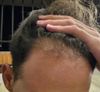
Verteporfin is being explored for hair regeneration, with unofficial trials and updates shared online. Efforts are being made to encourage more surgeons to trial verteporfin for donor hair regeneration.
The conversation is about a person regrowing their hair in 7 weeks using scalp massages, peppermint oil, microneedling, and keratin shampoo without drugs. They experienced initial shedding but saw improvement after consistent treatment and shampooing every other day.
User considers scalp micropigmentation (SMP) for hair loss. Mixed opinions shared; some regret it, others satisfied. Choosing reputable clinic and technician is important.
Microneedling stimulates hair growth through stem cell activation during wound healing, not just increased blood flow. Other methods like showers or supplements don't replicate this effect.
The conversation is about enhancing dermarolling for hair loss by using topical peptides like tb-500 or GHK-Cu to aid in healing and hair growth, and whether anyone has experienced significant results from this method.
The user shared their positive experience with hair regrowth using a minoxidil and finasteride spray, along with occasional microneedling, and encouraged others to try it. Despite skepticism from some users about a possible hair transplant, the user insisted their results were solely from the treatment.
A user successfully regrew their hair over 8 months using topical minoxidil, finasteride, a healthy lifestyle, and derma stamping. They emphasize the results are genuine and not from hair transplants.
Trans woman experiencing thinning hair despite low testosterone and finasteride use seeks possible causes and solutions. Current treatments include finasteride, spironolactone, estradiol, vitamins, and microneedling; minoxidil not tried due to concerns about dependence and side effects.
The user is seeking advice on improving their hairline, currently using dutasteride 0.5mg/day and oral minoxidil 5mg/day for 14 months. They want to avoid a hair transplant and are concerned about thin hair and receding temples.
Scalp massages may improve hair growth, with noticeable results in a few months. The technique involves detaching the skin from the skull, similar to detumescence therapy, and may be combined with other treatments for better results.
Hair transplants cost more in the U.S. than in Turkey, but quality varies. Proper research is essential, as aggressive transplants can exhaust donor hair, and finasteride only slows hair loss.
The user is using oral finasteride and minoxidil, microneedling, and plans to add topical minoxidil to boost hair growth. They are considering adding tretinoin but are unsure if it's necessary.
The conversation is about someone who initially had positive results with Minoxidil for hair loss, lost those gains due to a hospital stay, and is now not seeing the same results upon resuming treatment. They plan to add microneedling and/or tretinoin to their regimen and are seeking success stories from others who did not respond to Minoxidil alone.
A 25-year-old shares progress on hair regrowth using finasteride, ketoconazole shampoo, Alpecin caffeine shampoo, and topical minoxidil, noting improved hair health but persistent temple thinning. They consider switching to oral minoxidil, adding microneedling, and possibly a hair transplant after one year.
A new stem cell method for culturing hair follicles is being developed as an alternative to Minoxidil, finasteride, and RU58841. There are concerns about its cost and accessibility despite plans for commercialization.
PP405 is a potential hair loss treatment that inhibits mitochondrial pyruvate carriers, increasing lactate dehydrogenase activity and stimulating hair follicle stem cells. In a phase 1 trial, 31% of participants showed over 20% hair density increase with PP405 treatment.
This post and conversation are about the molecular mechanisms triggered by microneedling, specifically its effects on inflammation, tissue remodeling, epithelial proliferation, differentiation, and collagen synthesis. The discussion highlights the potential benefits of microneedling for hair loss treatment.
A user is considering creating a mobile app to track hair transplant recovery, including daily progress, photos, and care instructions. They seek feedback on whether such an app would be helpful for others.
The conversation discusses the potential for Verteporfin to reduce scarring, making hairline lowering surgeries more viable for men with mild hair loss. The user suggests that if scarring can be minimized, men might opt for hairline lowering instead of using grafts for other areas.
Hair follicle stem cells remain in bald individuals, but progenitor cells do not, raising questions about hair regrowth claims by Pelage. PP405 is discussed as a potential treatment, with skepticism about its effectiveness compared to existing treatments like Minoxidil and Finasteride.
A user suggests that deeper microneedling with Verteporfin injections might help regrow hair in areas with scar tissue, alongside a DHT blocker. Another user explains that hair loss might be due to reduced Wnt/β-Catenin signaling and suggests that treatments like Minoxidil, Finasteride, and microneedling could potentially reverse it.
A doctor advised against taking finasteride after a hair transplant, suggesting the patient had reached their final balding pattern, but many users disagreed, recommending medications like minoxidil and finasteride to prevent further hair loss. The consensus was to seek a second opinion, as the advice seemed financially motivated rather than medically sound.
Microneedling may enhance hair regrowth by transferring stem cells to dormant follicles, improving the effects of minoxidil. Users discuss using microneedling with needle lengths around 1.5mm to stimulate hair growth.
A user claimed significant hair regrowth over 18 months using minoxidil, finasteride, ketoconazole shampoo, dermastamping, and supplements without a transplant. Commenters were skeptical, suspecting a hair system might be involved.
A user's 6-month update on their hair loss treatment regimen, which includes finasteride, minoxidil and derma rolling, with no significant side effects.
TDM-105795 showed promising hair growth results, with higher efficacy than placebo and minimal side effects. It activates dormant hair follicle stem cells and may maintain gains without immediate loss, unlike minoxidil.
The user switched from finasteride to dutasteride and experienced heavy hair shedding around six months in, affecting even transplanted hair. They are seeking others' experiences with similar shedding after switching medications.
The user had a hair transplant and uses oral minoxidil, a red laser therapy helmet, fish oil, collagen, and sardines for hair thinning but avoids finasteride due to side effect concerns. Many suggest these methods may not be effective long-term without a DHT blocker.
The post discusses speeding up verteporfin trials for hair loss treatment. The original poster, involved in the trials, requests help in crowdsourcing doctor emails to spread awareness and gather more support for the trials.
A 31-year-old man shared his 2-year experience using finasteride and minoxidil after a hair transplant on the front and mid scalp, noting improvement but still having a thin crown. He recently started dermastamping, plans to use ketoconazole shampoo, and uses hair fibers for extra confidence at events.