Search
for
Sort by
Community Join
90-120 / 1000+ resultscommunity How You Can Help Speed Up the Verteporfin Trials
The post discusses speeding up verteporfin trials for hair loss treatment. The original poster, involved in the trials, requests help in crowdsourcing doctor emails to spread awareness and gather more support for the trials.

community 36yo Male: 5 Months of Derma Stamping with Minimal Results, Should I Change Needle Length?
A 36-year-old is experiencing underwhelming results from derma stamping for hair thinning, using needle lengths of 0.5mm to 0.75mm. They are considering increasing needle length, taking a break, or pairing the treatment with rosemary oil.
community Verteporfin FUT 9 Month Update
Dr. Bloxham's 9-month update on FUT scar revision with Verteporfin shows promising results. Excitement is high for FUE, which appears highly effective based on Dr. Barghouthi's findings.
community Twist-1 vs Scube-3. Is it worth pursuing both?
community Is it possible to have low scalp vascularity??
The user is using topical dutasteride, finasteride, minoxidil, and tretinoin but seeing no results or side effects. They also microneedle every two weeks but experience little bleeding, questioning if a thick scalp is preventing treatment effectiveness.
community Diffuse thinning is the worst man
The conversation is about the struggles of dealing with diffuse thinning at a young age and the lack of significant improvement after using treatments like finasteride and minoxidil. Some suggest additional methods like derma rolling, microneedling, and hair fibers, while others share their own experiences and encourage persistence with treatment.
community I don't care if it's thin, I'm keeping it long. 2 yr HT, 1 yr Fin
OP underwent a hair transplant (HT) and has been using finasteride for one year. Despite having thin hair, OP is happy with the results and feels more confident.
community 35 MtF | 16 Months | Minoxidil + Dutasteride + Microneedling + Exosomes. Note that since I'm early in my transition (and I was coming from a bald state), I still have short hair. Very few MtF progress pictures here, I figure this might help some of you.
A 35-year-old transitioning female (MtF) shared her hair regrowth journey using Minoxidil, Dutasteride, Microneedling, and Exosomes, starting from a bald state. Commenters discussed the impressive results, skin care routine, and the effects of estrogen on hair and skin.
community The temporal peak - the often forgotten part in transplants?
Temporal peaks are crucial for a natural-looking hair transplant, but they are challenging to achieve due to the need for precise angles and appropriate hair thickness. Many users emphasize the importance of finding a skilled surgeon and using finasteride to maintain hairline stability.
community Diffuse thinner taking Fin for over 2 years no improvement. Try oral min or switch to dut?
community Your Best Advice on MtF Transgender Hair Transplants
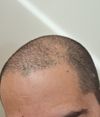
community 32M on Fin/Min for 2 Years: Considering HT for Overall Thinning
The user is considering a hair transplant to increase hair density after using finasteride and minoxidil for two years. They prefer a natural hairline and are unsure if a transplant is suitable for overall thinning.
community Any positive responses for Diffuse Thinner with Retrograde using Fin/Min/Dut
People with diffuse thinning and retrograde hair loss are discussing treatments like finasteride, minoxidil, and dutasteride, with some reporting improvements and others experiencing issues like scalp inflammation and increased sebum. Suggestions include addressing scalp inflammation, considering gut health, and possibly using topical antiandrogens or micro-needling.
community Guaranteed Way to Revive ALL Follicles. Transition, and then Transition Back & Maintain (for Men)
Transitioning genders humorously suggested for hair regrowth, noting some transgender individuals experience this. Discusses treatments like minoxidil, finasteride, and hormone therapy, but advises against transitioning solely for hair regrowth.
community Exit strategy advice: 2nd transplant vs. electrolysis to soften hairline
A 32-year-old male is considering options to soften a dense transplanted hairline after experiencing accelerated hair loss and intolerance to finasteride and dutasteride, while using minoxidil. He is exploring partial electrolysis or laser treatments to achieve a natural look with a short buzz cut, avoiding a second transplant or scalp micropigmentation.
community Verteporfin to deminiaturize follicles
User discusses verteporfin for hair regrowth through "super microneedling" and preventing scarring. They mention a case of an old man regrowing hair after a head injury and suggest verteporfin could recreate this result.
community Norwood Level 5 - Two Session 2022, 2024 - Total: 7100 greft - FUE - 4 Years Results
community Did these tests—any of these linked to diffuse thinning?
A 25-year-old male experiencing diffuse thinning is advised to address high TSH levels and low iron, and consider treatments like finasteride. Weight loss and improved diet are also suggested to potentially help with hair health.
community Using trichosol as a vehicle for finasteride, minoxidil etc.
User discusses using trichosol as a vehicle for hair loss treatments like finasteride and minoxidil. They ask about others' experiences and the stability of the solutions.
community Jxl069 (pp405 api) week 8 update
The user shared minimal results from using JXL-069 for hair loss, noting a slight lengthening of vellus hairs and plans to switch to a prodrug variant due to limited effectiveness. They also mentioned using finasteride and minoxidil, which have plateaued in results.
community Tressless When They See Verteporfin Results
The conversation discusses the potential of Verteporfin, an FDA-approved drug, for hair loss treatment, particularly in combination with microneedling or PRP. Users express hope and curiosity about its application, while some remain cautious due to the need for more extensive testing.
community need transplant? 3.5 months progress
A user trying to avoid an expensive hair transplant, and the replies suggesting they wait two years on treatment before deciding if they need a transplant or not.
community post transplant / post finasteride
community Diffuse thinning is the worst possible balding experience
The conversation discusses the struggle with diffuse hair thinning and the effectiveness of treatments like finasteride, minoxidil, and RU58841. Users share experiences of hair thickening and shedding stopping with these treatments, but results vary and some are skeptical.
community My 2700 Hair transplant journey.
community I built a free Al-powered hair transplant simulator for the community, would love your feedback!
A user created a free AI-powered hair transplant simulator to help visualize post-transplant results, seeking feedback and offering it as a tool for clinics. Users discussed its usefulness, limitations, and the requirement for email and phone verification to prevent abuse.
community 24M diffuse thinning ,2 years on finasteride and 5/6 months on dut and oral min, looking for long term advice
A 24-year-old male with diffuse thinning has been using finasteride for two years, dutasteride for 6-7 months, and oral minoxidil for 5 months, along with topical treatments. He plans to continue this regimen and reassess in August 2026, hoping to stabilize hair loss without surgery.
community Progress with 6 Years fin and a FUT (2017 vs 2023)
The post discusses a user's six-year progress with finasteride and a Follicular Unit Transplant (FUT) for hair loss. The user shared before and after photos in reverse order, leading to confusion, but overall, the community responded positively to the user's hair regrowth.
community 21M with a nasty case of MPB; Heres what's on my radar for the future.
Hopeful treatments for hair loss, including Verteporfin, Androgen Receptor Degradation, and SCUBE3. These treatments offer potential solutions to slow or stop the effects of androgens on the scalp.