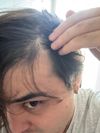
The user has been using finasteride, minoxidil, retinoid, and occasional microneedling for hair loss with good results. They recently added stemoxydine, which improved their hair further, and suggest trying it, especially in the EU where it's easily available.
The user reports using finasteride for 15 days, minoxidil for 2 months, ketoconazole shampoo twice a week, and a derma pen once a week to treat hair loss. They shared progress pictures showing results after 2 months of treatment.
The conversation discusses the effects of finasteride on hair loss and its potential neurological and sexual side effects. Users share personal experiences, with some reporting positive outcomes and others expressing concerns about cognitive function.
The conversation is about the potential impact of RU58841 on male fertility, specifically regarding sperm concentration, total count, and motility. The user is curious about the likelihood of RU58841 reducing fertility based on its mechanism of action and comparisons to similar substances.
The conversation discusses the difference between the commercially available Pyrilutamide and the version in clinical trials. It also mentions treatments like Minoxidil, finasteride, and RU58841 for hair loss.
The user is exploring topical Saw Palmetto as a milder alternative to microdosing topical Finasteride for hair loss, aiming to minimize systemic DHT impact. They plan to experiment with this herbal remedy for a year to assess its effectiveness on their mild androgenetic alopecia without significant side effects.
Men with early male pattern baldness (MPB) may have hormonal abnormalities similar to those in women with PCOS. Specific treatments mentioned include Minoxidil, Finasteride, and RU58841.
Mixing 1ml of topical Minoxidil and Pyrilutamide (2ml total) together in a container and applying immediately is being discussed. The concern is whether this method degrades or compromises the efficacy of either compound.
A male in his early 20s with CCCA (scarring alopecia) started treatment with Finasteride, Fluocinolone, and Doxycycline. Steroid injections were suggested but not yet done.
The conversation discusses the use of topical finasteride for hair loss, with the user considering whether oral finasteride might be more effective in reducing DHT levels. Other users suggest alternatives like dutasteride, RU58841, saw palmetto, and a combination of Redensyl, Procapil, and Capixyl, while debating the effectiveness and side effects of these treatments.
Combining tretinoin with minoxidil may enhance hair growth when minoxidil alone becomes less effective. Apply tretinoin, wait 40 minutes, then apply minoxidil, and avoid sun exposure.
The user experienced significant hair regrowth using a combination of minoxidil, alfatradiol, pyrilutamide, and nizoral, despite previous intolerance to finasteride. They emphasize the importance of consistency in treatment and are optimistic about the results, noting no side effects so far.
A human trial involving the use of Verteporfin as a treatment for hair loss, which has been ongoing for 119 days with an update on its progress. Treatments such as Minoxidil, Finasteride and RU58841 have also been discussed.
Disinfecting microneedlers is important to prevent infection, with suggestions to use high-percentage alcohol or denture tablets for sterilization. Rollers may cause skin damage, so stamps or pens are recommended for safer microneedling.
User started oral finasteride 0.33mg daily and later made a topical solution with cetirizine and stemoxydine. They experienced hair growth progress after 8-9 months and discussed factors affecting their results.
Tretinoin combined with minoxidil is effective for hair loss and can be used once daily. The user seeks a compounding pharmacy to mix these without finasteride.
An 18-year-old experiencing hair loss and seborrheic dermatitis has tried finasteride, dutasteride, and various shampoos without success. They are considering anti-androgens like RU58841 and KX-826 for oil control and dandruff reduction.
Minoxidil may not be effective due to low sulfotransferase activity, and the user considers adding tretinoin to the regimen. They are unsure about the timing and combination with microneedling.
Finasteride and Dutasteride used in combination with RU58841 and microneedling, as a treatment for hair loss. There was discussion on progress of the treatment and potential other methods to consider.
The user has been using Roman 3-in-1 topical treatment (finasteride 0.3%, minoxidil 6%, tretinoin 0.025%) and a 0.25 mm dermaroller for four months to address crown thinning. They are seeking advice on whether to continue with the current regimen, switch to oral finasteride, or try dutasteride for better results.
The user is considering RU58841 and has been using dutasteride since age 17. They are seeking affordable SARD options, mentioning ASC-J9, GT20029, and AH001.
Microneedling can cause infections if not done carefully; users suggest using alcohol swabs and reducing needle depth to avoid issues. Proper sanitation and gentle pressure are key to preventing bleeding and infection.
The conversation is about whether topical finasteride and minoxidil need to be applied directly to the affected areas of the scalp or if they can be spread through blood vessels. It also asks how long topical finasteride remains on a pillow.
A 20-year-old male experienced significant hair regrowth after 6 months using oral dutasteride, topical minoxidil, and tretinoin. He noted side effects like occasional watery semen, lower libido, better erections, and no more acne.
The conversation discusses using a combination of DHT gel, dutasteride, pyrilutamide, and minoxidil to promote beard growth while minimizing hair loss. Users suggest consulting a doctor and considering genetic factors before proceeding.
Hair loss discussion includes finasteride intolerance and questioning if Pyrilutamide is an alternative. Pyrilutamide not commercially available, but may be tolerable if approved since it's not a 5aR inhibitor.
The conversation is about whether testing for free DHT is necessary before starting Finasteride for hair loss, despite having other hormone tests available. One person suggests that genetic response to DHT is more important than DHT levels and advises starting Finasteride without the free DHT test.