OP is seeking advice on which percentage of tretinoin to use to enhance the effectiveness of minoxidil for hair loss. They are unsure about choosing between 0.1%, 0.025%, or 0.05% tretinoin.
The conversation is about the best concentration of Tretinoin to use with Minoxidil for hair growth, with suggestions ranging from 0.025% to 0.05%. Users discuss personal experiences and plans to adjust Tretinoin concentration for better results.
A user discusses a dermatologist-prescribed topical solution for hair loss containing 7% Minoxidil, 0.0125% Tretinoin, and 0.1% Dutasteride, questioning its safety. Responses suggest the concentration is generally safe, though there is skepticism about daily use at high concentrations, and similar products like HairStim and Happy Head are mentioned.
Start with 0.025% tretinoin to enhance minoxidil effectiveness, gradually increasing to 0.05% to avoid scalp irritation. Users experienced redness, inflammation, and dandruff when introducing tretinoin too quickly.
The user noticed a significant improvement in hair loss after 3.5 months using a topical treatment of 7% Minoxidil, 0.1% Finasteride, and 0.025% Tretinoin, which was prescribed and shipped from a pharmacy in Indiana. Other users discussed alternative products with varying concentrations of Minoxidil and Finasteride.
Topical Finasteride is most effective at 0.1-0.25%, and Minoxidil at 5%. Tretinoin is optional, and additional ingredients like biotin, caffeine, and saw palmetto are recommended.
Switching from tretinoin to tazarotene with minoxidil led to new hair regrowth after years of maintenance. Tazarotene's selectivity and higher concentration might be more effective for hair growth.
The conversation discusses using tretinoin for hair loss and skincare. Users share experiences, noting tretinoin's effectiveness in combination with minoxidil for hair and its proven benefits for anti-aging skincare.
Tretinoin may enhance minoxidil's effectiveness for those not responding to minoxidil alone, but it could reduce efficacy for some who are already responding to minoxidil. Tretinoin requires careful use, including skin moisturizing and sun protection due to increased sensitivity.
Minoxidil's effectiveness is limited by the need for sulfation and proper transport to hair follicles, with tretinoin potentially enhancing its effects by promoting enzyme activity and keratinocyte differentiation. Tretinoin may improve minoxidil's response by boosting the expression of necessary enzymes and transporters.
A user is seeking advice on a new topical hair loss treatment containing Minoxidil 3%, Finasteride 0.3%, Progesterone 1%, Hydrocortisone butyrate 0.1%, and Ketoconazole 0.5%. They are concerned about the systemic absorption of Finasteride and plan to do blood tests and a spermiogram before starting.
The conversation discusses a topical formula for hair loss including Finasteride (0.025%), Minoxidil (0.5%), Tretinoin (0.01%), Caffeine (0.005%), Melatonin (0.003%), Tea Tree Oil (0.05%), Aloe (0.05%), Biotin (0.05%), and Fagron TrichoXidil (2.5%). The user considers removing Minoxidil and Tretinoin to test TrichoXidil's effectiveness.
The conversation is about personal experiences with Sonsuk Topical Finasteride, Minoxidil, and Tretinoin for hair loss. The original poster is seeking feedback after three weeks of use due to a lack of reviews.
A user is using a compounded hair loss treatment with 5% minoxidil, 0.005% finasteride, and 0.01% tretinoin but is experiencing issues with residue and greasiness. They are inquiring if using the treatment five times a week instead of daily will still be effective.
User obsessed with hair loss prevention shares collection of treatments, including oral and topical finasteride, minoxidil, dermapen, and more. Others suggest adding RU58841, laser helmet, and PRP, while some advise dropping certain treatments for long-term manageability.
The post and conversation are about a hair loss treatment stack without finasteride or dutasteride. The suggested treatments include Alfatradiol, Koshine826, Ketoconazole lotion, Minoxidil, microneedling, Tretinoin, and Stemoxydine.
The user experienced significant hair regrowth using a nightly topical spray with 0.3% finasteride and 6% minoxidil, without side effects. Noticeable improvements were seen within three months, with continued progress over time.
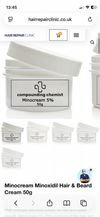
A user is considering switching from a 5% minoxidil spray to a minoxidil cream for easier application and less greasiness. They are inquiring about the Hair Repair Clinic 5% minoxidil cream, which includes optional tretinoin and other ingredients like isopropyl myristate and beeswax.
User shares 9-month progress using topical Fin/Min formula (10% Min, 0.1% Fin) for hair loss, with significant improvement in crown area. Others discuss experiences, side effects, and application methods for the treatment.
A user shared their hair loss treatment journey, using topical Minoxidil, Finasteride, Tretinoin, and Stemoxydine, and asked for feedback on progress after one month. Responses varied, with some users suggesting patience and consistency, while others noted minimal visible change.
Minoxidil is more effective when combined with retinoic acid, such as tretinoin or tazarotene, enhancing hair growth. Some users experience significant regrowth, while others see minimal effects or side effects.
A person shared their 3-month hair regrowth progress using 1mg finasteride daily, a topical solution with finasteride, minoxidil, and tretinoin, and weekly microneedling. They regret not starting treatment earlier, and a reply agrees that early treatment is beneficial.
The conversation discusses using different concentrations of topical treatments for hair loss, specifically Minoxidil, Finasteride, Dutasteride, and Tretinoin. The user is considering higher concentrations after previous treatments were ineffective.
A 28-year-old male experienced hair regrowth using a topical spray containing minoxidil, finasteride, and tretinoin, along with occasional microneedling, after stopping oral finasteride due to side effects. He is pleased with the progress after three months and plans to continue using the spray.
A user shared their 4.5-month hair transformation using a homemade topical solution with 5% minoxidil and crushed finasteride pills, applied twice daily with weekly microneedling. They plan to switch to once-daily application with tretinoin gel to enhance absorption.
Dutasteride has been used for 20 years with some hair thickness improvement but no dramatic regrowth. The user also experimented with minoxidil, tretinoin, and peptides like BPC 157 for potential benefits in hair density and quality.
A 23-year-old man uses a topical spray with minoxidil, finasteride, and tretinoin for hair loss, experiencing improved hair growth but occasional heart palpitations. He worries his girlfriend might leave him if he goes bald, but commenters advise that if she would leave over hair loss, she isn't worth it.
The conversation discusses various hair recovery treatments, including finasteride, dutasteride, minoxidil, RU58841, ketoconazole shampoo, microneedling, and tretinoin. Users debate the effectiveness and safety of these treatments, with some suggesting combinations like dutasteride and minoxidil as potent options.
A user's 20 year journey with hair loss and the treatments they have used to manage it, including finasteride, minoxidil, a custom Strut Blend of Dutasteride, Minoxidil, Tretinoin, and Biotin, Nizoral shampoo, multivitamins, Vitamin D, B Complex, Dim, Clomid, exercise, diet, laser helmet, Toppik dark brown, and topical Finasteride. The user also talks about their successful life, lack of desire for children and high sperm count due to Clomid.
A user experienced no hair regrowth after using oral minoxidil, topical finasteride, minoxidil, and tretinoin, and reported side effects from oral finasteride. They are considering switching to dutasteride or using hair fibers for better results.