Search
for
Sort by
Community Join
510-540 / 1000+ resultscommunity Injectable and biofunctionalized fibrin hydrogels co-embedded with stem cells induce hair follicle genesis.
community Injectable and biofunctionalized fibrin hydrogels co-embedded with stem cells induce hair follicle genesis.
community Seb derm is eating my hair?!?!
A 22-year-old male is experiencing hair loss due to seborrheic dermatitis, not male pattern baldness, and is seeking advice. Suggestions include using Nizoral, sulfate-free and ketoconazole shampoos, cutting hair short, using cold water, avoiding picking scabs, and trying selenium sulfide shampoo or finasteride.
community Even if the new drugs succeed, how are we gonna apply so many topicals?
New hair loss treatments like GT20029, Clascoterone, and PP405 are being discussed, with concerns about how to apply multiple topicals alongside existing treatments like minoxidil and finasteride. Suggestions include creating a routine, mixing treatments, or minimizing redundancy in treatment stacks.
community Pyrludimide (KX-826) or Breezula (clascoterone)
The conversation is about hair loss treatments, specifically Pyrludimide (KX-826) and Breezula (clascoterone), with the user unable to tolerate finasteride and dutasteride. The user plans to use these treatments alongside minoxidil, considering the efficacy and availability of each option.
community Atypical hair loss, weird response to finasteride
community Is it normal for scalp texture and appearance to change where hair is lost?
The conversation discusses changes in scalp texture and appearance in areas of hair loss, with concerns about the suitability of these areas for hair transplants. Users mention issues like fibrosis, inflammation, and thinner skin, advising caution and consultation with clinics before proceeding with transplants.
community White scalp that gets itchy after it dries. Not sure it’s seborrheic dermatitis anymore.
community Does Fluridil reducing shedding?
Eucapil (fluridil) may reduce hair shedding. It can be added to a regimen with finasteride and minoxidil.
community Topical FIN/MIN, Dermastamping, 2% ketoconazole and DHT blocking shampoo
The user has been using topical 5% Minoxidil, 0.1% Finasteride, dermastamping, 2% ketoconazole, and a DHT-blocking shampoo with saw palmetto, caffeine, biotin, and argan oil for hair loss. Despite some baby hair growth on one side, the user is experiencing continued hairline recession and shedding, leading to distress.
community pyrilutamide phase 2 results right here, thanks to user Glaringbooch
Pyrilutamide, a new drug being tested to combat hair loss that has been found to perform comparably or better than finasteride and dutasteride in the initial 6 months of treatment with minimal reported side effects.

community 16 advice on routine I’m beginning
The user is experiencing hair thinning and bald spots, using Nizoral, rosemary oil, fluocinolone, and receiving PRP treatments. They are considering oral minoxidil and finasteride but are hesitant due to age and financial constraints.
community 9 months of treatment as an aggressive diffuse thinner
The user has been using oral minoxidil, dutasteride, RU58841, and other treatments for hair loss over nine months, seeing some improvement in hair thickness and crown volume but continued thinning at the hairline. They plan to continue treatment for another nine months despite being sensitive to DHT fluctuations and are considering increasing dosages or other options like a hair transplant.
community Let's talk about Tsuji and Shiseido
The conversation discusses hair loss treatments, focusing on Tsuji's hair cloning and Shiseido's RCH-01, with skepticism about their effectiveness on humans. It compares these to PRP, noting PRP's higher efficacy in studies.
community 0-5 months: almost perfect hair regrowth. But now, after ten months….
The user experienced significant hair regrowth with topical finasteride, minoxidil, ketoconazole, and dermarolling, but later faced severe hair shedding after stopping dermarolling and reducing ketoconazole use. Suggestions included switching to oral treatments, resuming dermarolling, and considering lifestyle changes.
community Baby hairs on minoxidil 4 months in?
community 3 months progression not sure if I should pursue tretinoin
The user has been using finasteride, minoxidil, and a derma stamp for hair loss for nearly three months and is considering adding tretinoin. They are advised to be patient, as results typically take 6-12 months, and are exploring other options like oral minoxidil and dutasteride.
community New Hair Loss Cure: AMP-303 Is Back. It’s what PP405 should have been.
AMP-303 and AMP-601 are new hair loss treatments targeting dermal papilla cells, with AMP-303 showing early efficacy in transitioning vellus hairs to terminal hairs after one injection. Further clinical trials are planned, and these treatments are seen as promising due to their biologic approach and less frequent application compared to daily treatments.
community Pyrilutamide - cosmetic vs. clinical trials
The conversation discusses the difference between the commercially available Pyrilutamide and the version in clinical trials. It also mentions treatments like Minoxidil, finasteride, and RU58841 for hair loss.
community IGF-1 and Peptides? Miracle molecule waiting to be found
The conversation discusses potential hair loss treatments focusing on stimulating IGF-1 at the follicle level using growth-factor cocktails and engineered peptides, such as Acetyl Tetrapeptide-3, Copper Tripeptide-1, Oligopeptide-20, Thymosin-β4, and Palmitoyl Tetrapeptide-7. It suggests that device-assisted delivery methods like microneedling may enhance effectiveness.
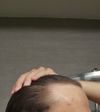
community Scalp redness and in that spot having thinning hair?
The user noticed increased hair thinning and scalp redness on one side of their temple. They are seeking advice on what this could be and how to address it.
community topical exosomes - experimenting
The conversation is about experimenting with topical exosomes for hair loss treatment, alongside microneedling, Happy Head's gel-like topical, and Ordinary's hair serum. The user also mentions the availability of treatments like latanoprost and Redensyl.
community Hairline Slowly Growing Back On It's Own After Seborrheic Dermatitis
The user treated seborrheic dermatitis by cutting sugar, improving sleep, using four different shampoos, and occasionally using steroids. Their hair is growing back thicker and new hair is appearing.
community Late 20s, 5 Years of hair loss, oily scalp, tried ketoconazole
The user is experiencing hair loss, possibly due to androgenetic alopecia and seborrheic dermatitis, and has tried ketoconazole shampoo without success. They are hesitant to use finasteride due to potential side effects and are seeking advice on managing their condition.
community I don't care if it's thin, I'm keeping it long. 2 yr HT, 1 yr Fin
OP underwent a hair transplant (HT) and has been using finasteride for one year. Despite having thin hair, OP is happy with the results and feels more confident.
community Progress finally (?) 4 months left & right temple
The user has been using finasteride for two years without results and recently started a new routine involving derma stamping, retinol, and minoxidil, which seems to show progress. The user microneedles about half the week and uses L’Oréal night serum for retinol.
community What are your thoughts on this solution?
The conversation discusses hair loss treatments, focusing on the use of Minoxidil, finasteride, and triamcinolone. Concerns are raised about high concentrations of Minoxidil and the long-term use of corticosteroids.
community 2 months on topical fin/min ...
The user has been using a combination of 0.3% topical finasteride, minoxidil, ketoconazole, and microneedling once a week for two months with positive results and no side effects. They apply the treatment daily using a spray and have short hair, which makes application easier.