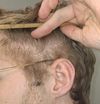
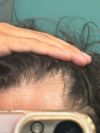
The user is treating hair loss with dermarolling, a laser helmet, scalp massages, and Nizoral. They stopped using minoxidil and finasteride and are considering pumpkin seed oil and sulforaphane.
The user has maintained their hairline with finasteride for 5 years and saw no results from minoxidil. They are inquiring if tretinoin alone can cause hair regrowth.
The conversation discusses using tretinoin with topical minoxidil for hair regrowth, despite previous non-response to minoxidil and concerns about oral minoxidil's heart risks. The user is also on dutasteride and is considering a hair transplant if other options fail.
A 28-year-old male experiencing diffuse thinning and miniaturization around the ears and back has tried finasteride, dutasteride, and both topical and oral minoxidil without success. He is seeking advice on identifying the type of hair loss and next steps since current treatments are ineffective.
GT20029 shows promising results for hair loss treatment, with potential approval in China by 2026 or 2027, but U.S. approval may take longer. It could serve as an alternative to finasteride, with a potentially better side effect profile.
A 23-year-old experiencing severe diffuse thinning after scalp inflammation is considering finasteride as a last resort after stopping minoxidil and using anti-inflammatory medication. Users suggest that inflammation causes temporary shedding and recommend consulting a dermatologist, with some advocating for finasteride as a reliable treatment option.
The user is using Minoxidil, Finasteride, Nizoral, Nutrafol supplements, and PRP sessions for hair loss treatment. They are concerned about the effectiveness of these treatments and whether they should continue or consider a hair transplant.
The conversation discusses enhancing Minoxidil absorption for hair loss treatment using Tretinoin and MSM (Methylsulfonylmethane). The user is seeking sources for Tretinoin and mentions MSM's potential to improve the absorption of topical agents.
The user is experiencing hair thinning despite using finasteride and minoxidil with added tretinoin, and is considering switching to dutasteride. Suggestions include trying dutasteride, oral minoxidil, microneedling, and possibly a hair transplant for better results.
The user shared their successful hair regrowth journey using finasteride, dutasteride, minoxidil, microneedling, and tretinoin. They experienced significant improvement, especially in the crown and temple areas.
Dutasteride mesotherapy is discussed as a hair loss treatment, with opinions on its effectiveness compared to oral dutasteride. The treatment is noted for being expensive, potentially painful, and more popular in Europe, with some users questioning its advantages over traditional methods.
The conversation discusses hair loss treatments, specifically topical dutasteride, minoxidil, and finasteride. Users share experiences and opinions on the effectiveness and side effects of these treatments.
The user Consistent-Gene1334 shared their positive results in regrowing hair by using topical minoxidil and oral finasteride. Other users in the conversation praised the results and discussed the effectiveness of these treatments for diffuse thinning.
The user is seeing progress in hair regrowth using a combination of 8% minoxidil, 0.25% dutasteride, and 0.01% tretinoin. The conversation includes comments on the effectiveness and application of these treatments.
After 8 months of using topical finasteride, hair miniaturization continues, raising concerns about its effectiveness. Microneedling is suggested as a possible complementary treatment.
The user has been using minoxidil, finasteride, and microneedling for two years, resulting in significant hair regrowth and plans for a 4000 graft hair transplant. The treatments have strengthened the donor area, making a hair transplant feasible.
The conversation is about the struggles of dealing with diffuse thinning at a young age and the lack of significant improvement after using treatments like finasteride and minoxidil. Some suggest additional methods like derma rolling, microneedling, and hair fibers, while others share their own experiences and encourage persistence with treatment.
The user experienced significant hair regrowth using high doses of dutasteride, minoxidil, and finasteride, but still considers a hair transplant due to thin hair and limited temple improvement. They face challenges accessing medication and are exploring additional treatments like microneedling.
A user with Androgenetic Alopecia is seeking advice on hair growth treatments while planning for pregnancy. Current routine includes LaserCap, Nizoral Shampoo, scalp massage, The Ordinary Multi Peptide Serum, vitamin D, prenatal vitamins, and SEEN shampoo.
Baldness is difficult to cure because current treatments like finasteride, dutasteride, and minoxidil only prevent hair shedding, and new developments are mostly ineffective. Botox shows potential in aiding skin regeneration and hair growth, but maintenance therapy with treatments like dutasteride and minoxidil may still be necessary.
A person using Minoxidil, Finasteride, Microneedling, and recently added Tretinoin is experiencing heavy shedding and thinning hair. They suspect Tretinoin has made them respond to Minoxidil and are seeking others with similar experiences.
A user is experiencing uneven hair thinning and has tried topical minoxidil without success and finasteride with adverse effects. They are considering microneedling and PRP treatments while avoiding finasteride, and another user suggests trying dutasteride as an alternative.
The user has been using finasteride and minoxidil for over three years, switched to oral minoxidil, and recently started dutasteride and dermarolling but still experiences thin hair. They are seeking suggestions for improving their hair condition.
Topical dutasteride with microneedling and mesotherapy dutasteride injections are effective treatments for androgenetic alopecia in both men and women. These methods offer promising alternatives to oral therapies with potentially fewer systemic side effects.
Clascoterone is seen as a promising topical treatment for hair loss, similar to finasteride but without side effects, though concerns exist about its long-term effectiveness. Other treatments discussed include topical minoxidil, ketoconazole, microneedling, and oral options like dutasteride and minoxidil.
User shared progress pictures showing increased hair density after 3 months using 5% Minoxidil, Keto shampoo, and supplements. They recently started finasteride for AGA and plan to update in 3 months.
An 18-year-old has been using minoxidil and finasteride for hair loss since age 15, recently adding dutasteride and GHK-Cu, but sees no significant improvement and is considering a hair transplant. Concerns are raised about using hormone suppressors at a young age, with suggestions to explore other treatments like dermarolling, diet changes, and checking for deficiencies.
The conversation discusses experiences with topical dutasteride for hair loss, comparing formulations from FUEClinic, MinoxidilMax, and Strut. Users share their results and side effects, with some preferring topical over oral treatments to minimize systemic absorption.
A 28-year-old male experienced hair regrowth using a topical spray containing minoxidil, finasteride, and tretinoin, along with occasional microneedling, after stopping oral finasteride due to side effects. He is pleased with the progress after three months and plans to continue using the spray.
The user experienced severe scalp itching and hair loss while on dutasteride, which they linked to caffeine and masturbation. They plan to cut out both to see if their hair density improves.