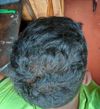
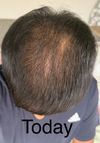
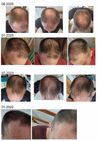
The conversation is about a female experiencing hair loss and seeking advice on why it's difficult to regrow hair. Specific treatments like Minoxidil, finasteride, or RU58841 are not mentioned.
An 18-year-old experiencing diffuse hair thinning since 8th grade seeks advice. They are concerned about having less hair than their 52-year-old father and are looking for treatment options.
The conversation is about a person struggling with inconsistent hair styling due to thinning hair, despite being on hair loss medications. They find that ketoconazole 2% shampoo helps, but conditioning makes their hair look worse; others suggest staying consistent with treatment and using hair fibers for events.
Scientists have grown natural-looking hair from stem cells, potentially revolutionizing hair growth treatments. Concerns include cost, DHT resistance, and the need for future procedures.
Prostaglandin balance affects hair loss, particularly in conditions like Lichen Planopilaris, where an imbalance can lead to hair follicle damage. Treatments mentioned include prostaglandin analogs and Pioglitazone HCL, with a focus on maintaining prostaglandin equilibrium for potential hair regrowth.
Dutasteride 0.5 mg significantly reduces both scalp and hair follicle DHT, with a greater reduction in hair follicle DHT. The discussion questions which reduction is more important for androgenetic alopecia and diffuse thinning.
The conversation discusses hair loss treatments like topical finasteride with minoxidil, oral dutasteride, and essential oils. Oral treatments like dutasteride and finasteride are seen as more effective, though some prefer topicals to avoid side effects.
King Thutmose IV's hair retention is humorously speculated to be due to treatments like finasteride, minoxidil, or other unconventional methods. The discussion includes jokes about genetics, ancient practices, and modern hair loss solutions.
The user has been using topical minoxidil, topical finasteride, microneedling, and ketoconazole shampoo for 9 months with positive results but is concerned about recent increased shedding. Another user advises that shedding is normal and suggests continuing the treatments consistently for up to a year to see solid results.
This conversation discusses the advancements in treatments for hair loss, including finasteride, dutasteride, minoxidil and new promising treatments such as pyrilutamide and verteporfin. Other treatments discussed were taking minoxidil orally, tretinoin to turn non-responders into responders and microneedling to further boost growth.
Stem cell therapy shows promise in treating hair loss by mimicking DHT-resistant cells from the back of the head. Traditional treatments like finasteride are also discussed, but stem cells could potentially offer a more permanent solution.
A user who shared progress pictures of their scalp using a microscope camera, demonstrating the difference between healthy and miniaturized hair. Various explanations for the cause of this were discussed, such as DHT build-up in scalp sebum causing an autoimmune response leading to inflammation and eventual hair loss, with some suggesting a do-it-yourself treatment involving adding ascorbic acid powder to shampoo.
The conversation discusses hair loss treatments, focusing on the use of topical minoxidil, microneedling, finasteride, and dutasteride, while debating the role of testosterone and DHT in hair loss. It also touches on the potential liver health impacts of these treatments and the genetic sensitivity of hair follicles to androgens.
People making comments on others' hair loss, and the different strategies used to deal with it. Treatments mentioned include finasteride and minoxidil.
The user is considering using CB or clascoterone for hair loss, potentially as an alternative to RU. They're also contemplating asking a dermatologist for topical clascoterone cream to apply to their temple.
The user is considering whether to continue using a comb-over to hide thinning hair after a hair transplant, which helped the front but not the crown. They are seeking advice on whether to maintain the current style or change it due to noticeable balding.
CB 03 01 (Breezula) was tried for hair loss but showed no significant improvement, with issues in dissolving and application. Finasteride and dutasteride remain the most effective treatments, while minoxidil is also used; CB's effectiveness is questioned, and topical alternatives like bicalutamide are considered.
Finasteride and Dutasteride block DHT, which is needed for vellus hair to become terminal on the beard but not on the scalp. The user considered using DHT cream but learned it's unnecessary for scalp hair.
A 48-year-old male has tried various hair loss treatments, including topical Minoxidil, Ketoconazole shampoo, a combination of topical Finasteride and Minoxidil, oral Finasteride, microneedling, and oral Dutasteride. He seeks advice on next steps after these treatments.
The user is using dutasteride, oral minoxidil, and topical minoxidil with tretinoin for hair loss. They are considering whether to continue this treatment or opt for a hair transplant for their temples.
The user has been using minoxidil and finasteride for 7.5 months to address hair thinning, particularly at the crown and temples, and is considering additional treatments like tretinoin and dermastamping despite having chronic scalp folliculitis. They are experiencing progress but are concerned about side effects and the effectiveness of treatments on temple regrowth.
The user observed new tiny white hairs after 12 days of using minoxidil, finasteride, microneedling, and biotin, hoping they will become terminal hairs. Others advise that while some hairs may not fully grow, consistent treatment, patience, and scalp massages could enhance results.
A user discusses a company, Roots by Genetic Arts, that offers a genetic test for hair loss to create personalized treatments, and is curious about its legitimacy and the science behind it. The company tests 16 genes related to hair loss and compounds a topical treatment based on the results.
Temporal peaks are crucial for a natural-looking hair transplant, but they are challenging to achieve due to the need for precise angles and appropriate hair thickness. Many users emphasize the importance of finding a skilled surgeon and using finasteride to maintain hairline stability.
After suffering from hair loss and trying various treatments like finasteride, minoxidil, RU58841, and scalp micropigmentation without lasting success, the individual found freedom and a renewed sense of self by shaving their head and accepting their baldness. They encourage others struggling with hair loss to not waste years searching for a cure and to consider embracing a shaved head as a positive solution.
A 29-year-old male experiencing hair loss due to TRT is using minoxidil and dermarolling but is hesitant to use finasteride or dutasteride due to potential side effects. He is considering low level laser therapy (LLLT), PRP, ketoconazole shampoo, and oral minoxidil as additional treatments. A reply suggests that without a DHT blocker like finasteride or dutasteride, other treatments may not be effective long-term.
The user is frustrated with hair loss despite using minoxidil, topical finasteride, and topical dutasteride, and is considering other options like oral treatments, SMP, or hair systems. They feel demoralized and are struggling with self-esteem and social interactions due to their thinning hair.
The conversation is about a user's hair loss treatment regimen, which includes daily finasteride, topical minoxidil, derma rolling, and Nizoral shampoo. Opinions vary on the effectiveness of the regimen, with some users suggesting additional treatments like oral minoxidil and dutasteride, while others debate the presence of a scalp fungus and the impact of microneedling.
Hair loss may be linked to blood flow issues, but DHT is considered the main cause. Treatments used include finasteride, RU58841, minoxidil, vitamin D3, microneedling, and dutasteride, but hair loss persists.
The user is experiencing aggressive hair loss and is using minoxidil, microneedling, biotin, and vitamin D. They are considering finasteride or dutasteride and plan to consult a dermatologist for the best treatment.