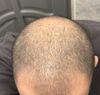
The conversation is about a female experiencing hair loss and seeking advice on why it's difficult to regrow hair. Specific treatments like Minoxidil, finasteride, or RU58841 are not mentioned.
A 15-year-old experiencing severe diffuse thinning plans to use minoxidil, dermarolling, and possibly ketoconazole, with hopes to later incorporate finasteride. Concerns about starting finasteride too young and the need for a dermatologist consultation are discussed.
User discusses hair loss treatments, including fluridil, minoxidil, tretinoin, melatonin, stemoxydine, ketoconazole, and piroctone olamine. They suggest that shedding healthy terminal hairs may be bad, while shedding weaker hairs could indicate a beneficial treatment effect.
A user shared progress pictures showing significant hair improvement using finasteride and minoxidil, expressing satisfaction with the results. Another user accused them of having a hair transplant.
The user is using dutasteride, oral minoxidil, and topical minoxidil with tretinoin for hair loss. They are considering whether to continue this treatment or opt for a hair transplant for their temples.
The user is experiencing aggressive diffuse thinning despite using 1mg oral finasteride daily, topical minoxidil twice, microneedling, and Nizoral for seborrheic dermatitis. They are considering switching to dutasteride or RU58841 but are advised to seek a second opinion to determine the cause of hair loss.
A user with diffuse thinning shares a tip for improving hair appearance by using a shea butter and coconut oil serum from Trader Joe's at night. They are on finasteride and considering adding minoxidil for better results.
The user experienced chronic telogen effluvium and mild male pattern baldness, treated with finasteride, oral minoxidil, and later switched to dutasteride, which stopped excessive hair shedding. Other treatments like low-level laser therapy, hair loss shampoos (except ketoconazole), and supplements were ineffective.
A user shared progress pictures after their fifth hair transplant, which included 3,000 grafts from both scalp and body hair. They use topical finasteride and minoxidil, and the procedure cost $22,000 at Maxim in Austin, Texas.
The user shared their 10-month hair loss treatment progress using Finasteride, Topical Minoxidil, and microneedling, noting significant improvement in their hairline. They also mentioned that Finasteride helped with acne, and other users discussed additional treatments like tretinoin and observed hair regrowth patterns.
A user shared their hair loss journey, showing improvement after starting finasteride, dutasteride, minoxidil 5%, and microneedling. They are curious about their degree of baldness and why their hair has thinned.
Keratin microspheres may offer additional mechanisms to combat hair loss compared to minoxidil. The process to create these microspheres is relatively simple and can be done at home with basic equipment.
The user has been using finasteride and minoxidil for over three years, switched to oral minoxidil, and recently started dutasteride and dermarolling but still experiences thin hair. They are seeking suggestions for improving their hair condition.
Hair appearance fluctuates due to factors like styling, product buildup, and humidity, causing frustration for those with diffuse thinning. Treatments mentioned include minoxidil, finasteride, ketoconazole shampoo, and RU58841, with mixed results.
Significant hair improvement in 3 months using topical 5% Minoxidil twice daily, 1mg Finasteride on alternating days, and weekly microneedling. Users express encouragement and admiration for the progress.
A user shares progress on hair thickening using finasteride, minoxidil, RU58841, and dermastamping. Another user notes slow but ongoing improvement with a similar treatment routine.
The conversation is about someone using Dutasteride, oral Minoxidil, and Tretinoin for hair loss, and they also stopped antipsychotics and treated an H. pylori infection. They feel there has been progress in their hair growth over two months.
The user has been using minoxidil, finasteride, a laser cap, and ketoconazole shampoo for hair loss without success and is seeking advice on further tests or treatments. They have a family history of hair loss and have not yet undergone dermatologist or trichology tests.
A 25-year-old male experiencing diffuse thinning is advised to address high TSH levels and low iron, and consider treatments like finasteride. Weight loss and improved diet are also suggested to potentially help with hair health.
Microneedling combined with tretinoin is discussed for its effectiveness in treating hair loss. Minoxidil, finasteride, and RU58841 are also mentioned as potential treatments.
A user is using topical finasteride, keto shampoo, microneedling, and tretinoin for hair loss and is considering adding pyrilutamide. They notice some improvement at the temples and seek advice on whether to focus on cosmetic results despite daily shedding.
The user is experiencing hair thinning and brittleness, possibly due to Telogen Effluvium, which affects body hair and may be linked to stress or nutrition. They are considering using finasteride for treatment but are unsure if it will address their symptoms.
The user is experiencing hair thinning and has been using minoxidil, dutasteride mesotherapy, and red light therapy for 4.5 months without seeing results. They are considering changing their treatment due to lack of progress.
The user experienced significant hair regrowth using finasteride, minoxidil, and a 4,000-graft hair transplant performed by Dr. Nader in Reynosa, Mexico. The results were natural-looking, and the user plans a second transplant for additional density if needed.
White spots on a bald scalp, likely tinea versicolor, can be treated with ketoconazole or selenium sulfide shampoos like Selsun Blue. Consulting a dermatologist is recommended for proper diagnosis and treatment.
The user has been using oral minoxidil, dutasteride, RU58841, and other treatments for hair loss over nine months, seeing some improvement in hair thickness and crown volume but continued thinning at the hairline. They plan to continue treatment for another nine months despite being sensitive to DHT fluctuations and are considering increasing dosages or other options like a hair transplant.
The user shared their 6-month hair loss progress using topical minoxidil, oral minoxidil, finasteride, and microneedling. They noted thicker eyebrows and eyelashes but also increased body hair.
The user shared their 5-year hair journey, including a recent hair transplant of 2600 grafts, and their routine of using dutasteride, oral minoxidil, and ketrel. They are hopeful for high-density results and recommend starting treatment early.
After 8 months of using topical finasteride, hair miniaturization continues, raising concerns about its effectiveness. Microneedling is suggested as a possible complementary treatment.
The user shared their 3-year hair loss treatment progress using dutasteride, minoxidil, PRP, micro-needling, and vitamin D supplements, noting improvements and no side effects. They also discussed transitioning from finasteride to dutasteride and increasing minoxidil dosage, while considering the effectiveness of PRP and micro-needling with long hair.