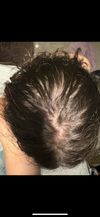
An 18-year-old shares their successful hair regrowth journey using finasteride 1mg daily, topical minoxidil twice a day (mixed with tretinoin 0.025% at night), ketoconazole shampoo 2-3 times a week, and occasional dermarolling. They report no side effects and emphasize the importance of consistency and early intervention.
The conversation discusses the potential of a new hair loss treatment, GT20029, which targets androgen receptors in the scalp and is in phase 1 trials in China. Users express hope that this treatment will be more effective than current options like Minoxidil and Finasteride.
Piroctone olamine is more effective than ketoconazole for increasing hair growth and reducing itching and dandruff. Treatments discussed include Minoxidil, finasteride, and RU58841.
Using topical finasteride with creatine might help reduce hair loss by targeting local DHT while maintaining normal systemic levels, but results are uncertain without testing. Users report mixed experiences with topical treatments like finasteride, dutasteride, RU58841, and minoxidil, with some seeing regrowth and others experiencing side effects.
The conversation is about a user's hair regrowth progress using topical Minoxidil 5%, a derma roller, Foligain Trioxidil shampoo, and various supplements like zinc, selenium, magnesium, B6, B7, saw palmetto, and D3 + K2. The user is seeking finasteride but faces prescription challenges in Italy.
The conversation discusses using tretinoin as an additional treatment for hair loss alongside minoxidil, with plans to test its effectiveness by applying it to only one side of the scalp. The user intends to start this experiment after using minoxidil for a year.
A user is experiencing hair regrowth after using oral finasteride, topical minoxidil, biotin, multivitamins, vitamin D, and dutasteride. They also use ketoconazole shampoo and Revita density shampoo to manage flakes and improve hair thickness.
The user stopped oral treatments due to side effects and switched to a regimen of topical minoxidil, tretinoin, azelaic acid, and dermaneedling, with recent addition of topical finasteride. They are questioning the long-term effectiveness of non-hormonal methods and considering hair transplantation.
A 23-year-old has been using minoxidil, finasteride, 2% ketoconazole shampoo, biotin, a multivitamin, and microneedling to address hair loss, noticing baby hairs and a fuller frontal hairline but concerns about a thin right temple. They are considering adding rosemary oil and switching to a 1.5 mm dermastamp for further improvement.
The user is experiencing one-sided diffuse thinning and has been using finasteride and liquid minoxidil for 4-5 years with minimal results. They are considering whether to save for a hair transplant or address scalp sensitivity and irritation first.
Redensyl is a plant-based treatment that may support hair regrowth by reactivating dormant follicles and improving hair density, especially in early-stage thinning. It is not a miracle cure and results vary; it is less proven than Minoxidil or Finasteride and may cause scalp irritation.
Bryan Johnson used a customized hair restoration formula from Roots byGA, which includes Minoxidil, Cetirizine HCl, Latanoprost, Dutasteride, Melatonin, Caffeine, Tretinoin, Vitamin D3, and Vitamin E. Many users are skeptical of the effectiveness and uniqueness of the treatment, suggesting that standard treatments like Minoxidil and Dutasteride are more reliable.
The user experienced significant hair regrowth using minoxidil, microneedling, and estrogen, leading to a need to tie their hair back. They attribute the success to estrogen suppressing testosterone, alongside their routine of minoxidil, microneedling, and supplements.
The conversation discusses impressive results from a 28-day application of a hair loss treatment. Users compare it to their experiences with Minoxidil and Dutasteride, noting excitement over the new findings.
A 37-year-old shared 3 months of hair loss progress using HIMS oral finasteride, minoxidil, biotin, dermarolling, and ketoconazole shampoo. They noticed reduced shedding, no significant side effects, and advised against using Nutrafol.
The conversation is about skepticism towards a product marketed as a "DHT BLOCKER" for hair loss, with users suggesting it is a scam and recommending proven treatments like finasteride and minoxidil. Other suggestions include lifestyle changes like a healthy diet, exercise, and stress reduction.
A 20-year-old is experiencing hair thinning and is considering Clascoterone and Minoxidil as treatments, avoiding finasteride due to concerns about fertility and hormones. A suggestion was made to use Clascoterone for local DHT targeting and combine it with Minoxidil for maintenance and regrowth while avoiding systemic side effects.
The conversation is about experimenting with topical exosomes for hair loss treatment, alongside microneedling, Happy Head's gel-like topical, and Ordinary's hair serum. The user also mentions the availability of treatments like latanoprost and Redensyl.
The conversation is about identifying ingredients in a scalp serum and their effects on DHT levels. The serum contains various ingredients like Aqua, Biotin, and Oleanolic Acid.
A 23-year-old noticed crown thinning and started using 1.25mg finasteride, biotin supplements, biotin/collagen shampoo, and 1% nizoral shampoo. After 3 months, they reported improvement and side effects that subsided after 2 months.
The user tried various hair loss treatments including minoxidil, finasteride, hormone therapy, dutasteride, microneedling, and natural oils. They plan to continue their regimen and may consider surgical options if results are unsatisfactory.
The conversation discusses using topical minoxidil and finasteride, along with dermarolling and biotin shampoo, for hair loss treatment. It also explores supplements like NutraPro's hair growth formula and other products like tretinoin, Ducray shampoo, and Nizoral to enhance results.
Using a daily hair spray with 0.3% finasteride, 7% minoxidil, 2% ketoconazole, and biotin, along with a 1% ketoconazole shampoo once or twice a week, may be excessive according to the product's recommendations. The user is unsure about this regimen for treating androgenetic alopecia (AGA).
Capronium Chloride and Trichoxidil are suggested as better alternatives to Minoxidil for hair growth without heart side effects. The Japanese Dermatological Association recommends topical Minoxidil over Capronium Chloride.
The user is considering minoxidil, clascoterone, and fluridil for hair loss, avoiding finasteride and RU58841. They are also contemplating a hair transplant and exploring the resilience of transplanted hair without finasteride.
Some individuals experience hair loss despite using treatments like 2.5 mg dutasteride, finasteride, and minoxidil, suggesting sensitivity to DHT or other factors. Various treatments and lifestyle changes are discussed, but results vary, and some consider hair transplants or other solutions.
Zeuss sublingual products for hair loss, including finasteride and a finasteride-free option, are discussed for their potential to reduce side effects through sublingual delivery. The inclusion of copper peptides is noted, but the high price is a concern without more user feedback.
The user has been using topical minoxidil, oral finasteride, and nizoral shampoo for almost three months, along with supplements like biotin and vitamin D3, and reports noticeable hair regrowth without side effects. They aim to have more hair for a wedding in June and are considering using hair fibers for temporary enhancement.