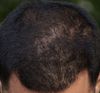
The user is experiencing severe hair shedding despite using minoxidil, finasteride, ketoconazole shampoo, and dermarolling. They are considering changing treatments after stopping dermarolling and switching finasteride brands worsened the shedding.
Clascoterone 5% solution shows strong potential for hair growth, offering a new treatment for alopecia with minimal side effects. It blocks androgen receptors locally and may be available by late 2026 or early 2027.
A woman experiencing hormonal hair loss is on dutasteride and bicalutamide, which initially improved her hair, but she is now experiencing a second shedding phase with significant short hair loss. Despite normal hormone levels and no deficiencies, she is unsure if this shedding is normal and seeks advice.
The user is experiencing significant hair shedding after starting RU58841, despite using dutasteride and oral minoxidil for over a year without stabilization. Others suggest continuing the treatment as shedding can be a normal phase, but caution that RU58841 is unpredictable.
A user experienced extreme hair growth on their hairline and temples using natural remedies like onion juice, nail rubbing, more veggies and fruits, less carbs, jojoba oil, and dermarolling. They did not use Minoxidil, finasteride, or any prescription drugs.
The user has been using dutasteride, lymecycline, betamethasone, and minoxidil for hair loss but struggles with eczema and dry skin. They feel hopeless as no treatments or moisturizers have helped, and they are concerned about their appearance due to their soft facial features.
A user is experiencing rapid hair loss and has been diagnosed with telogen effluvium by multiple dermatologists, but doubts the diagnosis due to the severity and speed of the hair loss. They are considering various treatments like spironolactone, estradiol, and possibly finasteride, while also exploring the possibility of hormonal imbalances or autoimmune issues.
The conclusion of the conversation is that some individuals may experience a condition called reactionary hypergonadism when taking dutasteride for hair loss. This condition can lead to an increase in testosterone levels, which may worsen hair loss instead of improving it.
The user experienced hair loss since 2019 and tried finasteride, dutasteride, RU58841, and ketoconazole shampoo without success. A scalp biopsy showed scarring and inflammation from folliculitis, indicating chronic inflammation was affecting treatment effectiveness.
Dutasteride can drastically reduce sebum production, leading to dryer hair and shedding. Alternating shampoos and periodic silica supplementation can improve hair quality and thickness.
A humorous discussion about random, long hairs appearing on the body, with no connection to hair loss treatments like Minoxidil, finasteride, or RU58841. Participants share personal anecdotes about these unusual hairs.
A 25-year-old female is experiencing hair loss and has tried PRP, Minoxidil 5% with Biotin, and weekly needling sessions. Her doctor suggested switching to GFC treatment and stopping the needling sessions due to increased shedding, which may be caused by Minoxidil.
The user is experiencing a strange hair loss pattern despite using dutasteride for 3 years and minoxidil with tretinoin for 1.5 years. They recently added microneedling and are considering a scalp biopsy to understand the cause.
User tried dutasteride, topical finasteride, oral minox, dermawounding, saw palmetto, pumpkin seed oil, and ketacozonole for hair loss. Improvement was temporary, now trying RU58841 and seeking help.
Microneedling combined with tretinoin is discussed for its effectiveness in treating hair loss. Minoxidil, finasteride, and RU58841 are also mentioned as potential treatments.
Phase II for TDM-105795 for Androgenic Alopecia is set to begin in April 2023. The study aims to evaluate the efficacy and safety of TDM-105795 in male subjects.
A 22-year-old male experienced hair regrowth using an intermittent Dutasteride regimen, oral and topical Minoxidil, FolliHair AM/PM, and Salicia KT shampoo. He stopped Dutasteride due to side effects like dry eyes and skin, but noticed increased hair shedding after stopping.
The conversation is about disappointment with hair loss progress despite using treatments like finasteride, minoxidil, nizoral, tretinoin, and a dermaroller. Direct sunlight revealed more hair loss than expected, prompting continued treatment and hope for improvement.
The conversation discusses hair regrowth, with users sharing experiences and advice on using finasteride, minoxidil, and dermarolling to stimulate hair growth. Many users report seeing small hairs, which they consider a positive sign, though opinions vary on whether these hairs will develop into thicker, terminal hairs.
The conversation discusses whether topical finasteride, dutasteride, or antiandrogens like RU58841 can reduce sebum overproduction as an early indicator of their effectiveness in treating hair loss. It suggests that while hair growth may take months to observe, a decrease in oiliness could be a quicker sign of a product's action.
The user applies a topical solution containing minoxidil, finasteride, dutasteride, retinoic acid, and hydrocortisone to address scalp inflammation and is considering adding cetirizine to the mix. They are calculating the correct amount of cetirizine to add to their formula and have paused this approach to retry oral minoxidil.
A user shares their experience with hair loss treatments, including oral Dutasteride, topical Minoxidil, and Tretinoin, despite seeing no results after six months. They encourage others to continue treatments and consider options like oral Minoxidil, Nizoral shampoo, and possibly hair transplants.
Dutasteride significantly improved hair health and reduced shedding for a woman with PCOS and hyperandrogenism, without causing depression or anxiety, unlike finasteride. Dutasteride also helped with PMDD symptoms and had no side effects, though it changed hair texture.
The post discusses using a topical tincture containing zinc, azelaic acid, and other ingredients to inhibit 5 alpha-reductase activity for treating hair loss. The user plans to try this natural alternative before using finasteride or RU58841.
The user is experiencing hair loss, possibly due to androgenetic alopecia and seborrheic dermatitis, and has tried ketoconazole shampoo without success. They are hesitant to use finasteride due to potential side effects and are seeking advice on managing their condition.
A person feels intense shame and self-hatred due to baldness and poor self-image, affecting their confidence and social interactions. Suggestions include therapy, exercise, braces, hair transplants, and using finasteride.
A 38-year-old woman has been using oral Dutasteride for a year without improvement and is now adding a topical solution containing Minoxidil, Dutasteride, Tretinoin, Ketoconazole, and Hydrocortisone. She is seeking advice on whether switching from oral to topical Dutasteride could prevent hair shedding.
Quitting RU58841 after over two years reduced scalp itching and inflammation, despite concerns about losing hair gains. The user continues using finasteride and oral minoxidil.