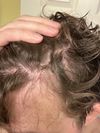
The user reported high estradiol levels after one month of using finasteride for hair loss. They discussed potential side effects and adjustments to their treatment plan.
A Phase II clinical trial for TDM-105795 has started recruiting in the US, and it might be a promising treatment for hair loss. Many hair loss drugs, including this one, originate from China.
Switching from oral to topical minoxidil due to increased heart rate. The user seeks advice on maintaining their hair treatment while managing heart rate concerns.
Kintor is producing a cosmetic with KX826, starting at 0.5% concentration and moving to 1%. The 0.5% concentration wasn't as effective as minoxidil and finasteride, but the 1% concentration shows promise.
The user has tried various hair loss treatments including topical minoxidil, oral finasteride, oral dutasteride, oral minoxidil, and exosome therapy, but none have been effective. They suspect trichodynia might be preventing these treatments from working.
A user reports hair regrowth at the temples after starting 0.33g of finasteride every other day in January, combined with weekly microneedling sessions. They experienced sexual side effects at higher doses, which improved with a lower dose and supplements like broccoli extract and l-citrulline.
The user is experiencing increased hair shedding while using finasteride and RU58841, possibly due to changes in application methods. They are considering adding minoxidil and stemoxydine to their regimen to improve results and manage hair greasiness.
Dutasteride at 0.5mg blocks 50% of scalp DHT, while higher doses like 1mg and 2.5mg block more, with 2.5mg blocking up to 80%. Some users report better results with lower doses, and there's confusion about the effectiveness of different dosages on scalp versus serum DHT.
User is on vacation in Greece and wants to buy tretinoin or isotretinoin to improve Minoxidil absorption. They are considering isotretinoin since it is available over-the-counter in Greece but requires a prescription back home.
The user is experiencing significant hair loss despite using treatments like finasteride, minoxidil, dutasteride, micro-needling, rosemary oil, and various vitamins. In the conversation, others suggest checking iron and hemoglobin levels, maintaining a positive attitude, and adding RU58841 to the treatment regimen.
A user with diffuse hair loss after taking accutane, which might have triggered genetic predisposition to AGA; their experience taking finasteride and experiencing side effects of increased oil production, increased sex drive, worsening hair texture; they are considering zinc supplementation with finasteride or other treatments such as alfatradiol or spironolactone.
A user on .5 mg of dutasteride for hair loss saw no improvement and is considering increasing to 2.5 mg but is unsure of its effectiveness. Another user mentioned that 2.5 mg reduces scalp DHT more and increases hair count more than .5 mg, but the cost and side effects should be considered.
The user has been using 5% minoxidil once daily and microneedling with a 1.5 mm dermaroller weekly for three months, considering increasing minoxidil usage but avoiding finasteride due to libido concerns. Another person suggests considering other treatments like RU58841, alfatradiol, topical finasteride, clascoterone, or saw palmetto since not using a DHT blocker could be less effective.
The conversation is about a user considering reducing their dutasteride dose due to side effects like lower libido and watery semen. They plan to use dutasteride mesotherapy every three months to maintain hair while reducing systemic DHT suppression.
A user increased their dutasteride dose to 2.5 mg and oral minoxidil to 5 mg after losing hair regrowth, and also started using 2% ketoconazole and microneedling. Another user suggested these changes are meaningful and recommended splitting doses throughout the day for better absorption.
User has been using minoxidil 6%, finasteride 0.3%, tretinoin 0.025%, and microneedling twice a week for 2.5 months. They are considering switching to oral treatments.
A 19-year-old is using 5% topical minoxidil, 1.25 mg finasteride, ketoconazole, and a dermaroller for hair regrowth, noticing improvement in the frontal area. Another user suggests adding oral minoxidil and maintaining a consistent routine, emphasizing the importance of stress management and a healthy diet for better results.
The conversation discusses the effectiveness of different doses of Dutasteride (Dut) in reducing scalp DHT levels. It suggests that 1mg and 1.5mg doses would reduce scalp DHT by amounts between 51% and 79%.
The conversation discusses concerns about Dr. Rassman's topical Finasteride, specifically whether it is liposomal or glycol-based. Dr. Rassman insists on providing the correct liposomal formulation and urges patients to contact him if they receive the wrong product.
The user is experiencing diffuse thinning and inflammation despite using 2.5mg dutasteride daily, ciclopirox, and ketoconazole shampoos. They are considering treatments like hydroxychloroquine and JAK inhibitors due to suspected scarring alopecia and have faced challenges in obtaining a scalp biopsy.
Clascoterone 5% shows potential for hair thickening and darkening, especially when combined with treatments like finasteride. It may be a good alternative for those who experience side effects from other treatments.
The post and conversation are about the long-term side effects of using Dutasteride and Finasteride for hair loss, including issues like raised liver enzymes, high cholesterol, and loss of libido. The user advises regular blood work and careful monitoring for those using these treatments.
The user has been using 0.25% topical finasteride for eight months with slight improvement and is considering switching to oral finasteride for convenience and potentially better results. Increasing the topical concentration to 0.33% or 0.5% is also an option, but oral finasteride may have more systemic side effects.
A 27-year-old man shared his hair regrowth progress after using finasteride for 4 years, recently adding a solution of RU58841 with minoxidil and alfatradiol, tretinoin on temples, and occasional ketoconazole. He is seeking opinions on his treatment approach.
The conversation discusses whether not masturbating (semen retention) affects hair loss, with opinions varying but generally dismissing the idea. Some participants mention using hair loss treatments like Minoxidil, Finasteride, and RU58841, but the effectiveness and relation to prolactin levels in the scalp are debated.
A 28-year-old male shares progress on hair loss treatment using 0.5mg dutasteride and 5mg minoxidil, experiencing initial shedding but encouraged by community support. He also uses ketoconazole occasionally based on scalp oiliness.
The user seeks alternatives to Propylene Glycol (PG) for delivering topical finasteride due to scalp irritation. They consider using Propanediol 1,3 and ask for other suggestions.
PP405 shows promise as a hair loss treatment, with 31% experiencing increased hair density in a short trial. It may complement treatments like finasteride and minoxidil, but long-term effectiveness and safety need confirmation.