Search
for
Sort by
Community Join
690-720 / 1000+ resultscommunity Progress since may 27, 2021. HairCAFE routine, DUT 3 times a week, topical minoxidil/tretinoin at night, topical stemoxydine and alfatradiol 50/50 mix with tretinoin in the morning.
User started DUT 3 times a week, topical minoxidil/tretinoin at night, and topical stemoxydine/alfatradiol mix with tretinoin in the morning for hair loss. They experienced significant progress and no side effects, crediting a YouTuber for encouragement.
community 4 months on dut and topical min as a 23 year old
A 23-year-old shares progress in hair quality after 4 months using dutasteride, topical minoxidil, and other treatments, noting improved crown thickness but persistent temple thinning. They switched from finasteride to dutasteride due to side effects and started testosterone replacement therapy, which they believe helps mitigate side effects.
community I’m taking Veradermics VDPHL01 - AMA
A participant using Veradermics VDPHL01, an extended-release oral minoxidil, experienced significant hair regrowth from Norwood 6 to Norwood 3V without side effects. They plan to use dutasteride after the treatment to maintain results.
community Fin 0.025% 1ml Daily. Now Rapidly Thinning My Third Month
The user experienced initial success with topical finasteride 0.025% and melatonin but noticed rapid hair thinning after three months. They are considering switching to a higher dose of topical finasteride or oral finasteride, as advised by others, while being cautious about potential side effects.
community Ru58841 after a hair transplant
A user discussed their hair transplant progress and mentioned using 1mg Finasteride, 5% Topical Minoxidil, and recently starting 5% RU58841. They are seeking advice on whether to use RU58841 at month 4 post-transplant.
community Losing ground after 1.5 years on DUT. Any suggestions?
The user has been using oral dutasteride (DUT) for 1.5 years but is experiencing hair thinning again and is considering increasing the dose or adding topical treatments like RU58841, despite concerns about side effects. Suggestions include trying oral minoxidil or waiting to see if the thinning is just a temporary shed.
community Making your own RT1640 in China
RT1640, a combination of cyclosporin A, minoxidil, and RT175, is discussed as a potential treatment for hair regrowth and repigmentation. The unique formulation aims to enhance hair follicle growth and restore hair pigment without the negative side effects of immunosuppressants.
community Just a little update. RU, minox, and Dut
User discusses hair regrowth using RU58841, minoxidil, and dutasteride. Many users praise the progress and ask about the treatments' effectiveness and side effects.
community Recently took a hair screening blood test to check my vitals, got report and summarised it in gpt
The conversation discusses hair loss treatments, specifically using Minoxidil, finasteride, and RU58841. It also mentions the importance of raising vitamin D3 levels.
community 25 months. Dutasteride, RU58841, Minoxidil, Microneedling, Nizoral, T/GEL, fixing vitamin D levels
User "manlycoffee" shares 25-month progress using Dutasteride, RU58841, Minoxidil, Microneedling, Nizoral, T/GEL, and fixing vitamin D levels for hair loss. Users discuss sources, experiences, and side effects of treatments.
community Any word from the dudes in the first pyrilutamide Kx group buys?
Hair loss discussion includes Minoxidil, Finasteride, and RU58841 treatments. Users inquire about experiences with Pyrilutamide Kx group buys.
community 4 Months on Roman 3-in-1 (Topical) — Crown Progress? Switch to Oral or Dutasteride?
The user has been using Roman 3-in-1 topical treatment (finasteride 0.3%, minoxidil 6%, tretinoin 0.025%) and a 0.25 mm dermaroller for four months to address crown thinning. They are seeking advice on whether to continue with the current regimen, switch to oral finasteride, or try dutasteride for better results.
community DUPA/Retrograde might not be DHT based...GET A BIOPSY QUICK or permanent Hair Loss!
DUPA and retrograde alopecia may not be solely DHT-based, and a biopsy is crucial for accurate diagnosis and treatment. Treatments mentioned include dutasteride, oral minoxidil, pioglitazone, clobetasol, calcipotriol, ketoconazole, and doxycycline, depending on the specific condition.
community 3 months on dut plus oral min 5mg
A user switched from finasteride and minoxidil to dutasteride and increased their oral minoxidil dose to 5mg daily, resulting in significant hair regrowth in three months. They stopped using tretinoin and reported minimal hair shedding and noticeable new hair growth.
community 6 month hairline results (dutasteride and microneedling)
A user's 6 month hairline results from using dutasteride and microneedling, which resulted in successful regrowth of their thinning temples. Other users commented with similar experiences that were also achieved through the use of finasteride, dutasteride and minoxidil.
community 32M, 5 year progress pictures
The user has been using finasteride, ketoconazole shampoo, oral minoxidil, and minoxidil foam for hair loss but feels their hair is not as thick as desired. They have stopped using RU58841 due to lack of results and are concerned about hair miniaturization despite these treatments.
community How good is Minoxidil mixed with tretinoin
Minoxidil combined with tretinoin may improve hair regrowth due to their synergistic effects. Using a gel with 0.025% tretinoin and antibiotics might still be beneficial.
community 18M progression pt.3 (6 months)
User started balding at 16 and began treatment at 18, using RU58841, minoxidil, derma rolling, and peptides. After 6 months, they experienced significant hair regrowth and are happy with the results.
community Mixing Stemoxydine 5% with premixed solution of RU58841 5%
The user is using Dutasteride, Nizoral, and RU58841 for hair loss and is considering mixing RU58841 with Stemoxydine for better scalp coverage but is concerned about the potential degradation of RU58841 when mixed with a water-based solution. They are seeking advice on the feasibility of this mixture.
community "Fluridil - As Good As RU58841 Without The Side Effects!?" ------ anyone here on fluridil?
Treatments for hair loss, such as Minoxidil, finasteride, RU58841 and Eucapil; the legitimacy of RU58841 products; and safety concerns related to using RU58841.
community The story of RU58841/PSK3841
RU58841, an anti-androgenic compound, showed early promise for treating alopecia but faced challenges after its patent in 1997. Despite advancing to Phase II trials, safety concerns and financial struggles led Aventis to abandon its development. Proskelia, which later merged into ProStrakan, couldn't prioritize the drug, leading to its eventual stagnation and failure to reach the market.
community Most reliable place to buy Pyrilutamide that ships to the UK?
The conversation is about finding a reliable source to purchase Pyrilutamide that ships to the UK. There's also an openness to using RU58841 as an alternative.
community Better comparison of my progress. 1 month of ru58841+minoxidil 5% once a day
The conversation is about someone's positive results after one month using RU58841 and minoxidil 5% once a day for hair loss. RU58841 is a topical solution that prevents DHT hormone from binding to hair follicles.
community New Product from Minoxidil Max - Topical Retinoic Acid (Tretinoin) is available now
A new product, a retinoic acid solution (0.3%), is available to enhance minoxidil products like Rogaine and Kirkland by converting them into a tretinoin-containing solution for improved hair loss treatment. One unit of the product is enough for a year's supply.
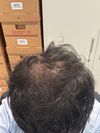
community Regrowth or I am trippin?
The user has been taking 1 mg of finasteride daily for four months and is questioning if they are experiencing hair regrowth, as suggested by their barber. Another user suggests taking better photos to assess the crown area more clearly.
community How much Ru58841 do i need to apply for temporal recession?
A user is experiencing hairline recession and has started using RU58841, applying it to the temples. They are seeking advice on the appropriate dosage for this specific area.
community Any positive responses for Diffuse Thinner with Retrograde using Fin/Min/Dut
People with diffuse thinning and retrograde hair loss are discussing treatments like finasteride, minoxidil, and dutasteride, with some reporting improvements and others experiencing issues like scalp inflammation and increased sebum. Suggestions include addressing scalp inflammation, considering gut health, and possibly using topical antiandrogens or micro-needling.
community Would RU58841 work on a test cycle?
OP experienced side effects from finasteride and is considering using RU58841 to prevent hair loss during a testosterone cycle. They have also used minoxidil, Nizoral, alfatradiol, and fluridil successfully.
community Rejected for the 2nd time for the VDPHL01 Clinical Trials (believe it or not!)
The user was rejected from participating in a clinical trial for an extended-release oral Minoxidil due to having rheumatoid arthritis, despite initially being accepted. They had stopped using Dutasteride and Minoxidil to qualify but continued using other treatments like RU58841 and red light therapy.